Green hydrogen and methanol touted for big roles in decarbonization









As China intensifies efforts to achieve its carbon peaking and neutrality goals, green hydrogen and green methanol are emerging as critical solutions for deep decarbonization.
During the two sessions — the annual gatherings of the National People's Congress and the National Committee of the Chinese People's Political Consultative Conference — several NPC deputies proposed accelerating the development of these clean energy resources through coordinated policy support, technological advancements and market expansion.
Zhong Baoshen, an NPC deputy, who is also chairman of Longi Green Energy Technology Co Ltd — a key player in the photovoltaic sector — called for accelerated development of green hydrogen and methanol, underscoring their potential as renewable fuels indispensable for reducing emissions in hard-to-abate sectors.
"While 42 percent of China's carbon emissions come from the power sector, the remaining 58 percent stem from largely nonelectric industries such as transportation, chemicals, metallurgy and cement production," he said.
"For these sectors, green hydrogen, produced using renewable energy — and green methanol, derived from green hydrogen and renewable carbon sources — offer viable pathways for deep decarbonization."
Zhong expects global demand for these fuels to surge with tightening global emission regulations.
According to industry forecasts, global hydrogen demand could reach hundreds of millions of metric tons by 2050, with green hydrogen accounting for the majority. However, as of 2023, global green hydrogen production capacity remained below 1 million tons, leaving significant room for growth, he said.
Green hydrogen and methanol, on the other hand, serve as ideal partners for renewables, enabling large-scale local energy consumption while providing solutions for peak load balancing and seasonal energy storage, Zhong said.
China's renewable energy capacity has expanded rapidly, with wind and solar power installations reaching 42 percent of total capacity by the end of 2024. However, the intermittency of renewable energy poses challenges for grid integration, energy storage and transmission.
"Using wind and solar power to produce green hydrogen not only improves energy efficiency, but also enhances the stability of China's clean energy system," Zhong said.
Despite their potential, green hydrogen and methanol remain in the early stages of development and face economic challenges compared to conventional fuels. Recognizing this, developed countries have introduced subsidies and industry standards to foster growth.
Zhong urged China to strengthen policy support to accelerate their commercialization, including scaling up large-scale renewable energy hubs integrating wind, solar, hydrogen and methanol production, removing transmission fees for renewable-powered hydrogen projects, offering preferential electricity rates to enhance economic viability, lowering loan interest rates and land costs for green hydrogen projects, as well as providing tax incentives to stimulate investment.
"Developing green hydrogen is a systemic effort requiring synchronized advancements in policy, technology and market mechanisms. It is not only a key pathway to carbon neutrality, but also a strategic move to enhance China's energy security."
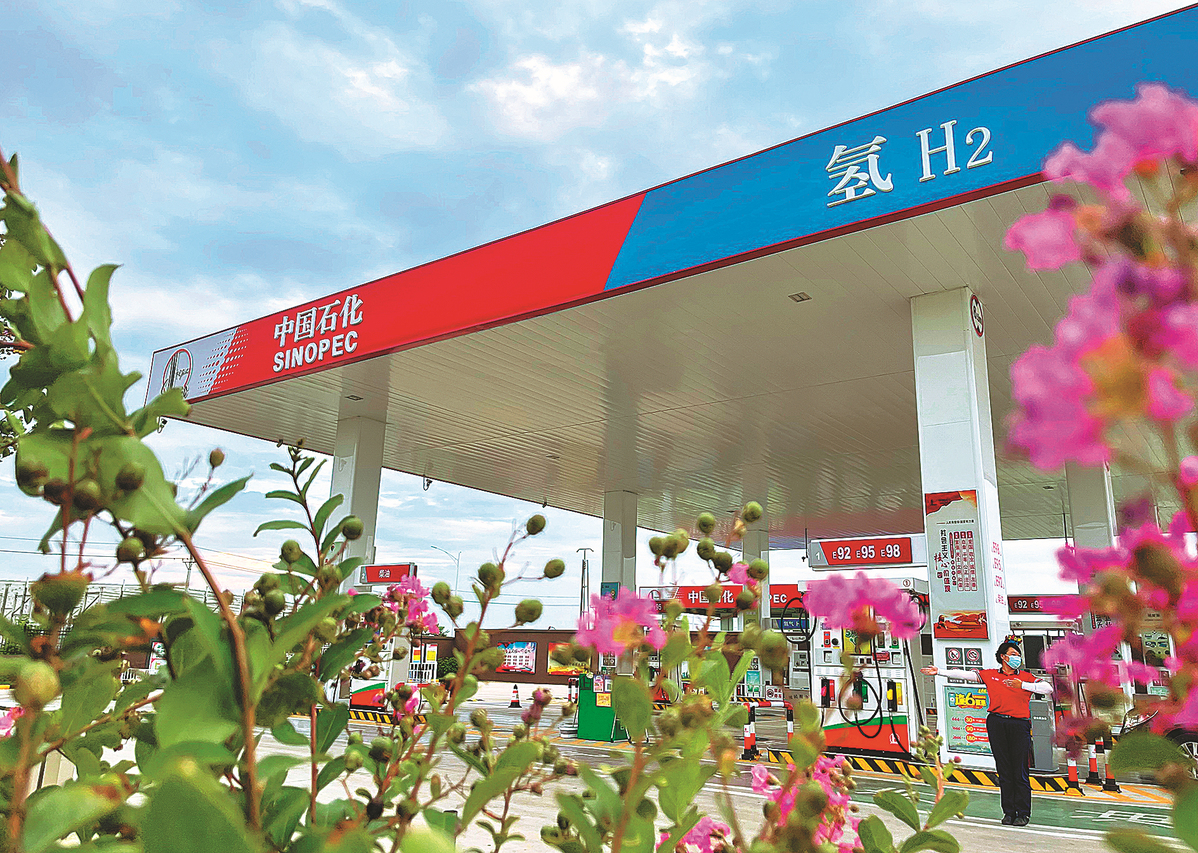
Echoing these views, Zhang Qingsheng, executive director of Sinopec Zhongyuan Oilfield under China Petroleum and Chemical Corp, called for a more integrated approach to green hydrogen development.
Zhang highlighted the need for a top-down strategy to ensure coordinated growth across the entire hydrogen value chain.
"China's hydrogen industry has entered a rapid development phase, supported by a series of policy measures. The Energy Law introduced last year officially included hydrogen in China's energy management framework, representing the chemical's huge development potential and scalable application scenarios," he said.
According to the China Hydrogen Alliance, China's hydrogen demand is projected to reach 60 million tons by 2050, with an industry value of 12 trillion yuan ($1.67 trillion), accounting for over 10 percent of the national energy mix.
However, Zhang also noted that several challenges remain, including inconsistent policy guidance across different regions, insufficient resource allocation for green hydrogen projects, as well as high production costs and limited market competitiveness.
To address these challenges, Zhang proposed strengthening national hydrogen planning, enhancing supply chain collaboration and expanding hydrogen applications.
He also called for accelerating construction of hydrogen pipelines to connect resource-rich regions with high-demand areas, thus ensuring cost-effective and large-scale hydrogen distribution.
By leveraging policy innovation, financial incentives and industrial collaboration, China is expected to solidify its leadership in the global green hydrogen economy.