


The poetry of prose in music









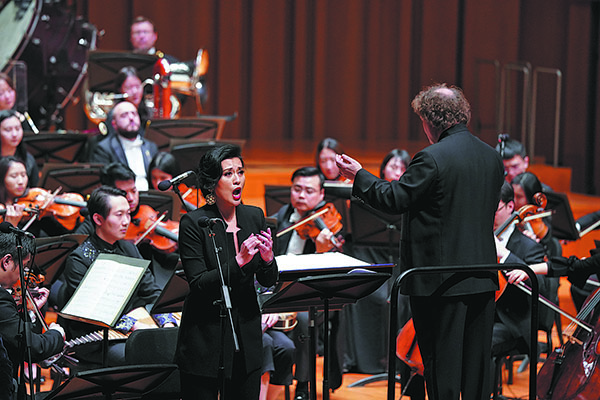
Symphonic tribute to Lu Xun seeks to capture writer's insight and enduring contribution to modern Chinese society, Chen Nan reports.
At just 17, composer Ye Xiaogang purchased the complete works of Lu Xun (1881-1936) with his first paycheck and became deeply engrossed in the writer's ideas.
Born Zhou Shuren, Lu Xun is often regarded as one of the most influential figures in modern Chinese literature. This early connection to Lu Xun's writing profoundly influenced Ye's creative path, culminating in his monumental tribute to the writer, Symphony No. 5 Lu Xun.
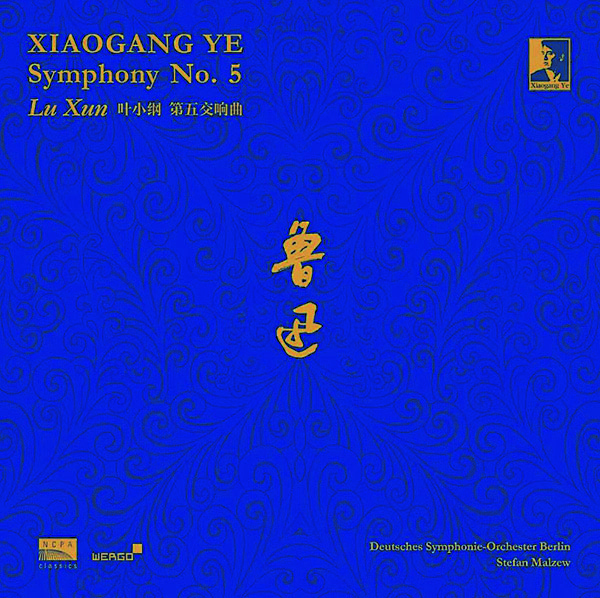
In a fusion of Chinese literature and the Western symphonic tradition, Ye has composed a musical masterpiece that brings to life the themes and characters of Lu Xun's vast literary landscape. Released by NCPA Classics and distributed under the Wergo label by Schott Music, this symphony is a deep meditation on the writer's intellectual legacy.
"For me, the composition of this symphony was deeply personal, as I have long admired Lu Xun's writing," the 69-year-old said at the National Centre for the Performing Arts in Beijing on March 15. "I am particularly drawn to his ideas on national spirit and Chinese identity." Over the years, he visited key locations connected to the writer, including his former residences in Shaoxing, Zhejiang province, and Shanghai, as well as the Lu Xun memorial museums in Beijing, Shanghai, and Shaoxing.
"These visits only fueled my desire to write this symphony, as they helped me understand the deep impact of Lu Xun's work on society and culture," Ye says.
Born into a large and wealthy traditional family, like many intellectuals seeking solutions to China's problems, Lu Xun first studied medicine in Japan. He later abandoned this path to become a writer, in the belief that his writing would be a more effective means to contribute to saving the country.
In his work, Lu Xun displays a deep understanding of psychology and the complexities of personal and collective identity. His characters often struggle with social constraints, personal despair, and a lack of self-awareness — reflections of the broader struggles of Chinese society during his time. Through stories like The True Story of Ah Q, A Madman's Diary, and Kong Yiji, Lu Xun depicted the tension between traditional values and the yearning for social change.
Ye describes the writer as "a light that never fades," a figure who not only created meaning in life, but also allowed others to experience the profound truths hidden in the universe.
"Perhaps this is my most important work," he says. "I wrote feverishly, with great excitement and eagerness, anticipating the moment it would come to life."
Born into a family of musicians in Shanghai, Ye began learning the piano when he was 4. At 23, he moved to Beijing to study at the Central Conservatory of Music. Together with peers, including Tan Dun, Zhou Long and Qu Xiaosong, he became part of the first generation of Chinese composers recognized by Western audiences.