Embarking on AI path with Chinese style
Wider applications in NEVs, retail and healthcare to unleash creativity of digital economy









China's progress in artificial intelligence has jolted the tech world, with the meteoric rise of Chinese AI large language model DeepSeek set to challenge Silicon Valley's dominance due to the former's cost-effective and open-source approach, which is inspiring wider application of the technology by companies across various sectors.
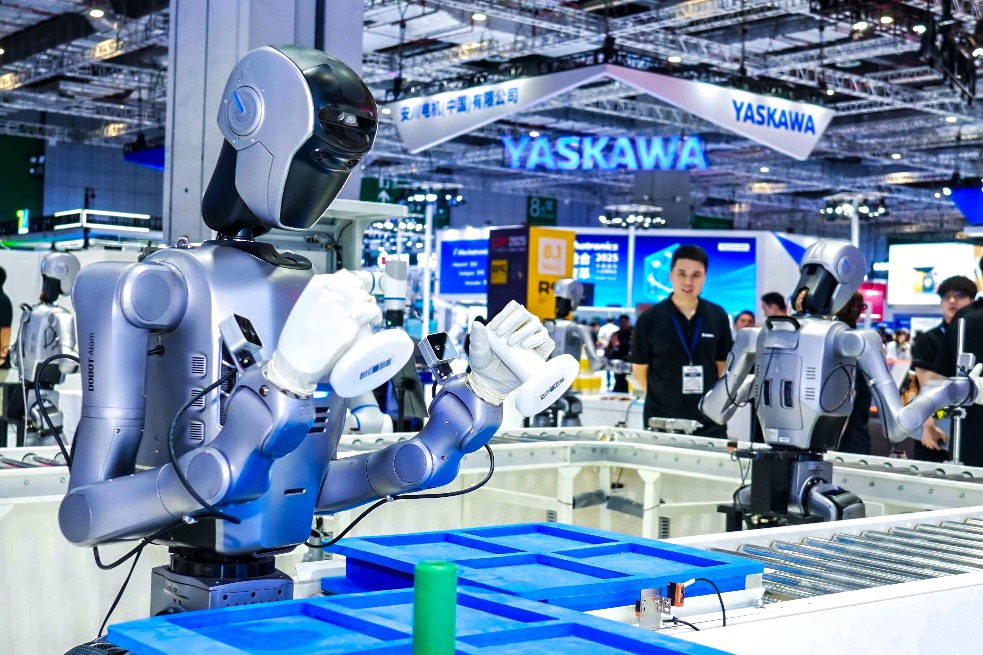
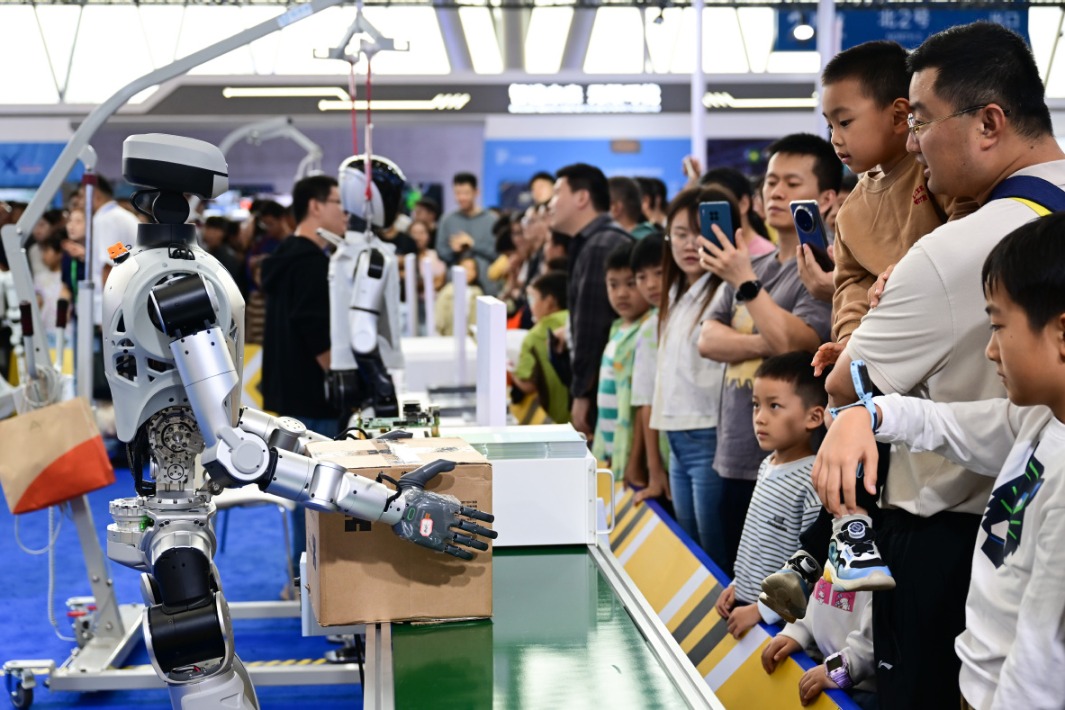
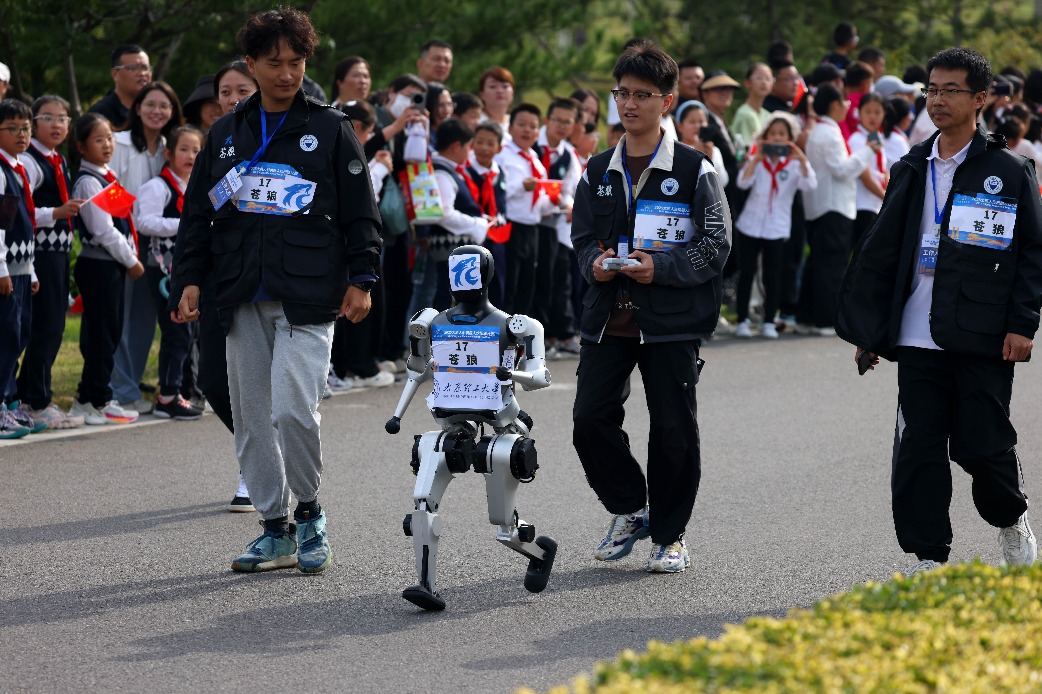
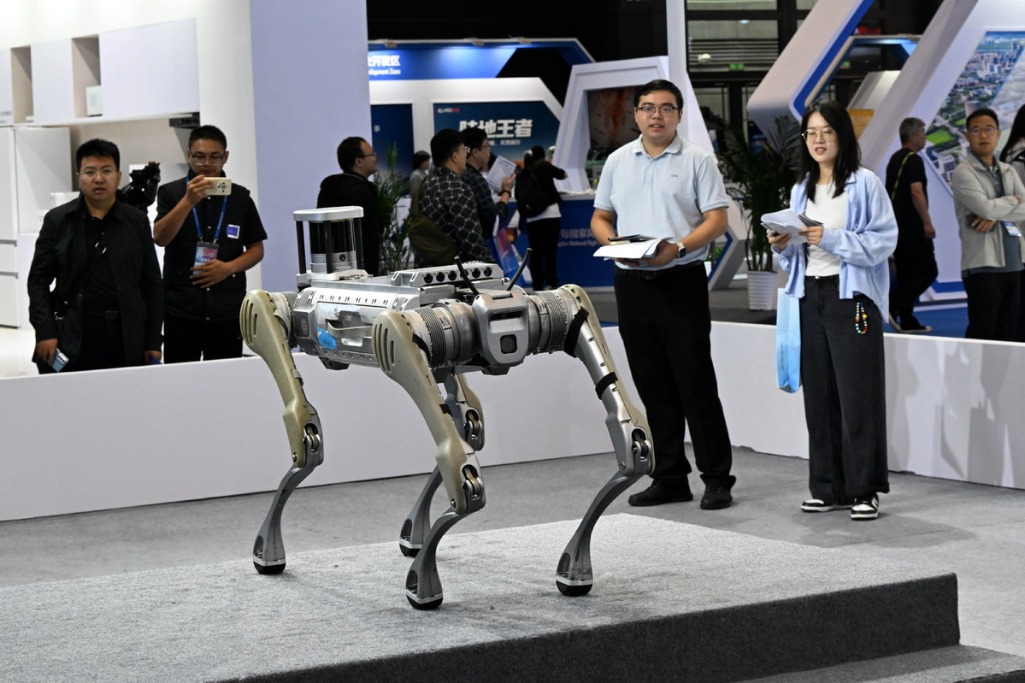
Humanoid robots from Unitree Robotics, performing a synchronized yangge dance during the nationally televised Spring Festival Gala — China's most-watched TV show — showed their elegant technical charm.
"Making a friend", a Chinese livestreaming studio, reportedly sold products worth 330 million yuan ($45.4 million) on March 8 by using DeepSeek, claiming in a Weibo post that "it is the result of our deep exploration and innovative application of AI technology".
Premier Li Qiang said in the Government Work Report, delivered during this year's two sessions, that China's technological capabilities continue to rise, and called for unleashing the creativity of the digital economy.
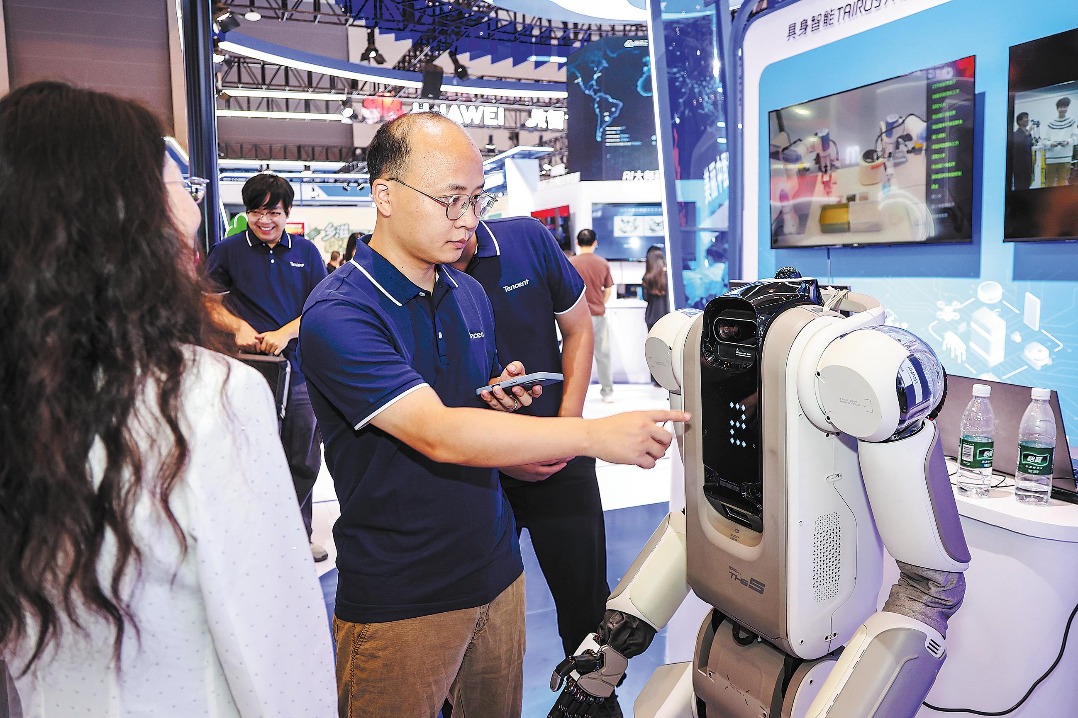
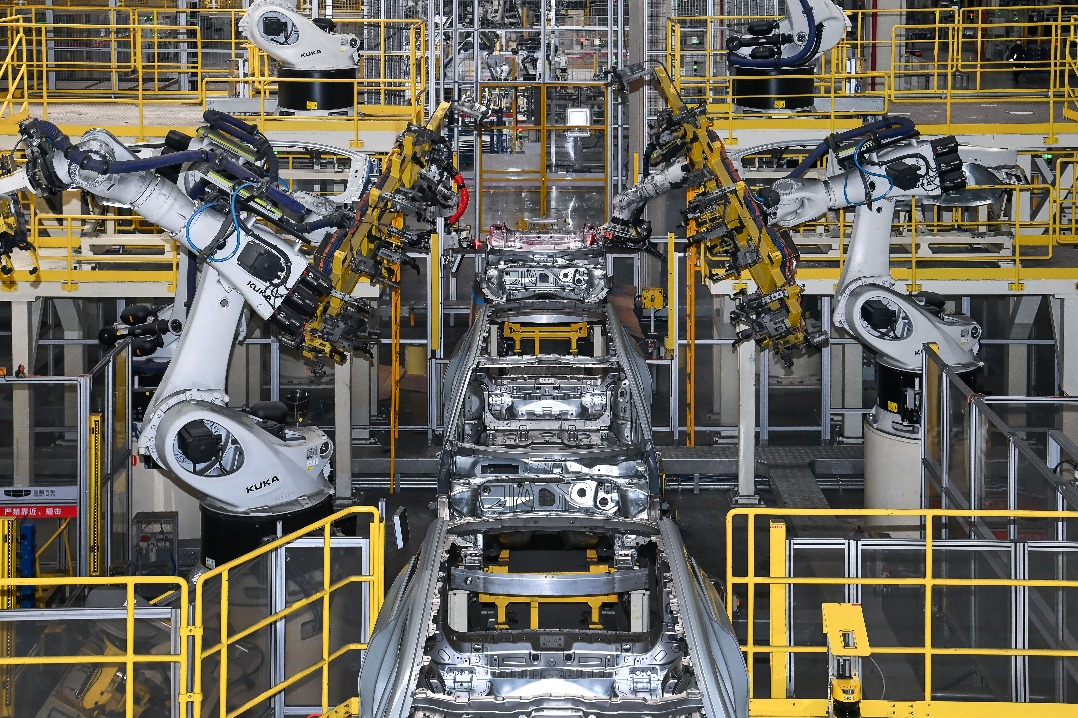
Under an AI Plus initiative, Li said: "We will support the extensive application of large-scale AI models and vigorously develop new-generation intelligent terminals and smart manufacturing equipment, including intelligent connected new energy vehicles, AI-enabled phones and computers, and intelligent robots."
Ubiquitous AI
Beijing resident Wang Hui owns a Nio electric vehicle, equipped with automatic driving assistance functionality.
Wang said that after getting on an expressway, she once switched to automatic assisted driving for a try.
"As long as you hold onto the steering wheel and keep your eyes straight, it's really easy to drive for hours without feeling tired," she said, noting that once, when a car in front of her came to a sudden stop while she was lost in thought, her Nio also came to a sudden stop thanks to its automatic emergency braking.
"It really gave me a great impression," she said.
A survey conducted in Wuhan, Hubei province, showed that more than 90 percent of respondents believe autonomous driving is safer than human driving.
NEV maker BYD announced in February that it is equipping its entire lineup with its Advanced Driving-Assistance System. Among its functions, the system enables vehicles to drive themselves on expressways and to park automatically.
The Beijing Economic-Technological Development Area recently announced that it had officially upgraded its intelligent patrol system by integrating unmanned patrol cars and robotic dogs with AI algorithms and big data analysis, to provide 24-hour full-coverage patrols throughout the area.
According to Baidu, a leading AI company with a strong internet history, AI can cover several categories — rule-based AI, machine learning, deep learning, natural language processing, computer vision, speech recognition, robotics technology, expert systems and evolutionary computing.
AI is vital to improving production efficiency and quality of life, as well as bolstering economic development, scientific research and technological innovation, in addition to elevating industrial transformation and environmental protection, said Ma Xiangbin, a Beijing-based data analyst.
According to Zhou Bowen, director of Shanghai's Pujiang Lab, AI has two dimensions — speciality and generality. And Guo Wei, chairman of Digital China, believes that in future AI development, the key lies in achieving both.
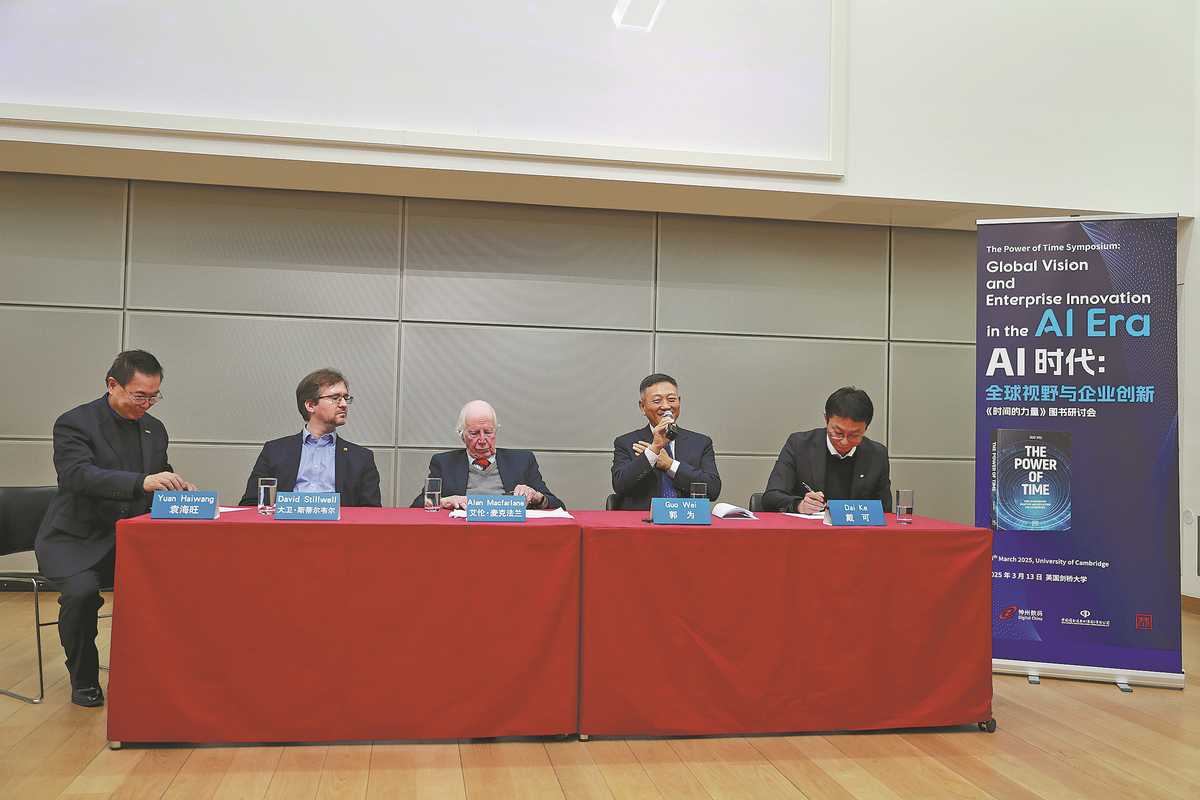
"In the digital transformation of enterprises, we not only need to maintain the versatility of large language models, but also tailor it to the needs of specific industries and enterprises across multiple aspects, including computing power, models, enterprise knowledge and intelligent agents, to achieve the 'integration of generalization and specialization'," said Guo at a seminar held at Cambridge University on March 13.
When Guo founded Digital China in 2000, he wanted it to help bolster the country's digital transformation.
Riding on the wave of China's industry transformation, the company has emerged from the periphery to the forefront of the IT sector, said Guo in the foreword to his book The Power of Time, the English version of which was launched at this year's London Book Fair.
With over 6,000 employees, including some 2,600 engineers, Digital China achieved an annual revenue of $16.5 billion in 2023.
"Today, AI-powered data-cloud integration is the future direction of digital technology development," Guo said.
Redesigning businesses
"AI has already achieved great success and played a significant role in the field of scientific research," Guo said, adding that the continuous evolution and interaction of technological paradigms, business models and management methods, is the core driving force for building new engines in the digital era.
According to Ma, Chinese companies have showcased a wide array of cutting-edge products integrating AI into every aspect of connectivity and smart devices.
AI technologies have evolved into "fundamental infrastructure and a core capability that fully enables economic and social transformation", said He Biao, executive director and CEO of China Mobile, during the 2025 Mobile World Congress in Barcelona, Spain, in early March.
"We must recognize that developing specialized models is not an easy task," as it entails large-scale investment, Guo said, noting that "For most industries, enterprises, and even entire cities, such investment seems too heavy."
In a bid to allow more enterprises to embrace the achievements of AI, a feasible path has to be sought, he said. Digital China has released its own Smart Vision, an AI native empowerment platform intending to better interact with its 30,000 plus business eco-partners and over 300 tech eco-partners.
It integrates four powerful features — computing power management and scheduling, knowledge governance, model training and management, and AI-native application development — creating an iterative AI development environment for enterprises.
Wider applications
Headquartered in Tianjin, Tasly Pharma is a globalized Chinese medicine enterprise, with over 20 research centers worldwide and 11 production bases throughout China.
Dedicated to cracking the digital code of life medicine, Tasly has completed its intelligent transformation with the help of Smart Vision, trying to set up a new benchmark in the pharmaceutical sector.
Tasly established its Botong Q&A system, which can effectively convey knowledge of traditional Chinese medicine with an accuracy rate of over 90 percent, helping its sales staff members quickly meet customer needs.
Meanwhile, it can also support its 20,000 employees spread across 26 provincial-level regions in their daily work, in addition to optimizing its internal management processes and rules.
Smart Vision has released its DeepSeek version, aiming to break the four core pain points — data security anxiety, innovation adaptation dilemma, lack of application scenarios, and high trial-and-error costs and computing power costs — accelerating the deployment of DeepSeek for enterprises.
In addition to the pharmaceutical industry, Smart Vision has also witnessed achievements in real estate, e-commerce shopping and retail banking, Guo said.
Partnering with a retail e-commerce shopping platform, Smart Vision has also achieved precise identification of more than 10 types of purchase intent in e-commerce business. And in the retail banking business, Smart Vision has helped significantly improve customer experience and operational efficiency, he said.
Path with Chinese style
Ma stressed that the popularization of AI computing power will greatly activate China's innovation capability in AI applications, presenting both opportunities and challenges.
As a major country in data supply and consumption, China has created enormous opportunities for the sustainable development of AI, he said.
"We have seen the innovative capabilities demonstrated by DeepSeek, and amid its peers, it has embarked on a path with Chinese characteristics," Guo said, adding that through a "less is more" approach, it lowered technical barriers for businesses with its open-source format and drastically reduced costs.
"This is also DeepSeek's most significant value — driving the inclusivity of AI," he added.
David Stillwell, a professor of computational social science and deputy director of the MBA program at Judge Business School, University of Cambridge, said the success of China's AI models broke the assumption that powerful chips are must-haves in creating powerful AI.
"The brilliant thing about DeepSeek is it makes its methods available publicly," said Stillwell. "I spoke to computer scientists who spent the weekend looking at the research paper from DeepSeek, and found it has genuinely come up with new ways of doing things that have made it possible with fewer chips."
Stillwell added that since the vast majority of their research scientists have been trained in China, it shows that China has the expertise to create cutting-edge algorithms.
"This is good news for the world, because I think a world with only US control and power with AI is very dangerous," he said. "I hope that Europeans are also inspired by this because it will be good if there was more AI being developed in the UK and other places in Europe as well, so there isn't total control over this technology by one company or just one country."
Alan Macfarlane, emeritus professor of anthropological science, life fellow of King's College, Cambridge, and a fellow of the British Academy, said Chinese civilization is not confrontational and aggressive, which is vastly different from the Western approach.
Macfarlane said if China can utilize artificial intelligence and successfully address the potential social issues that AI brings, then the outlook on the future will be optimistic.
"Therefore, I believe the Chinese people will certainly go out on a different road for AI development — a path with its own characteristics," Guo said.
Contact the writers at tanguoling@chinadaily.com.cn