


Relaying tradition in the digital era
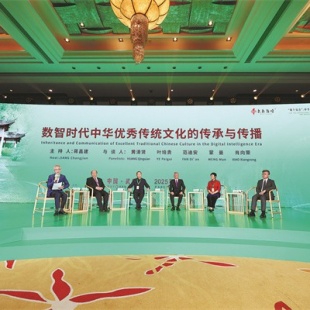
Pitfalls and potential of using AI to open up and explore national heritage discussed at forum, Yang Feiyue reports in Wuyishan, Fujian.









Built on those premises, he believes the digital revolution can open up opportunities for cultural exchange.
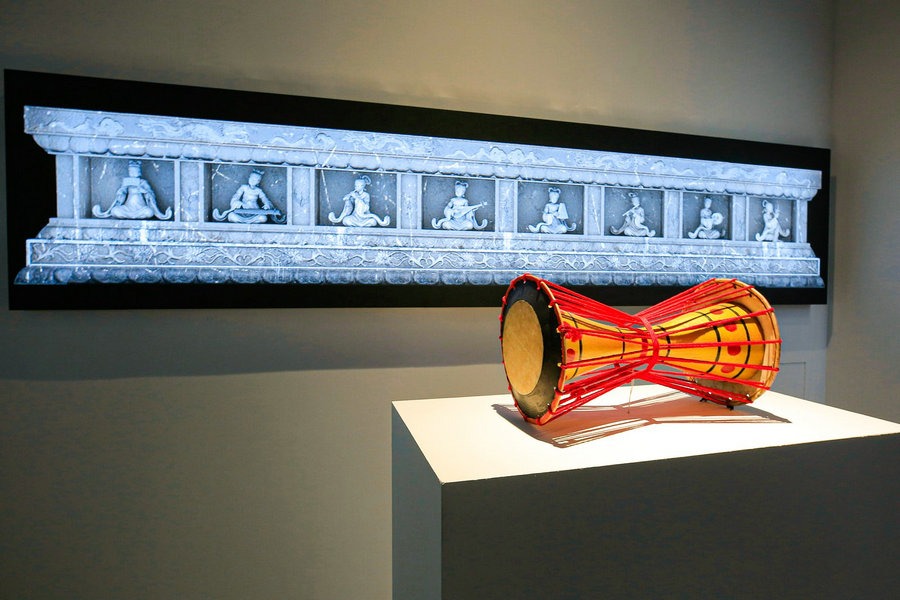
Fan points to the transformative impact of digital technologies on the stage, screen, and visual arts, as well as on the preservation of intangible cultural heritage, and appreciates the way digital technology enables the exploration of ancient art in manners that were not possible before.
"Today when we see the Dunhuang murals, the caves have been digitally re-created to reveal intricate details, vibrant colors, and even the dynamic movements of the flying apsaras. It's like stepping back into the Dunhuang era itself," Fan says.
He also says that digital tools have revolutionized the way people enjoy classical Chinese paintings.
"In the past, we could only admire these masterpieces from a distance. Now, we can zoom in to observe the finest details," he says, adding that these immersive digital experiences allow people to connect with tradition.
Ye Peigui, professor at the Capital Normal University and a well-known calligrapher, acknowledges the potential of digital technology in preserving and disseminating calligraphy, but expresses reservations about its ability to fully replicate the art.
While machines can simulate the brushstrokes, they struggle to capture the essence and uniqueness of human expression, he says.
He suggests exploring ways of bringing calligraphy to the forefront, to make its presence felt in every cultural space.
"Calligraphy is deeply embedded in every facet of Chinese culture, yet it often goes unnoticed. People may admire the physical artifacts (the scrolls, the ink, the paper), but they overlook the characters themselves," he says.
Ye also highlights the hands-on nature of calligraphy in education in the digital era.
"Calligraphy is a very practical art. To truly appreciate it, one must pick up the brush and write. The act of writing creates a powerful connection," he explains.
Xiao Xiangrong, dean of the School of Arts and Communication at Beijing Normal University, cautions against overreliance on AI, despite its transformative potential.
"AI, like cameras and film before, is ultimately a tool. What matters most is the person using it," he says.
"However, the rise of AI is also a wake-up call for artists. We cannot afford to be ordinary; we must strive to be unique. This brings us back to the essence of art itself," he adds.
Xiao emphasizes that AI's true potential lies in helping us explore the future. He expresses excitement about the possibilities of storytelling in the digital age and calls upon other artists to not only embrace technology, but also to ensure that it serves their creative vision.
Huang Qingxian, professor at the Zhou Enlai School of Government, Nankai University, underlines the importance of leveraging digital intelligence to preserve and promote China's cultural heritage while fostering cross-cultural understanding.
He recommends data-based systematization of China's UNESCO intangible cultural heritage listings to create a foundation for deeper exploration and understanding.
"Once systematized, digital tools can be used to analyze and interpret the complexities of Chinese culture," he says. This opens up more approachable and engaging access to its depth and richness, even to those unfamiliar with its nuances.
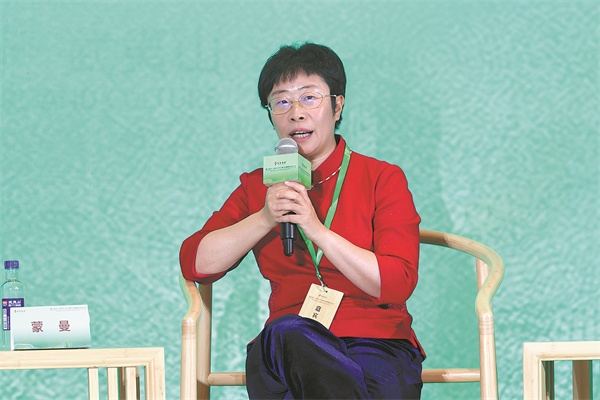
In terms of the future of cultural transmission, Meng says that those involved must hold onto lofty and transcendent ideals, and trust in the shared imagination of humanity, such as the universal dreams of beauty and harmony that connect all people.
"It is the foundation of our exchanges, our dialogues, and our shared destiny as a community. If we ever lose this, we lose our path. But as long as we believe, the way forward will always reveal itself," she says.
Meng also proposes approaching cultural transmission with a sense of ease and accessibility.
She points out that even Song Dynasty (960-1279) philosopher Zhu Xi, with his deep knowledge and philosophical insights, believed that the simplest expressions — like a song — could convey profound truths.
Similarly, when the treasures of Chinese culture are presented with ease and openness, everyone can understand the "few notes of wisdom", she says.