Plush toy appeal intensifies among youth
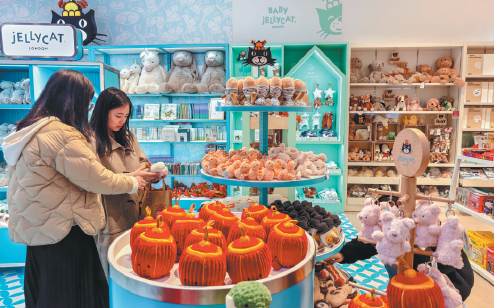
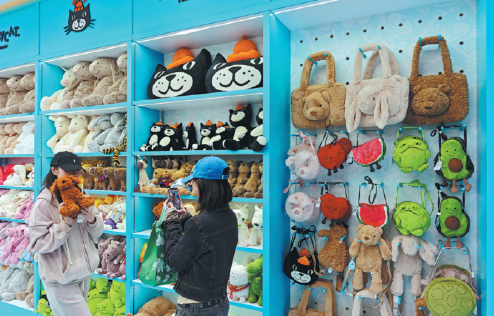
Many consumers embracing these soft and cuddly products as lifestyle companions, often taking them along to class, meals, work, and while traveling









A normal-sized plush toy retails for around 50 yuan ($6.9) on average in China. However, a 31-centimeter version plush toy from London-based toymaker Jellycat is priced at 399 yuan or more, and flies off the shelves the moment it becomes available.
These soft and cuddly toys have managed to transcend the traditional toy market, appealing to the emotional and psychological needs of young adults who are increasingly seeking comfort, companionship and a sense of self-expression through their purchases, analysts said.
Jellycat's products are defined by two key characteristics: instantly recognizable features like button eyes, tiny feet and endearing smiles, as well as whimsical, anthropomorphic designs that bring the plush toys to life.
Its social media accounts have a unique way of addressing their plush toys, referring to them as "furry friends" and "retired employees "when products are discontinued. The brand regularly shares the "daily lives" of their characters, even running "employee of the month "contests.
By cultivating an immersive brand world, the company has managed to forge strong emotional bonds with its consumers, who believe that their Jellycat friends possess genuine personalities and souls, said Zhu Keli, founding director of the China Institute of New Economy.
For Weng Huayu, a sophomore student at Beijing Language and Culture University, the connection to her Jellycat plush orange she bought in 2023 goes far beyond a simple purchase. Weng, who goes by the online nickname "Big Orange", felt an instant kinship with the toy.
"I felt like there was a special bond between us," Weng said. "I started bringing it to class with me, and now I take it everywhere. I've really grown to love it."
In Weng's eyes, her Jellycat plush orange has a warm, easygoing personality. "It's a bit naughty as well — it often runs away when I try to take photos of it. It loves to play hide-and-seek and will hide in real orange piles. It also enjoys traveling, and we've been to many places together."
During her travels, Weng always makes sure to take plenty of photos of the plush toy with the scenic backdrops and posts those in her WeChat moments.
On social media platform Xiaohongshu — also known as RedNote — users like Weng who treat Jellycat plush toys as children are far from uncommon. Many consumers have embraced Jellycat products as lifestyle companions, taking them along to class, meals, work and while traveling.
Some have even gone so far as to create dedicated social media accounts for their Jellycat plush toys, chronicling the "daily lives" of these furry companions.
Zhu said that Jellycat's ability to imbue its products with distinct personalities and backstories has been instrumental in fostering these deep, almost anthropomorphic bonds between consumers and the plush toys.
"By creating a sense of individuality and lifelike features around their products, Jellycat has enabled consumers to see these plush toys as more than just inanimate objects, but also as friends, companions, and even extensions of their own identity," Zhu added.
This user-generated content has become a powerful marketing tool.
Each post, photo or video is not just an advertisement — it's a personal story that resonates with others. These stories, amplified by social media algorithms, create a ripple effect, inspiring others to buy into the same emotional experience, Zhu said.
As of Feb 21, a search for "Jellycat "on Xiaohongshu yielded over 1.69 million posts. Moreover, during last year's "Double 11" online shopping spree, which took place from Oct 31 to Nov 11, Jellycat's store on Alibaba's e-commerce platform Tmall saw sales exceed 100 million yuan.
In addition to e-commerce platforms like JD.com, Tmall, and Xiaohongshu, Jellycat — unlike many global brands — has no self-operated brick-and-mortar stores in China. Instead, it relies on third-party retailers, including maternal stores, bookstores and coffee shops, often operated by well-known chain brands.
"Authorized dealers are finding it quite challenging to maintain adequate inventory, often having to scramble to secure the latest Jellycat releases and popular items," said Chen Yingjie, owner of a bookstore in Shanghai. "My store needs to restock Jellycat merchandise every one to two weeks."
The competition to get hold of the most sought-after Jellycat toys is intense, both at the consumer and retailer levels. This dynamic has spawned a thriving secondary market, where resellers are able to mark up prices, sometimes even doubling from the original rates, to meet overwhelming demand from consumers, Chen said.
It remains unclear whether Jellycat's persistent supply shortages are a deliberate tactic or an unavoidable challenge, but one thing is certain: the brand's immense popularity and innovative product offerings have been established in the Chinese market, Chen said.
The growing acceptance of toy ownership in China is also seen in the latest financial results of Pop Mart, a leading Chinese trend toymaker. In its 2024 interim report, the company reported revenue of 3.21 billion yuan from the Chinese mainland, representing a 31.5 percent year-on-year increase.
Pop Mart has even expanded into the theme park business, opening its first in Beijing in 2023. Pop Land — a 40,000-square-meter theme park — offers a chance for fans to take pictures with the toymaker's flagship characters in different settings, ranging from a European-inspired white castle to a leafy tree house.
Pop Land tickets sell for 150 yuan during weekdays and 180 yuan during peak periods. A combo ticket is available at 299 yuan for those hoping to join an immersive experience with its flagship characters.
People are moving away from the outdated perception that toys are solely for children, and embracing the idea that people of all ages can find enjoyment, fulfillment and value in these products, said Jiang Han, a senior analyst at market consultancy Pangoal.
The success of brands like Jellycat and Pop Mart comes at a time when Chinese consumers have evolved beyond the traditional emphasis on the practical use of a product. They are now actively seeking out items that can provide them with a sense of emotional fulfillment, cultural connections and social signaling, Jiang said.
According to a report released by the China Consumers Association in May, in addition to seeking value for money, emotional release and fulfillment are set to become important factors in influencing the purchasing decisions of the younger generations of Chinese consumers.
Raising a child or pet requires a significant investment of resources that many young people simply cannot afford. Plush toys, on the other hand, offer a low-maintenance alternative that can provide a sense of emotional fulfillment without the same level of financial and time commitment, Jiang said.
As the influence of this new consumption mindset continues to grow, Jiang noted that the competition among brands will increasingly center around their ability to deliver products and experiences that can forge genuine, lasting emotional connections with their target audience.



Today's Top News
- New Year's address inspiring for all
- Xi congratulates Science and Technology Daily on its 40th anniversary
- Xi congratulates Guy Parmelin on assuming Swiss presidency
- China Daily launches 'China Bound'
- Manufacturing rebounds in December
- PLA wraps up military drills around Taiwan