China will 'fight till end' in trade war









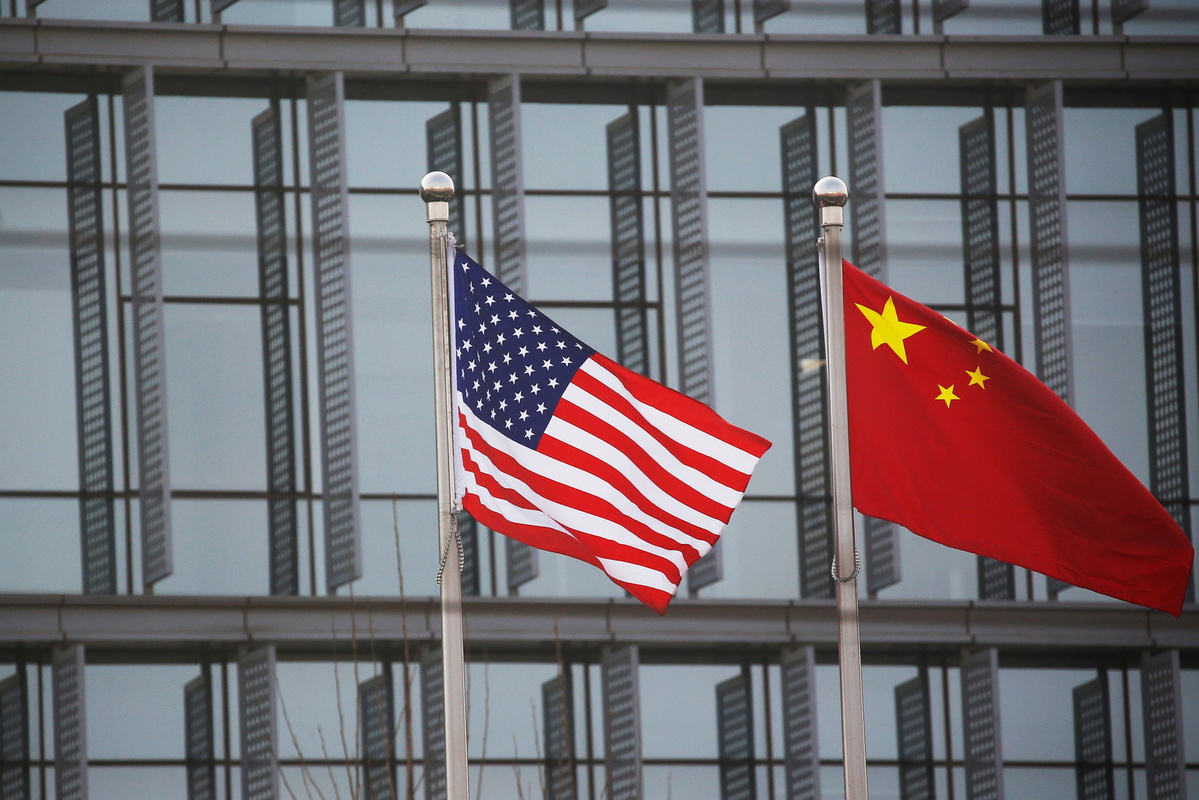
China has repeatedly emphasized that threats, tariffs and sanctions do not work and are instead counterproductive. However, the United States administration insists on going down the paths of unilateralism, protectionism and economic bullying in its bid to contain China, ultimately setting off a trade war.
The White House last week confirmed that it has raised tariff rates on Chinese imports to as high as 145 percent. Although it was later revealed that the US had excluded smartphones, computers, and other consumer electronics from tariffs, US President Donald Trump then denied there would be exceptions for those products.
A century of oppression by foreign powers has taught China that concessions and compromises arrived at through bullying ultimately lead to disgrace. Thus the new US levies will only strengthen the Chinese people's resolve to resist and "fight till the end", as pledged by China's Ministry of Commerce.
Trump should remember the debacle the trade war against China resulted in during his first term, when stiff Chinese resistance against high tariffs and sanctions dashed all hopes of slashing the US trade deficit.
According to data from the US Census Bureau, the country's total trade volume in 2017 was $3.8 trillion, with a trade deficit of $792 billion. In 2024, its total trade was worth $5.33 trillion, and the trade deficit ballooned to $1.2 trillion. Simultaneously, bilateral trade between the US and China shrank from $635.2 billion in 2017 to $582.5 billion in 2024. The trade deficit followed the trend and shrunk from $375.2 billion in 2017 to $295.4 billion in 2024. The figures clearly show that the US trade deficit continues to grow despite tariff increases.
This time, despite the US administration targeting almost all of China's trading partners, it will still be impossible to achieve the desired results.
The US tariffs are blatant violations of free-trade principles and rules, especially those of the World Trade Organization. For decades the world has been on the free trade track with continuous efforts made — largely led by the US — to cut tariffs bilaterally, multilaterally and even globally. By reversing the trend, the current administration is disrupting the economic order the US helped create, betraying the trust the world community had in the US, and profiteering at the cost of everybody else.
The White House is pleased that dozens of countries are seeking deals on tariff cuts under pressure. However, such high-handed bullying may win short-term gains, but will certainly erode trust and moral integrity.
Furthermore, the new wave of tariffs will enhance China's determination to fight back and secure its interests. Past experiences have made China better prepared to face the renewed trade war. Thus it did not hesitate to hit back against the unfair tariffs imposed by the US.
China's swift and resolute responses signal strengthened guard. As the current US administration sharply escalated additional tariffs imposed on Chinese goods, China began responding with restrictions on more rare earth metals and dual-use materials, used widely in the US defense and aerospace industries.
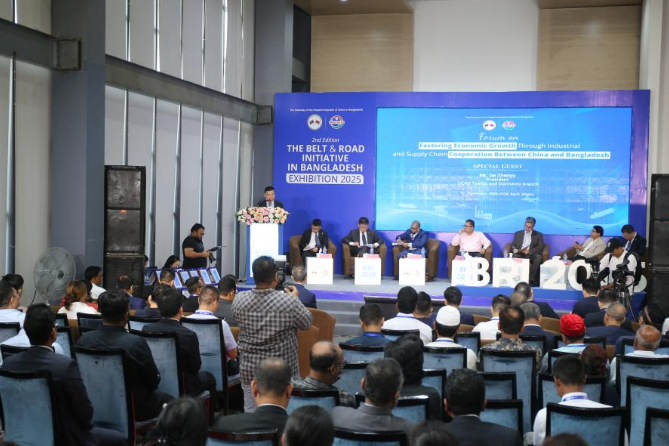
China has been preparing for such turmoil for long and has reached out to other countries to do trade and business in anticipation of adverse changes. Under the leadership of President Xi Jinping, China has invested globally to create alternative avenues and mechanisms, such as the Belt and Road Initiative, China International Import Expo and Asian Infrastructure Investment Bank.
These initiatives are paying off. The BRI has become the world's largest economic and investment initiative with more than 150 participants. CIIE has proved to be a great success, providing over 2,900 new technologies, products and services during the last seven years. This year, it provided more than 120 free stalls for 37 least-developed countries. AIIB is reshaping economic order by adopting principles of sustainability, innovation and prosperity for the people. AIIB functions as intended to deliver an apolitical, constructive, balanced and consensus-oriented decision culture, which is reflected in its funding decisions. India is the largest borrower from AIIB, having received $9.7 billion, followed by the Philippines with about $2 billion.
The resilience of the Chinese economy has vast potential thanks to effective decision-making under a strong central leadership. Multiple events this year, especially the two sessions, or the annual meetings of China's top legislature, the National People's Congress, and its top political advisory body, the National Committee of the Chinese People's Political Consultative Conference, have shown that China is focused on the domestic front to prepare for the future. Policies and mechanisms are at work to strengthen the innovation base, enhance domestic consumption, ensure monetary health and diversify domestic supply chains to face uncertain times.
The US will find it increasingly hard to cope with rising protests at home and abroad against the backdrop of the strong collective will of the Chinese. The US citizens will soon realize they must face the harsh facts by other means: The goal of the administration to make manufacturing return is illusory, judging from the tariffs and high production costs in the US; the wish to reduce US deficits to the minimum by high tariffs will remain just that as it is impossible as deficits result from a number of economic operations embedded with the country itself; and, the White House's threats to suppress China will only turn China stronger and more popular.
Thus the US should refrain from escalating a trade war, which would be a lose-lose proposition that can lead the world toward a recession. The wise policy option would be to immediately engage with China to find a win-win approach for cooperation and solving outstanding issues. It will be beneficial for the US, China and the whole world.
The author is CEO of the Asian Institute of Eco-civilization Research and Development in Pakistan.