



Kenya's bush-to-brew tours









Oldest farm
Located 34 kilometers northwest of the capital Nairobi, on the edge of the Great Rift Valley, about an hour's drive, Kiambethu is the oldest tea farm in Kenya, providing visitors with a glimpse into the early days of tea cultivation in the country. It was established by Arnold Butler McDonell in 1910.
McDonell was the first person to grow, make and sell tea commercially in Kenya, marking the establishment of an industry that currently churns out the country's biggest export product and a major source of foreign exchange. Tea contributes 23 percent of total foreign exchange, according to the Tea Board of Kenya.
McDonell sold his first tea harvest in 1926 to Mabroukie tea factory, marking the beginning of commercial tea production in Kenya. The factory was built by Brooke Bond Kenya in 1924, which played a key role in developing the tea industry in the country through establishing major tea factories and plantations.
In the 1970s, Brooke Bond Kenya expanded its activities to tea estates, factories and hotels and later changed its name to Unilever Tea Kenya.
When McDonell died in 1970, his eldest daughter Evelyn Mitchell took over the management of the farm and introduced guided tours in the 1960s. When she passed away in 1998, her daughter Fiona Vernon followed in her footsteps and carried on with the guided tours to date.
Vernon said over the years, the farm has been downsized from its original 350 acres (142 hectares) through sale and inheritance, to 30 acres, of which two are devoted to tea and 12 are indigenous forest.
A tour of the farm starts at 11 am by having a cup of tea or coffee over which the history of the farm and the process of making tea is outlined.
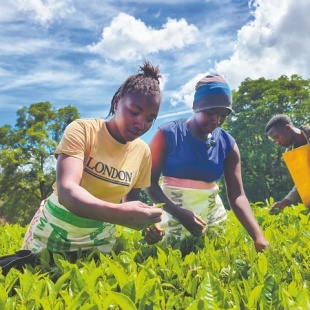
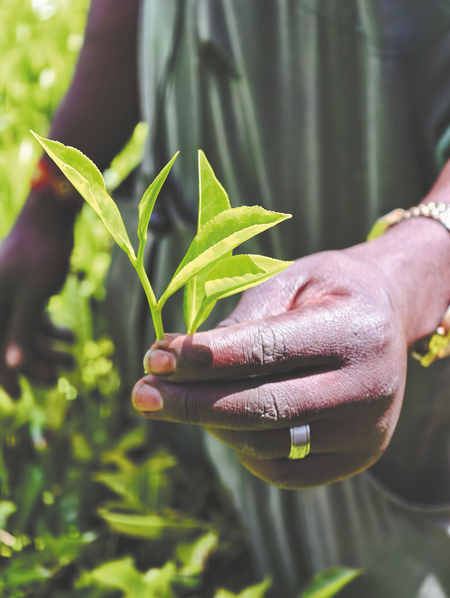
The visitors then proceed to the tea farm where they are taken through how tea plants are nurtured, how tea is picked, grown, fertilized and pruned. They then come back to the house for another cup of tea or coffee and homemade cookies.
Depending on the weather and the size of the group, the visitors sit in the garden, where they get a description of how tea is processed at the factory.
After that session, visitors are taken for a short walk to the farm's indigenous forest by a Kenyan guide who identifies the plants and explains how they are traditionally used. The tourists can also spot colobus monkeys and a wide variety of birds and flowers.
They then return to the house to enjoy a pre-lunch drink on the verandah with sweeping views of the tea fields and the expanse of the Ngong Hills if the sky is clear. A four-course buffet lunch is then served to conclude the tour.
"We usually offer tours from Thursday to Sunday each week. Sometimes we get 50 visitors," Vernon said, adding that the tour fee is $36 per adult covering tea talks, drinks and lunch, $18 for children aged 12 years and under and free for five-year-olds and below.
She said December to March is the peak season, during which they are sometimes compelled to turn down requests because their online booking system takes a maximum of 40, a number they can comfortably accommodate per day.
Vernon said in addition to local visitors, they receive international tourists from the US, European countries such as Sweden, Norway, Germany and France, China, and Japan.
She said COVID-19 pandemic was their biggest challenge as the number of tourists reduced significantly, terming changing weather patterns as the other.
"Tea production is weather-oriented. If there is inadequate rainfall, the quality of tea is usually poor," Vernon said, adding that the advantage lies in the region's high altitude.




















