China Travel Guide: Shanxi









Xiaoxitian Scenic Area (Little Western Paradise)
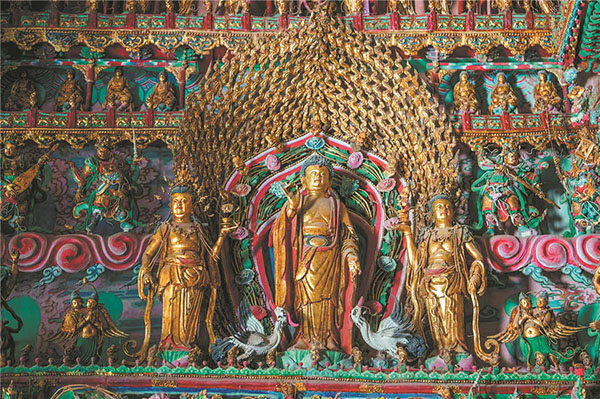
Xiaoxitian (Little Western Paradise) is situated atop Fenghuang Mountain in Xixian county in Linfen city in Shanxi province. Originally named Qianfo Temple, or Thousand Buddha Temple, it was built in 1634 during the Chongzhen reign of the Ming Dynasty (1368-1644).
Xiaoxitian is renowned for its extraordinary suspended sculptures. The main hall, covering just 169.6 square meters, houses over 1,900 colorful, lifelike sculptures - some as tall as 3 meters and others as small as a thumb - meticulously preserved after nearly four centuries.
Xuankong Temple
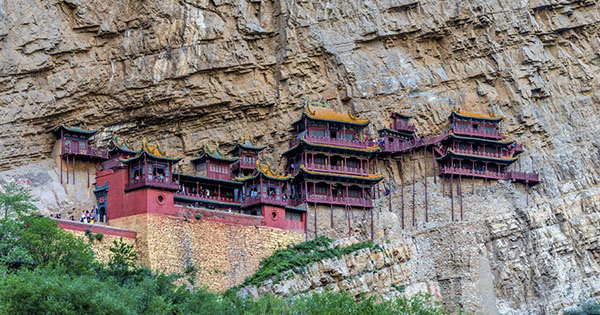
Xuankong Temple, or the Hanging Temple, is built into a cliff at Hengshan Mountain, about 60 meters above the ground. It stands as a cultural landmark of Datong city in Shanxi and a unique example of ancient Chinese architecture.
Constructed during the late Northern Wei Dynasty (386-534), about 1,500 years ago, Xuankong Temple is renowned for its daring location. In 2010, Time magazine listed it as one of the 10 most dangerous buildings in the world.
At first glance, it might seem that the temple is supported by some 30 vertical wooden pillars; the true support, however, comes from horizontal beams embedded in the rock.
Hukou Waterfall
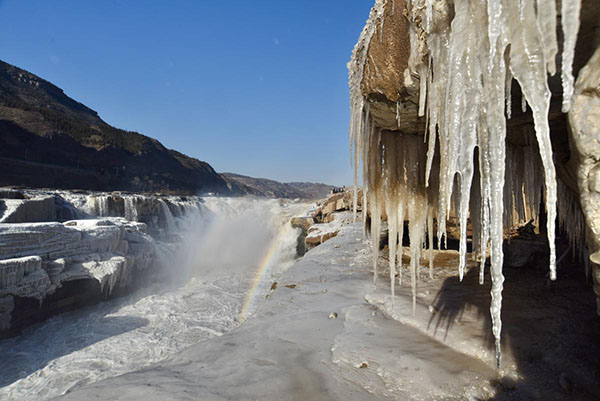
The Hukou Waterfall is a golden waterfall with mobile and subsurface streams. It is formed by the Yellow River running through the Yichuan section of the Qinjin Valley between Shanxi and Shaanxi provinces. The turbulent water stream pours down to the valley and makes for spectacular cascades.
The Hukou Waterfall, with enchanting all-season scenery, is known for its eight great views, namely the "Smoke from the Deep Waters", "Boats Sailing on the Dryland", "Rainbow above the Water", "Exploded Mountain Rocks and Poured Water", "Rain against the Sunny Sky", "Thunder in the Dry Season", "Upside-Down Ice Peaks" and "Tunnel of Running Dragon. Its marvelous landscapes are widely praised and considered a great symbol of the courageous and upright Chinese ethnic spirit.
With the grand waterfall as its major scenery, the tourist area features many other attractions including the Longwangchan Cultural Site (an archeological site of the Old Stone Age), Mengmen Mountain, Dayu Temple, Ancient Ferry Town and live-action performances of The Yellow River Cantata. It was listed as a national geopark in 2002 and a 5A scenic area in 2022.
Wutai Mountain
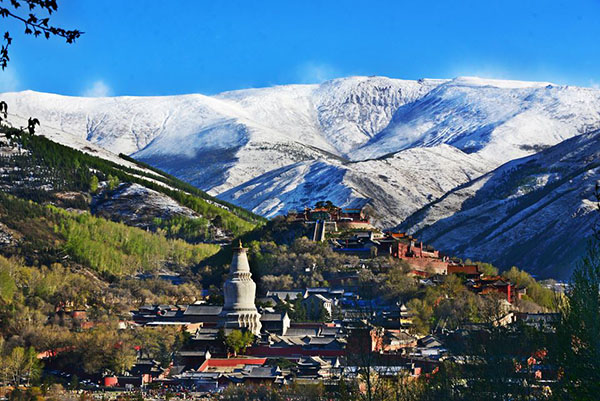
Wutai Mountain sits in northeastern Shanxi province, 230 kilometers from the capital Taiyuan, and is one of the four famous sacred Buddhist mountains of China.
Covering 593 square kilometers, Wutai Mountain is named after its five peaks which resemble five giant columns rising from the earth. Crowded with peaks and cliffs, the cool climate of Wutai Mountain makes it a popular summer tourist resort.
Wutai Mountain is also home to one of China's oldest Buddhist temple sites, which dates back to the Eastern Han Dynasty (25-220) and sits at the feet of towering pagodas.
Wutai Mountain's architecture draws from different dynasties, all of which utilized sculpture, stone inscriptions, frescoes and calligraphy. At the height of the Tang Dynasty (618-907), the area held more than 300 temples and monasteries, but most were damaged or demolished over many centuries.
The area is now home to 41 monasteries, including the tallest surviving Tang Dynasty timber building, the East Main Hall of Foguang Temple and its life-size clay sculptures, and the Ming Dynasty Shuxiang Temple with its 500 statues detailing Buddhist stories and history.
Wutai Mountain generally operates as a tourist destination combining natural scenery, ancient architecture, historical heritage, Buddhist culture, folk customs and elements of a summer resort.
Wutai Mountain was included in 1982 by the State Council in the first tier of national level scenic areas. Over the years, its standing and reputation have grown and it is now regarded as a national key scenic area, national geological park, national natural and cultural heritage location, and national 5A tourism scenic spot. Wutai Mountain was added to UNESCO's World Heritage List in 2009.