China, Africa benefit from sharing governance experience









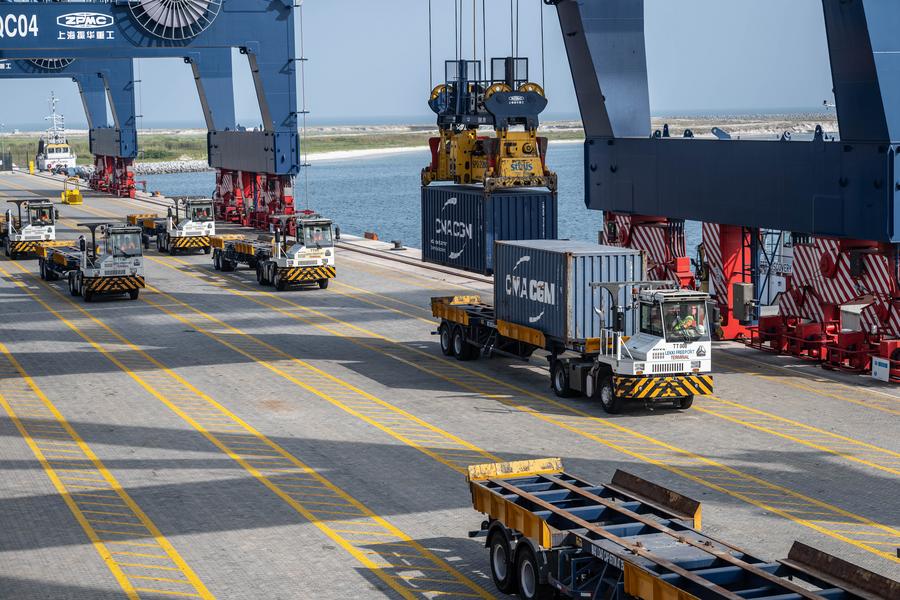
As the world navigates the complexities of development in the 21st century, the relationship between China and Africa continues to evolve as a powerful example of South-South cooperation. Both regions face pressing challenges — ranging from poverty eradication to sustainable growth — but also share a deep commitment to building equitable and resilient societies. In this context, governance becomes a cornerstone of progress.
The exchange of governance experience between China and Africa, therefore, is important. It is an exchange rooted in mutual learning, respect and a shared commitment to achieving sustainable and equitable development. Through such exchanges, African countries can forge a future where modernization delivers not just economic growth, but also social justice, environmental sustainability and peace.
Modernization is a complex journey, unique to each nation's historical, cultural and socioeconomic context. However, beneath these differences lies a universal aspiration: to improve people's livelihood, eradicate poverty and build a resilient society.
China's remarkable transformation over the past decades offers invaluable lessons for African countries. Its experience demonstrates that modernization is not merely about rapid economic growth but also about fostering social equity, institutional reform and good governance.
Mutual learning entails a two-way exchange. African nations offer unique insights rooted in indigenous knowledge, community-driven approaches and resilience, enriching China's development understanding. The African Union's Agenda 2063, for instance, exemplifies successful continentwide planning for inclusive and sustainable progress. Conversely, China's governance strategies, from poverty alleviation to infrastructure financing, provide a valuable blueprint for Africa's equitable advancement.
We must foster open dialogue among policymakers, scholars and civil society, sharing successes and challenges transparently. This deepens our understanding of governance models that balance economic growth with social justice, ensuring modernization truly benefits all, especially the marginalized.
In an interconnected world, no country modernizes in isolation. China's Global Development Initiative embodies this truth, calling for collective effort, shared resources and mutual benefit to accelerate development. African nations, facing diverse challenges, stand to benefit immensely from active participation in the GDI. Aligning our strategies allows us to leverage Chinese experience and investment for infrastructure, health systems, education and sustainable industries.
This joint approach champions openness — embracing investment, technology transfer and policy dialogue — and a win-win mindset, where China and Africa are equal stakeholders in development and growth. Through tailored solutions and collaborative implementation, we accelerate progress while reinforcing solidarity, respect and shared prosperity.
Crucially, modernization must be people-centered. Its true success is measured by the well-being, dignity and participation of citizens. China's remarkable story highlights that it prioritizes people's needs: lifting millions from poverty, expanding education and improving healthcare. African countries, with their rich cultural diversity, have much to contribute to this dialogue. They must champion inclusive development that benefits women, youth, indigenous peoples and marginalized groups. Deepening exchanges among our civilizations and cultures serves as a powerful catalyst for mutual understanding, dispelling stereotypes and building bridges. Modernization that excludes any group undermines its own sustainability.
Finally, modernization demands a peaceful and sustainable path. Global challenges such as climate change and resource depletion necessitate eco-friendly practices. China's experience in balancing rapid growth with environmental sustainability offers valuable lessons for Africa in integrating protection, promoting renewables and fostering green technologies. Equally vital are peace and security. Political stability and social cohesion attract investment, enable reforms and improve livelihood. China's insights into social harmony and conflict resolution through dialogue can benefit African countries striving for stability. Sharing experience in conflict prevention, peace-building and environmental management ensures modernization advances in harmony with nature and society — a future that is peaceful, secure and sustainable.
Namibia deeply values its cooperation with China, a bond forged long before its independence in 1990. China, under Chairman Mao Zedong, offered the South West Africa People's Organisation Party of Namibia and its first president Sam Nujoma vital support, including diplomatic recognition and aid. In turn, independent Namibia swiftly endorsed the one-China principle, providing solidarity and resources during China's late leader Deng Xiaoping's reform era. This profound historical tie underpins our strong political relations and extensive cooperation, fostering win-win economic engagement in infrastructure, mining and development, all rooted in shared history and mutual respect.
The journey to modernization, for both China and Africa, thrives on mutual learning and shared experiences. Our relationship exemplifies the power of solidarity, cooperation and respect for diverse development pathways. As Africa draws inspiration from China's progress, adapting strategies to its unique contexts, China can, in turn, deepen its understanding of Africa's rich cultures and indigenous knowledge, ensuring a truly reciprocal exchange.
This path, despite being challenging, echoes the spirit of China's Long March: a testament to unwavering determination, strategic wisdom and collective effort in overcoming obstacles.
Together, through shared governance experience and initiatives like the GDI, we can build a future of just and equitable development, win-win cooperation, inclusive progress and sustainable peace. Our collective efforts will contribute to a more prosperous, harmonious and sustainable world.
The author is ambassador of Namibia to China. The views do not necessarily reflect those of China Daily.