


Symphony drums to the beat of environmental protection









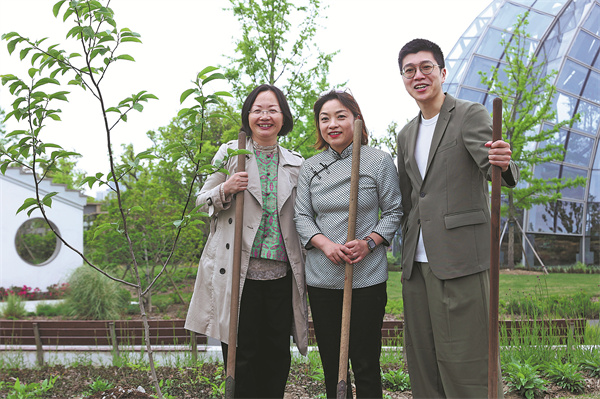
The Shanghai Symphony Orchestra will premiere Trees, a new repertoire with an environmental protection theme, on July 5, during the upcoming Music in the Summer Air festival.
The orchestra has presented the annual festival since 2010 to serve as a crossover event introducing classical music to wider audiences.
The event, featuring the theme "To the Future", will be held from July 1 to 13. It will exhibit the harmonious existence of humans and nature, with the debut of Trees being a highlight.
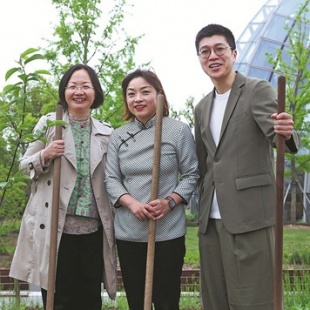
"To Shanghai, a symphony orchestra and botanical garden share people's pursuit for beauty. We decided to use music as a medium to introduce the beautiful botanical world to more audiences," says Zhou Ping, director of the orchestra, at a news conference announcing the partnership between the orchestra and Shanghai Botanical Garden.
Trees is the first fruitful endeavor of this partnership co-commissioned by the two institutions.
"We have advocated ideas about environmental protection and knowledge of plants through garden tours and lectures," says Yan Wei, head of Shanghai Botanical Garden.
"We hope the new symphonic piece can evoke public resonance and inspire more curiosity and closeness to plants.
"Our botanical garden's logo has a tree in the center," she adds.
According to Zhou, in addition to the live performance, the orchestra is contemplating which music to present in the garden.
"We are thinking about immersive concerts or music playback in different spaces to align the melodies with the environment," Zhou says.
Elliot Ho Yat Leung, composer of the new piece, is just 29 years old and the youngest recipient of the prestigious Huabiao Award in China for his score for the film The Battle at Lake Changjin.
His works have been performed by leading orchestras such as the New York Philharmonic and the Hong Kong Philharmonic Orchestra.
His symphonic poem Wuxia premiered at the festival's closing concert last year and his composition Chinese Kitchen debuted in a performance by the Shanghai orchestra last December.
The composer arranged Trees to tell the story of these large, statuesque plants.
"I lived in Los Angeles and had friends who lost their homes in the California wildfires," he says. "I became more aware of the acute environmental crisis we face.
"People might think the loss of a tree means nothing, but the disappearance of stretches of forest begins from the falling of a single tree," he says.
By caring for each tree and everyone making a bit of effort to protect the environment, "we can grow trees to become forests and help mountains turn green again", he says.
"The symphony's first movement is very beautiful, like a meditation. I want audiences to close their eyes and feel it," Leung continues. "When you enter the movement, I slowly cut down the trees one by one …when audiences hear this, I want it to break their hearts."
In the second movement, he portrays a post-apocalyptic world where "the earth is gone", and the following three movements address the importance of taking action.
As a composer, Leung is particularly interested in percussion instruments.
In Chinese Kitchen, he uses the unconventional ocean drum to emulate the sound of prawns frying in sizzling oil.
In Trees, he adopts more exotic instruments, such as slit drums, log drums and a spiral trash cymbal, an unconventional percussion instrument used in many ways to present rich, colorful sounds.
"Percussion instrumentalists are always willing to try new things and new ways to play because there are not as many repertoires for percussion music as for other instruments," he tells China Daily.
"I am interested in the colors of percussion music. Combining it with string and other instruments can achieve endless possibilities for new expressions."