


Instrument at the heart of heritage









Guqin resonates across time as its beauty appeals to a global audience, Chen Nan reports.
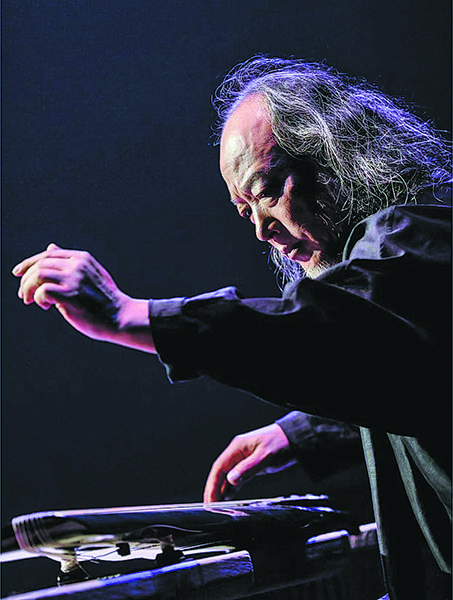
For Wang Peng, virtuoso performer of the guqin — a seven-stringed zither — and master artisan of making the ancient Chinese instrument, its quiet resonance transcends both time and space.
The guqin, with its nearly 3,000-year history, does more than produce music. It is woven into the very fabric of Chinese culture. As Wang often says, the guqin is at the heart of this cultural heritage.
On June 26, Wang will participate in a cultural event at the National Museum of Art of Romania, where he will not only showcase the hauntingly subtle music of the instrument but also share the rich cultural history embedded within its sound.
The guqin was inscribed on UNESCO's Representative List of the Intangible Cultural Heritage of Humanity in 2008.
"Described in ancient texts and confirmed by archaeological findings, this instrument has long been inseparable from China's intellectual history," reads the UNESCO website. "It represents China's foremost solo musical instrument tradition."
Wang, 59, says that "the theme of this event resonates deeply with an ancient Chinese folktale about the guqin, known as zhi yin".
The story, which dates back to the Spring and Autumn Period (770-476 BC), is about guqin musician Yu Boya, who lived alone in the forest. One day, a passing woodcutter named Zhong Ziqi stopped to listen to his playing. The music stirred vivid images in Zhong's mind — clouds drifting and waterfalls cascading — and they quickly became close friends. The term zhi yin describes this kind of ideal friendship, one built on mutual understanding and an emotional connection that transcends words. When Zhong passed away, Yu was heartbroken. In his grief, he smashed his guqin, knowing that he would never find a listener who could so intuitively understand his music again.
"This story reflects the profound connection between performer and listener, bridged by the guqin," Wang explains. "This instrument is not just about sound; it conveys the deepest emotions, a key element of Chinese cultural identity. When we talk about traditional Chinese culture, the guqin is undoubtedly at its core."
Wang is eager for the event in Romania, which he believes will help the audience truly understand and appreciate its subtle beauty.
On the day following the performance, June 27, Wang will also participate in an event at the Chinese Cultural Center in Bucharest, Romania's capital.
A dedicated advocate for the guqin, Wang has spent decades working to preserve and promote this ancient instrument on the global stage. Not only is he a renowned performer and skilled guqin maker, but he also considers himself a modern transmitter of the instrument's profound cultural philosophy.
His passion for the guqin began during his studies at the Shenyang Conservatory of Music in the 1980s, where he developed a deep affection for both the instrument and the literati lifestyle it represents. Wang has since restored over 100 ancient guqin instruments, including several dating back to the Tang (618-907) and Song (960-1279) dynasties. The guqin used during the opening ceremony of the 2008 Beijing Olympics was also crafted by him.
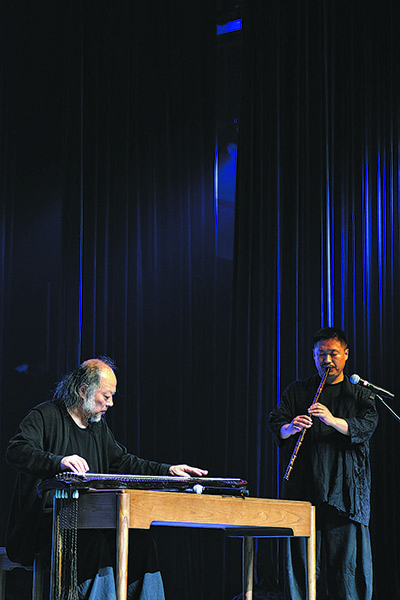
In 2001, Wang founded Jun Tian Fang, a guqin ensemble and cultural heritage center dedicated to the preservation and study of the instrument. The ensemble also serves as a platform for education and cultural exchange.
From 2016 to 2018, Jun Tian Fang collaborated with artists from Australia and England on a music and dance production titled One Infinity, a groundbreaking attempt to share the instrument's unique cultural narrative on the international stage.
"My greatest ambition has always been to craft the finest guqin possible," says Wang. "That was the original inspiration behind founding Jun Tian Fang — to create an instrument with both beautiful sound and elegant form.
"Over time, I've come to realize that the guqin is more than a craft or a musical technique," he says. "It is a cultural vessel rich with philosophy, aesthetics, and deep ideological meaning. That's why Jun Tian Fang is not just a workshop. It's become a center for education, performance and cultural exchange, where we not only build instruments but also share the tradition with people from around the world."
During his visit to Romania, Wang will be accompanied by a member of Jun Tian Fang, xiao player Liu Xiaogang.
Liu is also a national inheritor of the traditional wind instrument that has been used in Chinese music for thousands of years, typically producing a deep, resonant sound.
Beyond performances and speeches, Wang's visit carries a deeper message: the revival of an aesthetic way of life that transcends cultural boundaries.
"The guqin is not just a Chinese treasure; it's a universal invitation to slow down, listen, and reflect," he says. "In a world that often prioritizes speed and spectacle, the guqin offers a space for quietude and depth.