Plastic-free world within reach









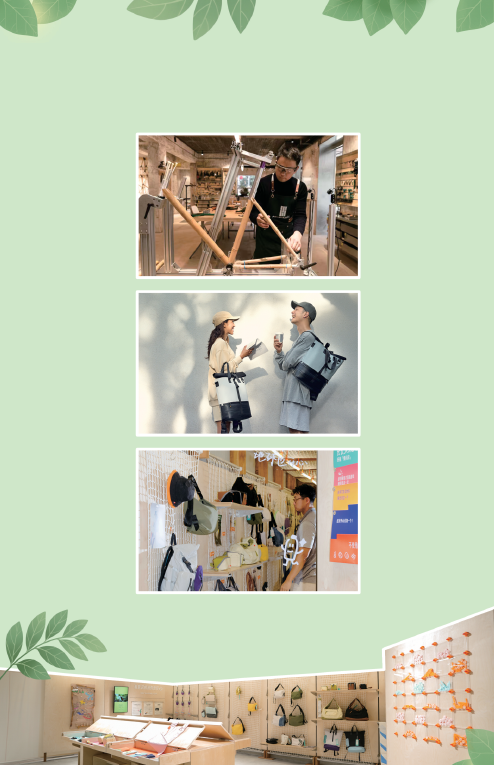
By reimagining discarded materials and embracing sustainable design, these young entrepreneurs are leading the charge against plastic pollution.
This year's World Environment Day (June 5) spotlighted the theme "Ending Plastic Pollution". In China, a group of young entrepreneurs is responding to that call — transforming discarded materials such as plastic bottles, fishing nets, and bicycle tires into fashionable, functional products, paving the way for a plastic-free future.
When old bicycle tires are thrown away, Gao Chao from Shenzhen, Guangdong province, sees potential.
As the founder of the fashion brand UOOSEE, she has partnered with nearly 2,000 bike shops nationwide, recycling over 3,000 tires each month. These mud-covered tires are cleaned, cut, and sewn — without any chemical processing — into rugged, waterproof backpacks that appeal to young consumers who value both sustainability and style.
Meanwhile, HowBottle takes a different approach — turning beverage bottles and fishing nets into recycled plastic, which is then used to make bags, hats, and even eyeglasses.
"Materials themselves aren't inherently guilty," said founder Lun Jiayu (Supa), from Foshan, Guangdong province. "If plastic can be recycled or kept within human society rather than ending up in nature, it still has value."
Another alternative comes from bamboo. The brand AbuSolutely, founded in 2011 by Ren Yao from Chengdu, Sichuan province, creates bamboo bicycles that are both lightweight and durable.
"I was inspired by a photo of a bamboo bicycle from a century ago in Britain," Ren recalled.
After years of research and development, AbuSolutely's bamboo bikes have not only received certification from the EU bicycle industry but also passed a more rigorous test — Ren himself rode one from Chengdu to Lhasa in the Xizang autonomous region, successfully completing the challenging 2,600-kilometer journey across the Qinghai-Tibet Plateau.
"With the same weight, bamboo fiber can bear three times the load of steel," Ren said. "Its resilience and shock absorption make it ideal for bikes."
At first, however, the idea wasn't widely accepted. Bamboo was seen by many domestic buyers as a cheap material. "People thought it was a scam to sell something made of bamboo at a relatively high price," Ren recalled about the early days of his venture.
The situation improved quickly, with sales growing from just a dozen bicycles in 2016 to three or four hundred today.
"The growth in sales reflects the rise of a green consumer group in China," he said. "Many people come to us because they resonate with our philosophy."
Eco-conscious consumer
However, green products still face criticism, with some people perceiving them as overpriced and unattractive due to the so-called "green premium".
Supa explained that higher prices reflect the cost of sustainable practices, such as ethical labor standards, strict waste management, and biodegradable packaging.
"In the past, prioritizing speed and efficiency often came at the expense of the environment and people's wellbeing," she said. "Today, focusing on sustainability simply means prices better reflect those real costs."
She added that as more companies embrace eco-friendly practices, competition in the market intensifies, providing consumers with more choices. "This benefits both the industry and consumers," she said.
Supa also emphasized that consumption doesn't have to conflict with environmentalism. Thoughtful, conscious purchasing decisions allow consumers to actively support environmental protection.
Gao agreed. "The new generation of consumers is more discerning and willing to invest in products that reflect their values," she said. "They've seen the world and know what suits them, rather than being swayed solely by flashy logos."
When discussing these new brands' commitment to sustainability, Gao compares it to a gaming philosophy: "Gamers never die; they just reload." This phrase also serves as UOOSEE's slogan.
"Fast fashion bags often use linings with a lifespan of just three years, but we opt for the more expensive ones that last over 10 years. Decades later, our bags can still be used and will have a vintage charm. We want products and fashion to be more than just a passing trend, but rather a game that never ends," she elaborated.
In Gao's view, environmental protection is somewhat counterintuitive to human nature because it requires people to restrain their desires and embrace a minimalist lifestyle.
"Therefore, sustainable products must first benefit consumers so they can seamlessly integrate into daily life without needing to be intentionally highlighted or mentioned," she said.
Sustainable lifestyle
Ren stresses the importance of avoiding "eco-coercion". "The public is unlikely to pursue environmental protection just for its own sake. Green products must make commercial sense first," he said. "Replacing plastic with bamboo, for example, requires excellence in product design and quality — we need to create items that ordinary customers actually want to buy, not just appeal to eco-conscious buyers."
He believes that true competitiveness lies in the product itself and is optimistic about the future of Chinese eco-friendly brands on the global stage.
"China has unmatched production capacity," he said. "If we continue to refine our products, we will undoubtedly secure a place in the international market, which will, in turn, grant us the ability to set rules and standards."
Supa has noticed a remarkable shift among emerging brands: even if they aren't explicitly labeled as eco-friendly, they incorporate sustainable elements in their materials or manufacturing processes.
"Today's young entrepreneurs naturally possess an eco-friendly mindset. Without environmental awareness, it's almost embarrassing to establish a brand image," she said.
This trend is creating a positive cycle — more brands joining in are helping drive down technological costs, making eco-friendly products more accessible.
With a bachelor's degree in biotechnology from Sun Yat-sen University and a master's degree in social entrepreneurship from the University of Southern California, Supa believes in the essential role of business and technology in advancing environmental efforts.
"There are various ways to address social issues — NGOs can raise environmental awareness, while social enterprises have the capacity to leverage greater resources to integrate environmental protection into everyday life through innovative business models," she said.
She noted that Chinese companies had long faced technological barriers from other countries in their efforts to recycle and reuse waste textiles — such as nylon fishing nets — with meaningful progress only becoming possible in recent years.
She is also exploring more eco-friendly materials. For example, HowBottle has collaborated with the Palace Museum to design a cultural product using bio-based technology: fallen leaves from the Forbidden City are collected and used as a fermentation substrate to grow mycelium, which is then processed into fabric fibers.
These products, which blend romantic imagination with cutting-edge technology, enrich the concept of environmental protection and reflect Supa's belief that sustainability should be a joyful pursuit.
"Choosing eco-friendly products shouldn't feel like an act of asceticism. When you fall in love with them for their beauty and rely on them for their functionality, sustainability happens naturally," she said.
"We hope that through our products, more people will come to see environmental protection not as a sacrifice, but as a better, more sustainable way of life."