ROK's diplomatic rebalancing holds promise









The impacts of the Russia-Ukraine conflict is shifting the world order toward a multipolar structure centered on Eurasia, BRICS and the Global South, while the Donald Trump administration, following the "America First" strategy, is pursuing a belligerent and selfish foreign policy. These developments are changing the Republic of Korea's neighborhood environment.
Under previous president Yoon Sukyeol, the ROK pursued a foreign policy centered exclusively on the US-ROK alliance and trilateral cooperation with the United States and Japan. This heightened tensions with China, Russia and the Democratic People's Republic of Korea, putting the ROK in a serious diplomatic dilemma.
However, the new Lee Jae-myung administration in the ROK is expected to adopt a pragmatic and balanced foreign policy centered on national interests. Moving away from the previous administration's ideology and foreign policy, the Lee administration aims to adopt a realistic approach that prioritizes national interests above all else.
Amid the shift from a unipolar (US-led) liberal order to a new multipolar system, the ROK intends to break free from its alliance partner-centric stance and explore a mediating role that connects the West and Eurasia. While the US-ROK alliance will remain a key pillar of Seoul's foreign policy, Lee seeks to expand the ROK's diplomatic autonomy and strategic space by improving relations and deepening cooperation with China and Russia.
Lee has said that he is opposed to the ROK's involvement in the Russia-Ukraine conflict and the Taiwan question. Hence, the Lee administration's foreign policy will emphasize the significance of pragmatic diplomacy and national interests when dealing with the US, China, Russia and Japan. While recognizing the importance of its relations with the US and Japan, the Lee administration is expected to avoid being fully dependent on the US, and instead pursue mutually beneficial, pragmatic partnerships with China and Russia.
In particular, Seoul will redefine its relations with Beijing while focusing on economic cooperation and people-to-people exchanges, in order to expand strategic collaboration in supply chains, logistics, energy, transportation and manufacturing.
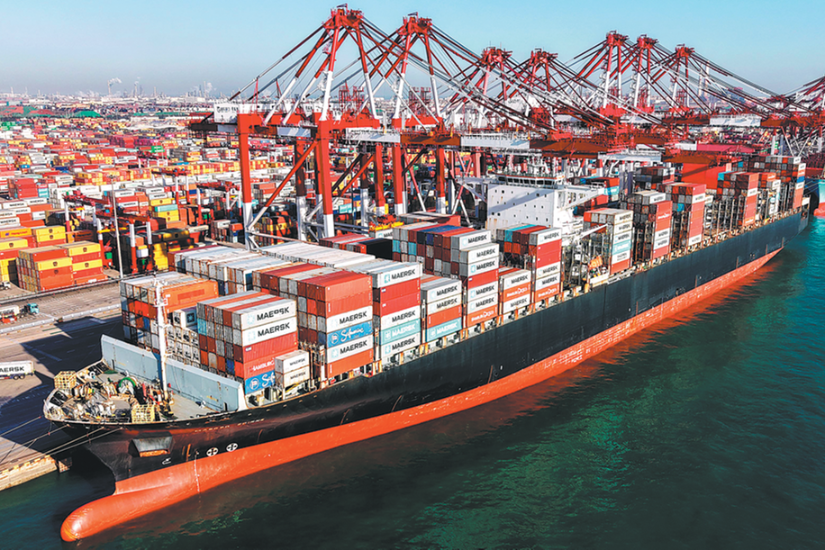
Lee also plans to utilize the Busan Port as a key hub to explore the Arctic route, enhancing the country's logistical competitiveness in accessing the Eurasian region. During his presidential campaign, Lee emphasized that using the Arctic route could reduce the distance between Busan and Europe from 20,000 kilometers to 15,000 km, shortening the shipping time from about 40 days to 30 days, which will give a shot in the arm of the country's logistics industry. Accordingly, the ROK's multi-layered cooperation with China and Russia is expected in the Eurasian market.
Also, the Lee government attaches great importance to China's role in the Korean Peninsula denuclearization and peace process, and intends to revive the "peace and coexistence" policy of former ROK presidents Kim Dae-jung, Roh Moo-hyun and Moon Jae-in. The Lee administration is also likely to help revive the inter-Korean dialogue and deepen ROK-China cooperation to restore peace on the Korean Peninsula. High-level direct communication between the ROK and China, including leader-level talks and delegations, is a good way to expand economic cooperation and people-to-people exchanges.
China has been emphasizing the importance of developing a new form of international relations, characterized by a community with a shared future for humankind and global development initiatives. As a result, diplomacy with neighboring and developing countries is increasing.
The ROK and China agree that there is a need to deepen cooperation to ensure the success of the APEC meeting scheduled for November in the ROK. Seoul has said it is willing to increase communication and cooperation with Beijing during the meeting to improve bilateral relations. On the other hand, China, according to media reports, views Lee's pragmatic diplomacy as a positive shift from his predecessor's policy, raising hopes that China-ROK ties will improve.
Yet there remain challenges such as intensifying US-China strategic competition, changes in the global economic structure and the anti-China sentiment among people in the ROK, which need to be addressed systematically and effectively. There are several unresolved issues between the ROK and China, too. While both sides stress the importance of cooperation for the restoration of peace and stability on the Korean Peninsula, ongoing geopolitical conflicts are thwarting the development of China-ROK ties, highlighting the need for increased communication and dialogue.
The two countries should therefore deepen cooperation not only in the political, economic, social and cultural fields but also on regional and international issues.
In contrast to the previous Yoon administration's embrace of the US' "Indo-Pacific" strategy, which antagonized China, Russia and the DPRK and widened domestic divisions, the Lee administration's foreign policy stresses peace and mutual benefit over confrontation and Cold War-style hostilities. The ROK is expected to intensify its engagement with China, which is its largest trading partner, through pragmatic economic cooperation. And the improvement in relations with Russia will help the ROK to develop its Arctic logistics, boost its engagement with Eurasian countries and restore peace on the Korean Peninsula.
In short, Lee's foreign policy emphasizes practicality and balance, national-interest-centered diplomacy, diplomatic autonomy, improved relations and deeper economic cooperation with Russia and China. Lee has also recognized the crucial role of China and Russia in restoring peace and stability on the Korean Peninsula.
The views don't necessarily reflect those of China Daily.
The author is director of the Center for Chinese Studies of Sejong Institute, the Republic of Korea.


Today's Top News
- ROK leader's visit to help boost bilateral ties
- China's new plan, world's new opportunities
- Expert: US actions, words don't match
- China's diplomacy to blaze new trails
- Visits point way to better future for all
- PLA tests joint combat strength for second day