Sci-tech sector maturing rapidly amid incentives
Government's sustained support for equity investment and project funding helping enterprises quickly achieve technical, production breakthroughs










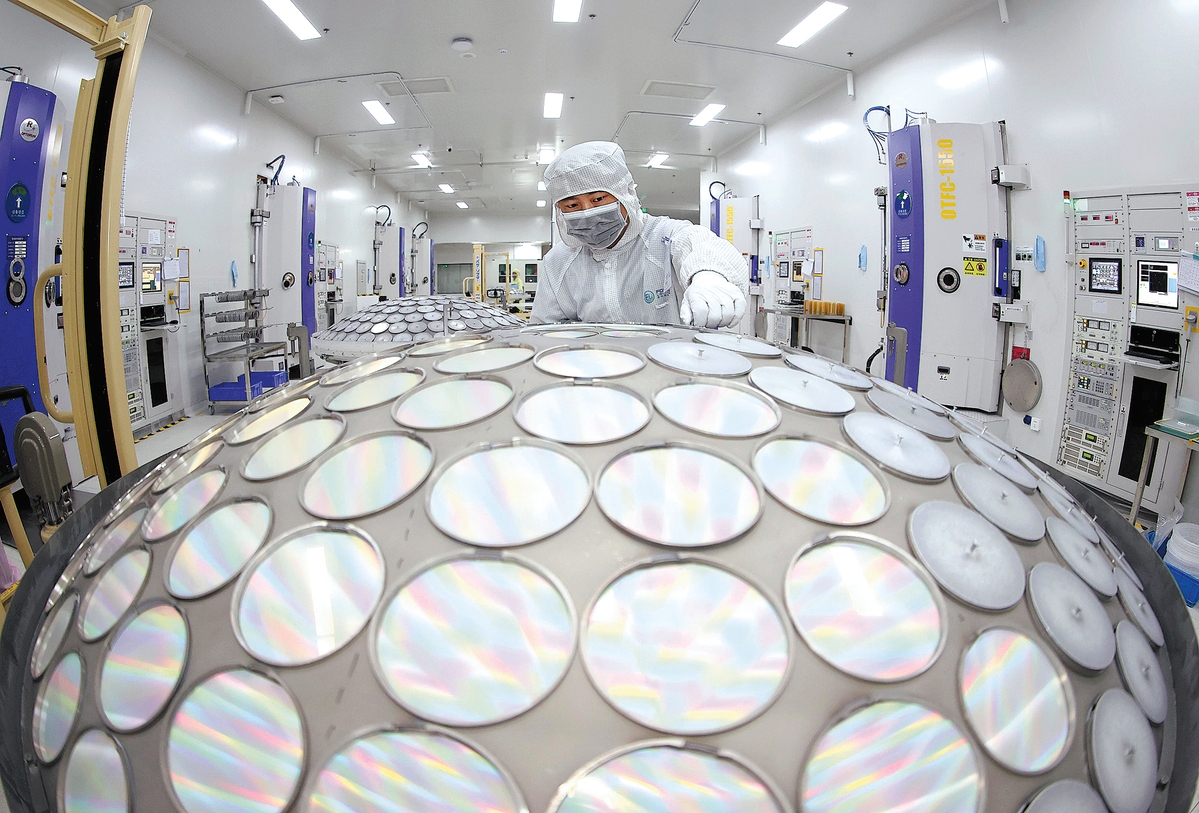
The philosophy underpins the investor's portfolio, which includes Beijing-based Haawking, a chip tech startup that just completed a new pre-B+ financing round, bringing its total funding to several hundred million yuan.
As one of China's rare players in the field of digital signal processor chips, Haawking is the first in the world to design, develop, and mass-produce DSP chips using the open RISC-V instruction set architecture, a crucial step toward domestic technological independence.
"The innovative tech rose from a global DSP market which has long been dominated by US companies, with Chinese firms struggling to establish a meaningful presence," said Li Renwei, founder and chairman of the company.
Li explained that the development of DSP chips has largely been a closed process, with existing instruction set architectures not open for external licensing. This means that domestic companies lack viable technical pathways for advancement. Over time, such a situation will hinder technological upgrades and product iteration, restricting the integration and compatibility of domestic operating systems, software and the broader application ecosystem.
"Against this backdrop, we innovatively use RISC-V instruction to resolve two critical issues, intellectual property rights and ecosystem compatibility, opening a secure, autonomous pathway for Chinese processor design," Li said.
According to the company, its self-developed Haawking-HX2000 DSP chip series, the world's first based on RISC-V architecture, has already developed more than 10 chip models. Several versions have entered mass production and are shipping at an annual volume approaching 10 million units.
Li emphasized the company's heavy focus on innovation, noting that over 60 percent of its employees are research and development specialists and that total R&D investment has exceeded several hundred million yuan to date, which makes sufficient financial support a big role.
"Technological breakthroughs become even more valuable during periods of rapid market change," said Wang of Unity Ventures. "The more uncertain the environment is, the more we should invest in companies with breakthrough potential, as technology remains the underlying force driving social progress."
In this sense, Chinese policymakers are also moving to streamline capital market access for such hard-tech firms. One key highlight is the recent establishment of a growth tier to the STAR Market at the Shanghai Stock Exchange as part of efforts to deepen reform in the technology-focused board.
Initiated by the China Securities Regulatory Commission recently, the move was coupled with the restart of a fifth set of listing rules for companies to float at the STAR Market, which allows the listing of rapidly growing but still unprofitable companies.
"Previously, the listing thresholds of the STAR Market made it difficult for many technology firms — those with major breakthroughs but not yet profitable or still in the R&D stage — to access the capital market," said Xu Chi, chief strategist at Zhongtai Securities.
Xu said the new policy offers more targeted support for high-quality tech companies with significant technological advances, broad market potential and sustained R&D investment, opening up financing channels to help these firms grow rapidly.
SSE data show that 54 unprofitable companies have been listed on the STAR Market since its launch six years ago. As of the end of 2024, these companies had achieved total revenue of 174.5 billion yuan ($23.93 billion), with 26 reporting annual sales exceeding 1 billion yuan.