Textiles weaving green prospects with high-tech
Sector's carbon emissions intensity down by over 60% in 2005-22 period









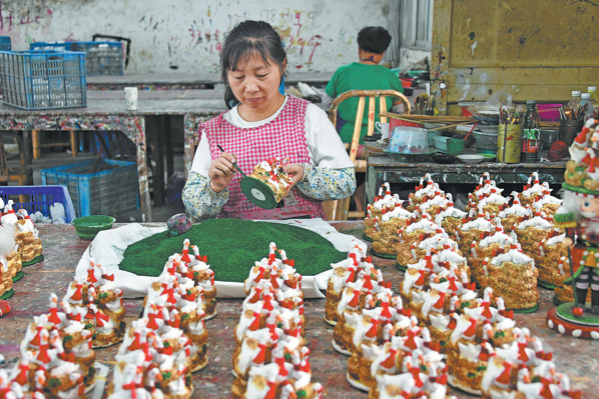
China's textile and apparel producers are making more efforts to cut carbon emissions, and technologies such as intelligent manufacturing, biomanufacturing and 3D printing are helping them to further accelerate the sector's green transformation.
As a core hub for global textile and clothing production and consumption, China's processing of textile fibers accounts for over 50 percent of the global total, said the China Textile Information Center (CTIC).
The country's textile sector's carbon emission intensity, which is measured by a company's carbon emissions volume divided by its sales revenue, declined by over 60 percent during the 2005-22 period. In the past two years, the carbon emissions intensity of leading domestic enterprises further dropped by 14 percent, said the China National Textile and Apparel Council.
"China's textile sector is accelerating the formation of new quality productive forces around the new positioning of technology, fashion, green and health," said Sun Ruizhe, president of the council.
"We should give full play to leading textile enterprises' role in carbon emissions reduction, and strengthen technological innovation in key areas such as using green fibers, promoting waterless or reduced-water printing and dyeing, as well as the recycling of waste textiles."
Sun said China should further integrate itself into global green development, strengthen cooperation with markets involved in the Belt and Road Initiative by sharing green technologies and jointly building green standards, and promoting mutual recognition of key indicators.
Globally, carbon emissions from the textile sector account for 0.6 percent of total carbon emissions, said the International Energy Agency.
"Accurate climate prediction is crucial for the design, production, sales and other aspects of the apparel sector. Quantitative prediction can help enterprises make adjustments in advance based on their previous business experiences," said Chao Qingchen, director of the National Climate Center.
As China aims to peak carbon dioxide emissions before 2030 and achieve carbon neutrality before 2060, Bosideng Group, a major domestic down jacket firm, said the dual-carbon goals provide historical opportunities for the textile industry to further upgrade, and consumers have indicated a growing demand for sustainable fashion products.
The company has continuously optimized the efficiency of its energy usage, expanded the application rate of renewable electricity, and supported public ecological projects. It also requires suppliers to reduce the use of harmful substances.
"Bosideng deeply feels the responsibility and always integrates the concept of sustainable development throughout the entire process of our operation. Sustainable growth has become a widely recognized global consensus," said Gao Dekang, chairman and CEO of Bosideng.
Meanwhile, the ratio of China's small and medium-sized enterprises engaged in the textile sector is significantly higher than in the overall manufacturing sector. Currently, there are 690 specialized, innovative and "little giant" textile enterprises in China. "Little giant" companies refer to specialized SMEs that produce unique goods and services.
In a strategic move to accelerate the textile sector's digital transparency, the 2025 digital product passport whitepaper for China's textile sector was launched in late June by the CTIC, and GS1 China — an affiliate of the State Administration for Market Regulation.
The whitepaper established China's first integrated digital product passport framework, and positioned digital transparency as the cornerstone of sustainable transformation across the lifecycle of a product.





Today's Top News
- SOEs post stable revenue, profits in Jan-Nov
- First brew in Lhasa
- PLA fully capable of crushing secessionist attempts
- China holds central rural work conference
- President Xi to deliver New Year's message to ring in 2026
- Xi's diplomacy in 2025: Shedding light on a world at crossroads