Shanghai exhibit hails role of Flying Tigers in liberating China









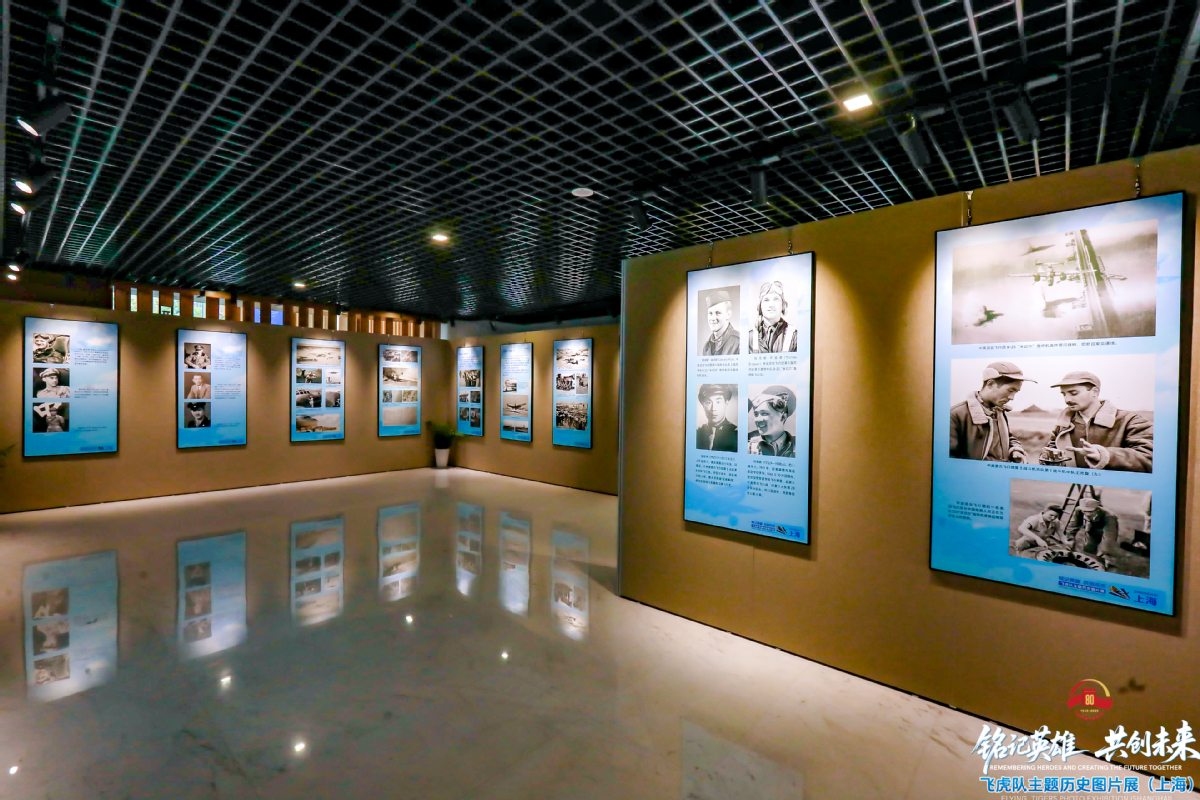
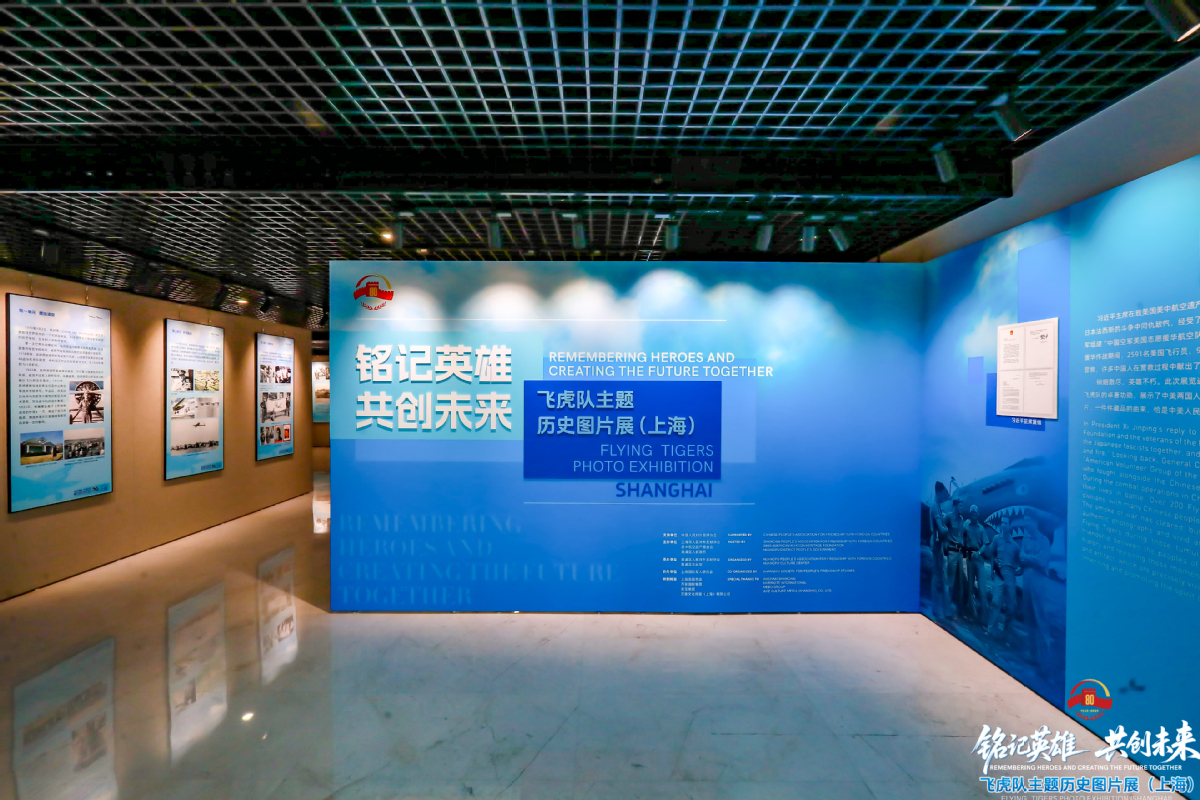
A photo exhibition on the Flying Tigers opened at Huangpu Cultural Center in Shanghai on Tuesday, hailing the profound friendship that developed between China and the United States during the war against fascism.
Themed "Remembering heroes and creating the future together", the exhibition is co-hosted by the Shanghai People's Association for Friendship with Foreign Countries, the Sino-American Aviation Heritage Foundation and Huangpu District People's Government and aims to encourage a cooperative future for the two nations and peoples.
Running till Sept 14, the exhibition marks the 80th anniversary of victory in the Chinese People's War of Resistance Against Japanese Aggression (1931-45) and the World Anti-Fascist War. It showcases more than 200 photos categorized in five chapters, charting the outstanding achievements of the Flying Tigers and the remarkable story of how they fought shoulder to shoulder with Chinese people against Japanese aggression during World War II.
The Flying Tigers, formally known as the American Volunteer Group, were a legendary unit of US volunteer pilots formed in 1941 under General Claire Chennault's command. Chennault first arrived in China in 1937 to survey the Chinese Air Force but decided to stay after witnessing the atrocities committed by Japanese forces against civilians.
During their time in China, the Flying Tigers contributed to the fight against Japanese forces through direct air combat and by flying supplies into blockaded areas over the Himalayas. They also trained Chinese pilots, opened aviation schools and helped civilians operate early warning systems. Meanwhile, thousands of Chinese people courageously rescued Flying Tiger pilots and air crewmen shot down while attacking Japanese troops — at the risk not only to their own lives, but the lives of relatives, friends and neighbors.
From 1941 to 1945, the Flying Tigers led by Chennault downed more than 2,600 Japanese military aircraft, sank or severely damaged 44 Japanese warships and 13,000 river vessels, as well as transporting over 736,000 tons of supplies to support the Chinese people's fight against Japanese aggression. A total 2,591 North American and 911 Chinese airmen sacrificed their lives in battle over that period, while more than 200 members of the Flying Tigers were rescued by the Chinese military and civilians at the cost of many lives, according to the exhibition.
"That is the significance of all these photographs. It is the shared American and Chinese legacy of the Flying Tigers. It's sacrifice. It's love," said Jeffrey Greene, chairman of the Sino-American Aviation Heritage Foundation.
Greene pointed out that "Flying Tigers", or "Fei Hu Dui" in Chinese, is the name that Chinese people gave to the North American pilots. In Chinese mythology, a tiger that flies cannot be defeated and is immortal, and that was exactly what the Chinese people saw when these North American pilots chased away Japanese troops.
"The Flying Tigers is a symbol of China-America cooperation during wartime… This photo exhibition eloquently and powerfully speaks to the timeless truth of the remarkable relationship that developed between the people of China and the United States during the darkest days of the WWII," said Greene.
Chen Jing, president of the Shanghai People's Association for Friendship with Foreign Countries, said at the exhibition's opening ceremony that the spirit of the Flying Tigers highlights a heroic mission taken on by both China and the US to safeguard peace, a bond of standing side by side and a beautiful story of the enduring friendship between the two nations that can be passed on to generation after generation.
During the opening ceremony, three schools in Shanghai were honored as the "Flying Tigers Friendship School", a program helping to tell the story of the Flying Tigers to younger generations in both countries.
Shanghai No 8 Senior High School in the city's Huangpu district is one of the three. Zhou Zheng, principal of the school, received a special pilot jacket representing the Flying Tigers along with the honor, which engendered in her the warmth and power of the Flying Tiger spirit.
"Looking back at history is about creating a better future," said Zhou.
"Most students at our school are aged 16 to 18 — a key time period when they are shaping their world views. Becoming a 'Flying Tigers Friendship School' can offer us a very good chance to promote exchanges and enhance friendship between Chinese and American youth. They will write down new chapters of the future."


- Xi plays decisive role in formulating Party leadership's recommendations for 15th Five-Year Plan: official
- UN's 80th anniversary | The Road to peace
- Hit TV series and song go viral across the Strait
- Shanxi University shapes global cultural ambassadors
- China aims to raise the average life expectancy to around 80 years
- China launches Long March 5 carrier rocket to deploy new satellite