


Science for art's sake
As technology reshapes relic preservation, rural folks emerge as essential partners in sustaining cultural identity, Yang Feiyue reports in Changsha.









In collaboration with the Palace Museum, Wei's team applied neutron technology to research a Western Han Dynasty (206 BC-AD 24) iron scribe's knife in a lacquer sheath for writing on bamboo or wooden slips, which exposed the composite structure of the cutting edge, along with detailed craftsmanship like the molding and wrapping of cracks.
Wei notes that many innovations are driven by preservation needs.
For instance, his team developed a mobile electron beam irradiation device, part of a national R&D program led by the Dunhuang Academy, to protect tomb murals.
This device allows full-spectrum, uniform irradiation in confined tomb spaces, effectively sterilizing and disinfecting while maintaining ozone balance in the environment, he explains.
Wei emphasizes the need for ongoing collaboration with the cultural relics community to create a national nuclear analysis platform, furthering China's technological capacity in cultural preservation.
Beyond labs and grand performances, cultural heritage finds new life at the grassroots level.
In Zhejiang province, rural communities have become powerful stewards of history, with village museums anchoring local identity and driving regional development, says Lou Ting, director of the Huzhou Municipal Bureau of Culture, Radio, TV, and Tourism.
Under the 2021 initiative by the National Cultural Heritage Administration to develop Chinese village museums, Zhejiang has constructed more than 900 such museums.
Huzhou, designated a national pilot city, has since developed themed museums aligned with local heritage, including sericulture and tea, Lou says.
"We actively engage villagers, local scholars and private collectors, encouraging them to take ownership of rural cultural heritage. Old objects and traditional crafts, once scattered across fields or forgotten in farmhouse corners, are now carefully collected, curated and exhibited — making rural memory tangible and nostalgia perceptible," she says.
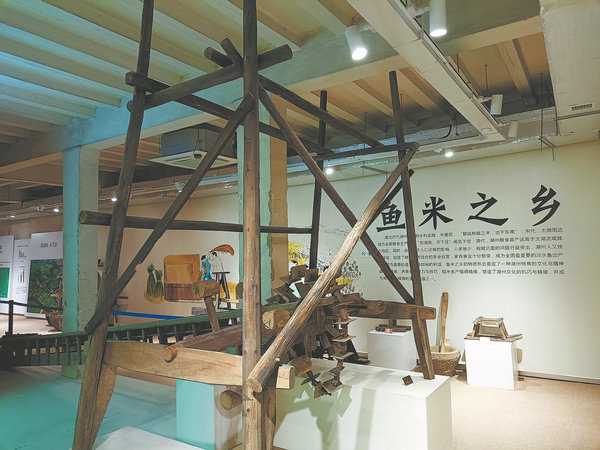
For example, Yigao village, recognized for its world-class irrigation heritage, established a museum that not only showcases ancient water management tools and historical hydrological chronicles but also employs immersive sound, light, and multimedia to bring to life the millennia-old wisdom of water conservancy.
"It has become a vital window for interpreting the cultural code of water towns south of the lower reaches of the Yangtze River," Lou says.
To date, the city has 122 rural museums — averaging one for every eight villages, she says.
Many of those museums have produced positive results. At the Digang ancient village, the mulberry-fishpond museum draws over 1 million visitors annually for its display of the wisdom hidden in local ecological farming that has sustained itself for 1,000 years, which boosts tourism business for local villagers, Lou observes.
More efforts will focus on integrating local characteristics with contemporary design in planning, accelerating the development of archaeological parks and rural cultural heritage parks, exploring more sustainable and dynamic operational models, and deepening the integration of cultural heritage with related industries, she says.
Lou believes those museums are "a showcase for local culture and a repository of historical memory".
Meanwhile, Hunan province is taking strides in revitalizing its cultural heritage through both tradition and technology.
Jiang Meng, director of the Hunan provincial cultural heritage bureau, says that efforts have been made to improve the construction, management, and accessibility of museums and memorial sites across the province.