'Rebalancing' doesn't benefit Sino-EU ties









In a major speech to the European Parliament in Strasbourg, France, on Tuesday, European Commission President Ursula von der Leyen accused China of distorting trade and limiting access for European companies to the Chinese market as she called for a "genuine rebalancing" between the two sides.
The aim is to have fewer "market distortions", less "overcapacity" exported from China, and fair, reciprocal access for European businesses in China, she said.
The criticism is unjustified and reveals the EU's false perception of China, as a Chinese Foreign Ministry spokesperson later pointed out. The remarks were even more inappropriate given they were made just two weeks prior to a China-EU summit scheduled to be held later this month to mark the 50th anniversary of the establishment of diplomatic relations between the two sides. The lack of sensitivity does not fit well with the consensus the two sides have reached on doing their utmost to find ways to strengthen their cooperation.
China values its relationship with the EU, believing the mutually beneficial partnership not only holds strategic significance for both sides, but also carries far-reaching implications for global peace, stability and prosperity. China views the 27-nation bloc as a key partner for economic and trade cooperation. The two sides are each other's second-largest trading partners, with nearly $100 million worth of goods flowing between them every hour.
This makes it all the more important that the EU bear in mind the whole picture of China-EU economic and trade cooperation when talking about any differences that exist between them in the process of their ever-deepening interactions.
Over the past five decades, the China-EU economic partnership has evolved from an extremely modest start to become one of the world's most consequential relations. The volume of trade between the two sides, which stood at $2.4 billion in 1975, had surged to $785.8 billion in 2024, with "today's daily bilateral trade size being as large as that of a whole year" 50 years ago, as Foreign Ministry spokesperson Mao Ning observed.
Given the high level of economic interdependence and interconnectivity between the two sides, it is natural for trade frictions to break out from time to time. Yet the only way to properly manage such differences is through dialogue and consultation, rather than seeking "de-risking" or "decoupling" as the EU is doing, which belies the economic reality that exists between the two sides and risks jeopardizing their practical cooperation.
What the EU needs to do now is not finger-pointing at China for the alleged "market distortion activities", but some self-reflection that may help enhance mutual understanding and drive bilateral trade forward in a mutually beneficial and sustainable way.
Brussels accuses Beijing of resorting to subsidies to dominate the global market for greentech products such as electric vehicles and wind turbines, ignoring the fact that China's rapid development in these sectors is fueled by its technological innovations, complete supply chains and fierce market competition and that the country's subsidy policies are fully compliant with World Trade Organization rules.
Given that China and the EU share common ground in upholding multilateralism and free trade, and there exists no clash of fundamental interests or geopolitical conflicts between them, there is no reason for the two sides not to expand mutual openness, consolidate existing collaboration mechanisms, and foster new growth momentum in cooperation.
Rather than posing systemic risks to Europe, China's high-quality development and high-level opening-up will bring new opportunities for European businesses and enrich the content of China-EU cooperation. The consensus between China and the EU far outweighs the differences. This paves the way for a healthy, stable and sustainable China-EU relationship, which is in the fundamental interests of both sides and meets the common expectations of the international community.
What China and the EU need most is consolidation and expanding of their cooperation, not "rebalancing".


Today's Top News
- US?arms sale only a?'bomb' to Taiwan
- China-Cambodia-Thailand foreign ministers' meeting reaches three-point consensus
- Drills demonstrate China's resolve to defend sovereignty against external interference
- Trump says 'a lot closer' to Ukraine peace deal
- China pilots L3 vehicles on roads
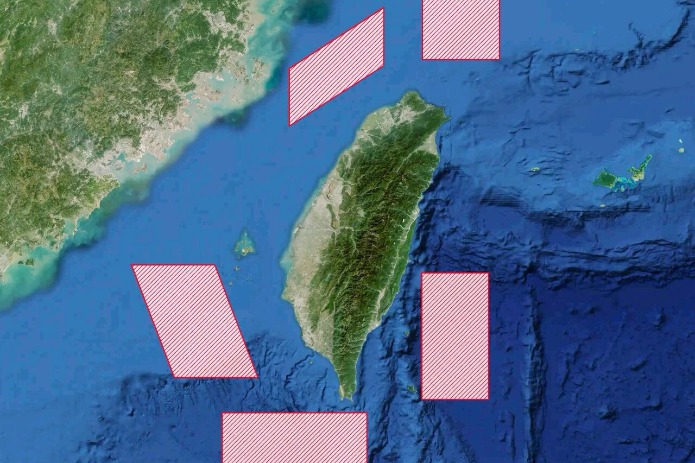
- PLA conducts 'Justice Mission 2025' drills around Taiwan