The past is now present in Chinese chic









The phenomenal success of the animated film Ne Zha 2 and video game Black Myth: Wukong, as well as the booming sales of related merchandise reflect the popularity of guochao, or China chic, in the country's cultural consumption.
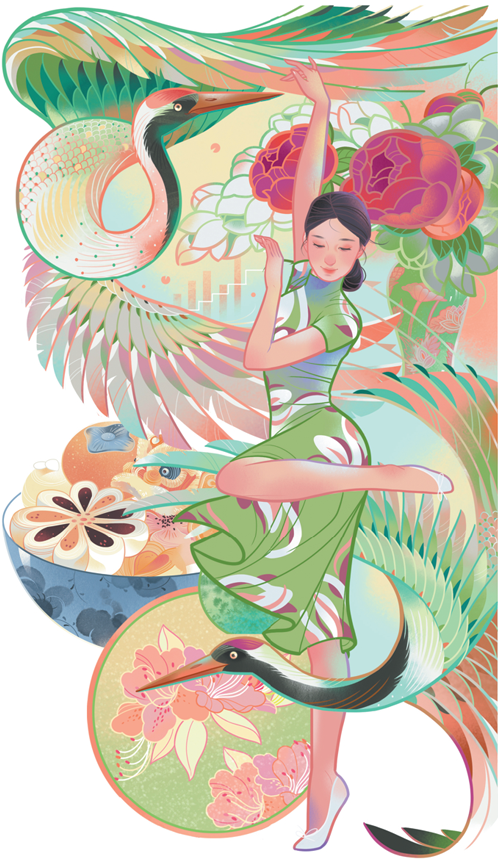
Over the past decade, the trend has become a defining feature of China's cultural landscape. From museum-inspired creative products to peripheral merchandise inspired by period dramas, and from immersive digital experiences to traditional attire, fashion items infused with Chinese cultural elements have permeated fields such as clothing, cuisine, furniture, architecture, music and industrial manufacturing. It is estimated that the market value of Chinese traditional costumes will reach 250 billion yuan ($34.85 billion) this year.
Fashion is one of the most emblematic domains of guochao. In recent years, young people dressed in traditional Chinese garments have become a common sight during holidays. They express their individuality and appreciation for traditional aesthetics. Indeed, guochao has deeply influenced contemporary Chinese fashion design and consumption, with clothing featuring cultural motifs gaining immense popularity.
In the culinary world, designs rooted in traditional culture have become a trend in restaurants' decor, tableware and food packaging. Iconic regional dishes have been reborn as guochao staples. Diners seek out these centuries-old delicacies of cities. Some restaurants even offer "imperial banquet" experiences, where guests don traditional attire and savor dishes accompanied by performances of classical music, dance and poetry recitals, catering to the growing fascination with traditional culture.
Museum cultural creativity lies at the heart of guochao. Collecting cultural and creative products have become must-do activities for museum visitors. Treasures in different museums provide fertile ground for the development of cultural creative products. They have evolved from simple artifact reproductions into a creative industry spanning fields such as publications, animations and games. Young people are the primary consumers of these products with unique designs.
The rise of guochao is no accident but the result of multiple factors. Culturally, social perceptions of traditional culture have changed in the new era. No longer seen merely as heritage to be preserved, it is now viewed as an organic part of modern life. Additionally, policies promoting cultural tourism and rural vitalization have rekindled interest in regional traditions. Nationwide events like dragon boat races, flower-basket performances and ethnic cultural events have brought living culture into the mainstream, amplified by digital media. Moreover, China's material prosperity and social progress have alleviated historical insecurities, fostering a relaxed mindset open to cultural exploration. Traditional culture, offering both novelty and familiarity, has naturally become a focal point.
At its core, guochao signifies the full flowering of Chinese cultural confidence. The nation has moved beyond the colonial-era mindset of idolizing the West and rediscovered pride in its own heritage through the achievements of Chinese modernization. Guochao demonstrates how Chinese civilization, enduring for millennia, thrives by embracing historical agency and innovation.
Aesthetically, guochao cultivates a distinct neo-Chinese style, blending tradition with contemporary trends to celebrate the beauty of modern life. It embodies cultural, historical and aesthetic confidence, reintegrating tradition into daily existence through fashion, romance and personalization. This revitalization is reshaping China's cultural production and consumption.
Economically, guochao represents a fusion of traditional culture with industrial and digital civilizations, a manifestation of China's new quality productive forces. Here, traditional culture becomes a vital part of advanced productivity, while modern manufacturing breathes new life into it. This synergy mirrors the integration of the basic tenets of Marxism with the best of China's traditional culture.
In essence, guochao is the zeitgeist of China's cultural confidence, a warmth radiating from the nation's reclaimed glory and its march toward new historical heights.
The author is associated with the Cultural Research Center, Chinese Academy of Social Sciences.
The views don't necessarily reflect those of China Daily.


Today's Top News
- China to apply lower import tariff rates to unleash market potential
- China proves to be active and reliable mediator
- Three-party talks help to restore peace
- Huangyan coral reefs healthy, says report
- PLA conducts major drill near Taiwan
- Washington should realize its interference in Taiwan question is a recipe it won't want to eat: China Daily editorial