Resilience, innovation and adaptability shaping exports









Despite the sweltering conditions, the factory floor of Ningbo Iceberg Electronic Appliance Co in Ningbo, East China's Zhejiang province, was a hive of activity in early July.
Workers at the plant moved with urgency, assembling batches of compact outdoor and skin care refrigerators destined for overseas markets.
A skin care refrigerator, or cosmetic fridge, is a mini-fridge designed to store beauty products at optimal cool temperatures.
Officials from Ningbo Customs told me that the company's order volume has surged this summer, driven by heat waves in many parts of the world.
Meanwhile, managers said that exporting lithium battery-powered products has become the new priority for the company this year as it seeks fresh growth opportunities.
Specializing in beauty fridges, car coolers and thermoelectric warm-and-cool boxes, the Ningbo-based company is now entering a new stage focused on product innovation.
In response to the global push for carbon neutrality and energy-efficient consumption, it has stepped up innovation to launch lithium-powered refrigeration units aimed at eco-conscious customers abroad.
This example offers a vivid glimpse into the evolving trajectory of China's foreign trade amid an increasingly uncertain global landscape. The era when competitiveness hinged purely on volume and low costs is fading. In its place, resilience, innovation and adaptability are emerging as the key drivers shaping the future of Chinese exports.
With rising global uncertainties, ranging from geopolitical tensions and tariff disputes to weakening demand in traditional markets, Chinese manufacturers are under pressure to recalibrate their export strategies.
In this context, the future of China's foreign trade is increasingly shaped by three interconnected trends, namely green transformation, digital expansion and regional integration.
Among these, the global push for sustainability is creating fresh growth opportunities for Chinese exporters. Products such as lithium-powered refrigeration units, energy-efficient air conditioners, photovoltaic panels, electric vehicles and smart home appliances are gaining momentum in overseas markets.
In these areas, Chinese manufacturers are no longer merely responding to international trends — they are increasingly helping define them.
As green product standards evolve worldwide, companies across China are racing to meet stricter requirements on carbon emissions, energy efficiency labeling and recyclability, underscoring their readiness to compete at a higher level.
At the same time, the digitalization of trade is reshaping how goods and services move across borders. Rapid growth in cross-border e-commerce platforms, bonded warehousing and intelligent logistics centers is enabling faster delivery and more efficient Customs processes. These advancements are also empowering smaller manufacturers — particularly those in China's inland regions — to access global markets directly.
The shift is also apparent in the services sector, where exports now include data processing, online education, cloud computing and remote technical support, all driven by digital tools.
Regional trade integration is another key pillar of China's evolving foreign trade landscape. Through free trade agreements like the Regional Comprehensive Economic Partnership, the country is deepening economic ties with key partners across Asia-Pacific.
This evolving regional dynamic is fostering a more interconnected production and trade network, where South Korean and Japanese technologies, Chinese manufacturing and innovation, Southeast Asian countries-based assembly and Australian raw materials form a deeply interdependent value chain.
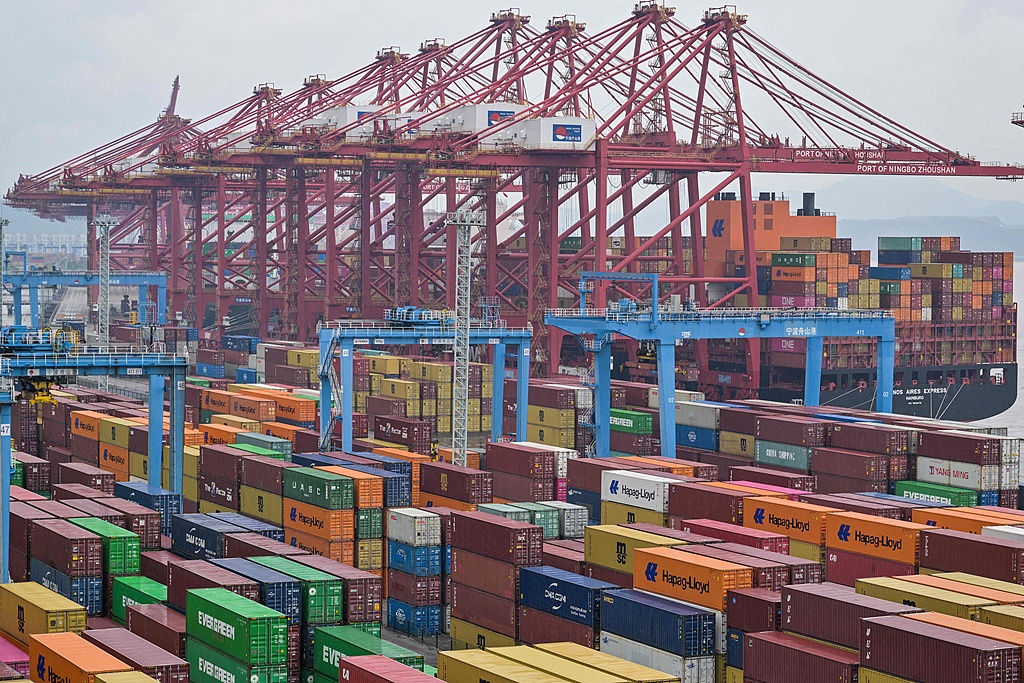
Based on what I saw in Ningbo and other trade hubs, it is clear that China's export economy is no longer fueled by quantity alone. The focus has shifted toward quality, differentiation and alignment with global trends.
To remain resilient and forward-looking, Chinese companies are innovating not out of choice, but out of necessity, responding to evolving consumer needs, environmental standards and a reordering of global supply chains.
That process may be uneven, and not without growing pains, but it signals a trade future built on higher value, stronger ecosystems and deeper integration with the global economy.