


Celebration of scholarly virtue









In Mengzi, a collection of the anecdotes and dialogue of the namesake philosopher living more than 2,300 years ago, one chapter says, "In adversity, one cultivates oneself for perfection in solitude; when prominent and prosperous, one serves the greater good."
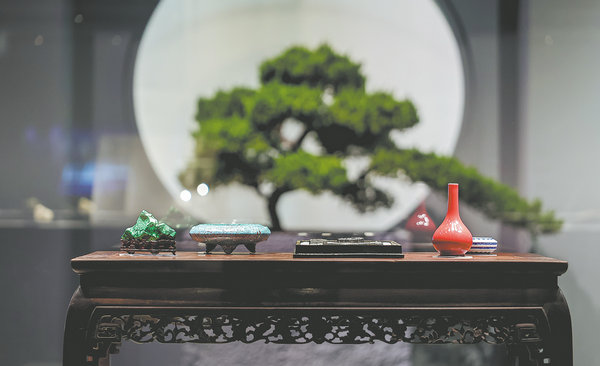
To make themselves perfect, intellectuals of ancient times turned to nature to have their hearts purified and their minds regenerated. Meanwhile, they would decorate their living spaces, especially the study, with cultural objects which they believed help create a hub where one could cultivate good virtues and achieve spirituality.
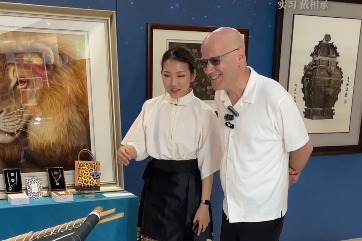
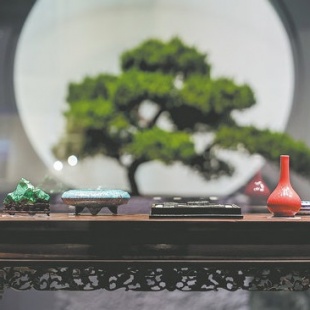
This state of perfection pursued by scholars is vividly unveiled at The Poetic Realm of Refined Living, an exhibition celebrating the art and aesthetic views of Ming (1368-1644) and Qing (1644-1911) dynasties.
It is being held at the Guardian Art Center in Beijing through to Sept 10.
The exhibition marks the first collaboration between the Guardian Art Center and Beijing Art Museum — the latter has lent more than 150 artifacts in collection for display, and according to Chen Jing, director of Beijing Art Museum, about 65 percent of them are being shown to the public for the first time to unveil the sheer scope and depth of the cultural life of Ming and Qing scholars.
The audience is introduced to private rooms, and the world of intimacy as well, of the literati, seeing how they decorated the study to enrich the life and nurture their minds, says Hu Guimei, a researcher of Beijing Art Museum.
What made the study aesthetically excellent was the qinggong (objects of elegance) tradition. It first referred to the items of tributary for the worship of deities or in Buddhist practice. Later, qinggong items included the objects of artistry that people placed on desks and shelves for appreciation, such as qinghua (cobalt blue and white ceramic) brush pen containers, scent burners and flower pots, as well as flowers and fruits with a soothing aroma.
A highlight of qinggong treasure on show is an ink stick collection of the Qing Dynasty. Such collections, in which high-quality handmade ink sticks were preserved in a well-designed case, were called jijin mo (a fine collection of ink) which was first produced in the Ming Dynasty and flourished in later years.
A commissioned collection of the kind normally includes ink sticks of varying sizes, made with fine materials and scented with quality natural oil. The sticks were finished with decorative patterns and characters to reflect customers' aesthetic preferences.
The collection on display was made by Wang Jie'an, deemed as one of the four famous artists of handmade ink in the Qing Dynasty.
Hu says the items at the exhibition not only "reflect a pursuit of an ideal life through living with fine workmanship, sometimes made or designed by the users themselves, and sharing these treasures with a few like-minded friends", but also the objects reveal a break from worldly desires and a spirit of independence.
A fine example that has drawn a lot of attention is a vertical landscape painting by Tang Yin, or better known by his courtesy name Tang Bohu, hailed as one of the Four Great Painters of the Ming Dynasty.
In Deep River and Thatched Pavilion, Tang depicted a riverside view to direct one's eyes first to the steep cliffs on top and then down below, a hermit scholar sitting in a thatched pavilion and his attendant on the way to fetch water.
Kou Qin, general manager of Guardian Art Center, says the graceful lifestyle centuries back would inspire people today to adopt a similarly cultural way of living, and that is the true meaning of tradition been kept alive.