Tips for expats to strike swifter friendships









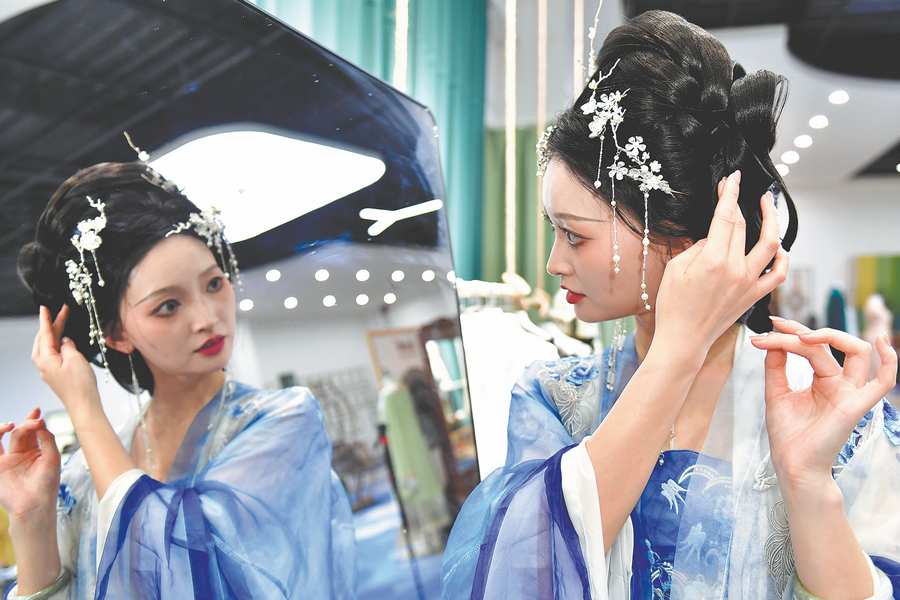
While visiting scenic or historical sites in China, sometimes foreign tourists have walked up to me and said "Nihao, sir, can you…?" Afraid that I wouldn't understand English, many of them have shown me their smartphones or cameras while pointing at themselves, meaning "Can you take a photograph for us?"
Realizing after the "photo session" that they had come across a Chinese person who could speak "some English", they have normally engaged in a short conversation with me. Some of them have asked for Chinese translations of "How are you!" or "How much is it?", and even corresponding Chinese terms for "madam", "sir" and "miss". Once, after telling one such group that the Chinese terms for "madam", "sir" and "miss" were "nyushi", "xiansheng" and "xiaojie" respectively, I suddenly realized they might run into trouble if they used any of those terms to address somebody in China, because some new meanings of the terms have changed, at least among the Chinese people.
"Madam" can be translated as nyushi, and one can use the term to address women of all ages, and "sir" as nanshi — that's what some Chinese people do — though the latter may have a different meaning for some. In many Hong Kong gangster movies, popular across the country 30 or so years ago, a police officer was always addressed as "sir", a term which became popular among many Chinese mainland fans. It's another matter that many believed "sir" means a high-ranking police officer.
"Miss" is normally translated as "xiaojie" (little sister), but the term should be used cautiously these days. A term, which had been used to address the daughters of the rich and high-ranking officials for centuries, has been used by some for the past few decades to refer to women engaged in illegal sex work. As a result, a person using the term is most likely to get a dirty or angry look from a woman.
Finding the right term to courteously address each other has always been a big issue in China despite the country being a land of ceremony and decorum for thousands of years. Husband and wife, for instance, can address each other in more than a dozen ways depending on the family's social background.
The over-elaborative formalities came to a sudden end with the founding of the People's Republic of China in 1949. Between the 1950s and 1980s, "tongzhi" (comrade) was universally used by the Chinese people to address each other, irrespective of gender, age or social status, and some Chinese official media now advocate for promoting the usage of "tongzhi" again. In the better-developed industrial cities such as Shanghai, shifu (master) was used to address shop assistants, bus conductors and skillful workers in factories as a show of respect.
The reform and opening-up launched more than four decades ago drew people's attention to wealth and social status. For some years, people tended to address each other as laoban (boss) even though the so-called boss neither had any title nor any bank deposit.
Now that people are spending huge amounts of money on health and appearance, including facial enhancement, new forms of address are becoming popular, especially those that make the addressee feel good. For example, I've been called "dage" (elder brother) by teenagers trying to persuade me to buy their products. Although I may be their grandparents' age, I don't feel annoyed when being called "elder brother". I hope they'd call me shuaige (handsome brother), instead, which is widely used to address men, old and young, handsome and not-so-good looking.
To match shuaige there is meinyu (beauty), a term many use to refer to women of all ages. Oftentimes I've heard people addressing someone as meinyu on the street, only to turn around and find the addressee to be an over weight middle-aged woman.
Even though we know terms such as meinyu and shuaige have been abused a lot, those who use them to flatter others and those being flattered seem to be happy. For me, the term meinyu is a blessing, because it saves me from the embarrassment of addressing a bank clerk or a waitress as "xiaojie".
My last advice to foreign tourists: Call Chinese men shuaige and women meinyu and you will enjoy super service.
The author is former deputy editor-in-chief of China Daily.
kangbing@chinadaily.com.cn