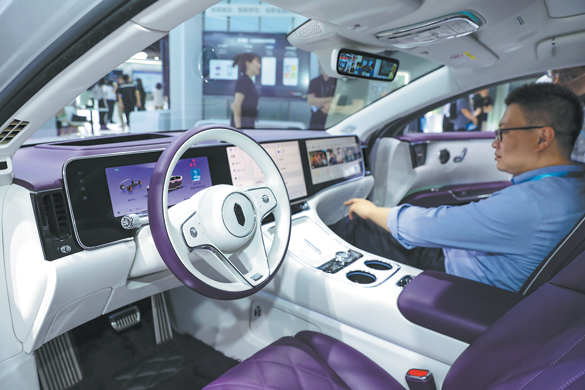
AI enables sustainable energy transition









China's energy landscape is at a critical juncture as it is about to enter the 15th Five-Year Plan (2026-30), marked by significant demand growth and structural transformations. With power consumption projected to rise by 4-5 percent annually, equal to about 500 terawatt-hours of new electricity demand each year, the country's power system has substantial investment opportunities. The construction of an intelligent power system also offers vast potential, with estimates indicating a trillion-yuan market opportunity over the next decade.
This development coincides with global energy restructuring marked by surging investments and digital solutions playing a pivotal role. As China balances international shifts and its own energy transition imperatives, a dual strategy integrating traditional and renewable energy sources has become vital. The coexistence of these sources will drive deep decarbonization and technological advancements, shaping the future of China's energy sector and industrial landscape.
According to the International Energy Agency, global renewable energy sources such as solar and wind power, hydropower, and geothermal power are expected to surpass coal energy by 2025. In the "net-zero emissions by 2050" scenario, renewables will facilitate nearly complete decarbonization of electricity generation.
With national policies and rapidly falling costs of solar photovoltaic panels and wind turbines, renewable energy's share of installed electricity generation capacity reached 51.9 percent in China in 2023, surpassing coal for the first time. Between 2014 and 2023, China contributed to 45.2 percent of the global increase in non-fossil energy consumption, leading the world in the research, development and deployment of renewable energy technologies across the power, heating and transport sectors.
To realize the dual climate goals of peaking carbon emissions before 2030 and achieving carbon neutrality before 2060, and to ensure energy access, affordability and reliability for all, China is expected to intensify ongoing efforts to integrate renewables into its energy mix.
Besides, China is making efforts to ensure energy storage systems buffer supply and demand, maintain grid frequency and voltage stability, reduce curtailment, shift electricity consumption loads and provide backup power. These systems play a crucial role in deploying and effectively integrating renewable energy, addressing the inherent intermittency and variability of energy sources like solar and wind.
But seasonal fluctuations in renewable energy generation require storage solutions to handle short- and long-term needs, which may exceed battery capacity, as batteries are efficient only for relatively short periods.
Furthermore, integrating a network of distributed small-scale energy resources, such as batteries, electric vehicles, and rooftop solar panels, remains a challenge for the power grid. Digital technologies such as artificial intelligence, internet of things sensors, and advanced analytics offer promising solutions, while AI-driven virtual power plants (VPPs) can consolidate decentralized energy resources into one single, controllable entity, managed like a traditional power plant.
Sensors provide real-time information on the energy network and operating environment. AI-powered algorithms process vast amounts of data from diverse sources, including weather forecasts, grid conditions and consumer demand patterns, facilitating real-time decisions on energy production, storage and use. This optimization ensures efficient energy distribution, reduces peak loads, and minimizes waste.
By leveraging machine learning, AI can predict energy production from renewables and consumption patterns, allowing grid operators to proactively coordinate supply and demand. For example, the VPPs can store energy during low-demand or high-renewable periods, and distribute power during peak demand, smoothing load curves and reducing curtailment.
Moreover, AI can monitor equipment health, detect anomalies, and predict potential failures, enabling timely maintenance that would increase asset life and reduce operational costs. This can minimize downtime and enhance the economic viability of renewable energy projects.
Combined with technologies such as blockchain and Web3, AI can help energy asset owners to gain insights into real-time market conditions, optimizing their decisions on energy trading and earning carbon credits.
This approach can incentivize the use of clean energy, encourage market participation, and maximize profitability for operators while supporting renewable integration and reducing carbon emissions.
As the use of renewable energy increases, AI-driven platforms can continue to improve their performance by learning from new data and adapting to changing grid conditions. This will facilitate even more accurate forecasting, better resource allocation, and greater flexibility in responding to market and grid dynamics.
The goal is to build a future where people can live in harmony with nature, and enjoy a good quality of life powered by clean energy. AI and other digital technologies act as catalysts for the energy transition, fostering better coordination among power generators, transmitters, distributors and end-users. This collaboration would make renewable energy systems smarter, more flexible and efficient, and economically viable, facilitating the electrification of transport, heating, and industry sectors with renewables.
The views don't necessarily reflect those of China Daily.
The author is an associate professor at the School of Energy and Environment and Department of Public and International Affairs, City University of Hong Kong, and a visiting professor at the School of Public Policy and Management, Tsinghua University.





Today's Top News
- China to apply lower import tariff rates to unleash market potential
- China proves to be active and reliable mediator
- Three-party talks help to restore peace
- Huangyan coral reefs healthy, says report
- PLA conducts major drill near Taiwan
- Washington should realize its interference in Taiwan question is a recipe it won't want to eat: China Daily editorial