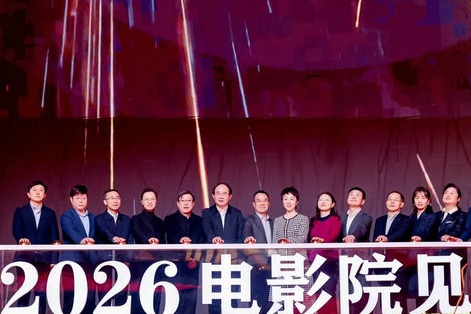
Green, beautiful, livable cities call for modernized urbanization path









As the nation enters a new phase of development, the just concluded Central Urban Work Conference in Beijing marks a pivotal moment, outlining a comprehensive vision for building modern, people-centric cities, moving beyond rapid growth to focus on quality, sustainability, and intrinsic development.
In 1980, only 19.93 percent of China's total population lived in cities. The percentage had reached 67 percent by the end of 2024. While this progress in urbanization reflects decades of sustained economic and social development, it has also brought challenges — particularly for medium-sized and smaller cities — in areas such as living conditions, public services and infrastructure.
China's urbanization is shifting from the previous rapid growth to stable, high-quality development. The focus is no longer on large-scale expansion but on enhancing the existing urban resources. This paradigm shift needs a new set of urban development concepts that place greater emphasis on human-centered approaches, intensive and efficient resource utilization, distinctive local characteristics, increased investment in governance, and enhanced coordination in urban work.
That explains why President Xi Jinping emphasized in the conference, held from Monday to Tuesday, the importance of coordinated endeavors to improve all aspects of urban development and in particular to improve the quality of life for urban residents. In his remarks at the meeting, Xi stressed that a city should not only have high-rise buildings, but also show enough concern for how its residents can enjoy a better life.
Developing cities of the people, for the people and by the people has long been the general guiding principle for China's urban development. According to the meeting, at the heart of the new blueprint is the overarching goal of constructing modern cities that are innovative, livable, beautiful, resilient, culturally advanced, and smart. This objective is to be achieved through a commitment to high-quality development and an intrinsic growth model, with urban renewal serving as a critical catalyst.
Following this approach, modern city clusters are to be developed to raise the urban capacity in order to accommodate the growing number of urbanites and the corresponding social and economic development demands.
Urban planners are required to further improve the urban ecology, optimize a city's dynamics through reform and opening-up, and develop new quality productive forces to make it possible for a city to actively participate in both the domestic and international economic flow. That requires a city to develop industries according to its local conditions and advantages.
Cities must be livable. Shanty towns and shabby residential areas within urban areas must be renovated. What is particularly noticeable is that cities are prohibited from building very tall buildings, which are considered to be unsafe and not convenient for people to live in.
A city without a good eco-environment can never be livable. Environmental protection was therefore emphasized at the meeting. Cities must attach the utmost importance to the protection of their sources of drinking water, improving the air quality through effectively treating pollutants and conserving and increasing their biodiversity.
Public services must also be improved to raise the quality of people's lives.
Another aspect that was particularly emphasized at the meeting was the need for cities to be tenacious in fighting against floods and other natural disasters. Modern technology can help with this.
Indeed, a modern city must be smart. Digital technologies and artificial intelligence should be applied to make life as easy and comfortable as possible for residents. But at the same time, cities should not forget their past. The preservation of buildings and landscapes of historical interest is an important way for a city to maintain its unique character.
How China's urban development fares has a direct bearing on the country's overall social and economic progress. By embracing this new approach, China aims to build cities that are not only engines of economic growth but also vibrant, sustainable, and truly people-centric homes for its people.
With what it has achieved in its urbanization in the past decades, and with the experience that it has accumulated, China will undoubtedly be able to make further progress in the development of its cities.


Today's Top News
- China reports 20% rise in inter-regional trips on first day of holiday
- China rebuffs criticism over drills around Taiwan
- Mainland pledges deeper cross-Strait integration in 2026
- Lai's 'separatist fallacy' speech rightly slammed
- Xi's message for New Year widely lauded
- Swiss bar fire kills around 40, injures more than 110