


Exhibitions foster ties between ancient civilizations









In a dimly lit gallery in South China's Guangxi Zhuang autonomous region, Zhou Jie stood before a life-sized plaster cast of a Pompeii victim, who was encased in volcanic ash nearly 2,000 years ago in what is now southern Italy.
The exhibition, Where Time Stands Still, features over 100 artifacts from Italy's National Archaeological Museum of Naples, two-thirds of which are being displayed in China for the first time.
"The jewelry and glassware from Pompeii look just like those unearthed from Han (206 BC-AD 220) tombs here in Guangxi," says Zhou, peering at a comparative display. "It's amazing how people so far apart developed such similar aesthetics."
Such a sense of resonance and discovery is fueling a growing appetite for cross-cultural exhibitions across China.
Over 100 inbound and outbound cultural relics exhibitions were held last year, according to China's National Cultural Heritage Administration.
From ancient Egypt to the Mayan civilization, Chinese museums are increasingly presenting global heritage and reshaping such offerings for local audiences.
At the Shanghai Museum in East China, a towering 2.4-meter-tall statue of Pharaoh Merneptah greets visitors to On Top of the Pyramid: The Civilization of Ancient Egypt, an exhibition that has drawn more than 2 million visitors since opening last summer.
On display at this event in Shanghai are 788 rare Egyptian artifacts, including 200 recently excavated items not yet displayed in any Egyptian museum.
To engage broader audiences, the museum launched evening tours, themed events like Museum Meow Night, allowing visitors to bring their pet cats, and over 1,100 merchandise items, from plush toys to magnets, which have helped the exhibition generate over 580 million yuan ($80.8 million) in revenue.
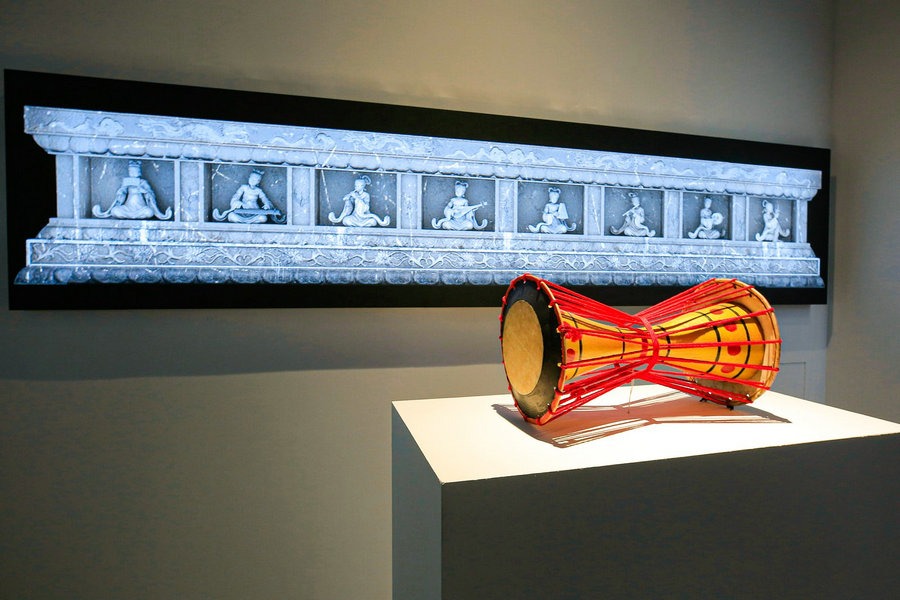
At this venue, painted Egyptian wooden coffins and animal mummies share space with Chinese oracle bones and ceramics — providing a visual dialogue between ancient civilizations.
University student Wang Xinyan, wearing Han-style clothing and Egyptian-inspired earrings, revealed that she was on her third visit to this museum. "My curiosity about cultural relics has grown into a passion. I hope to work in this field in the future," Wang says.
Similar enthusiasm could be seen at Henan Museum in Central China, where the Mayas, Ceiba and Cosmos exhibition showcases 209 Mayan artifacts — 90 percent of which are being displayed in Asia for the first time — displayed under jungle-themed lighting.
"The painted pottery reminded me of China's Neolithic Yangshao culture. Both are so vivid and full of life," says local resident Zhu Peipei, who attended the exhibition's opening.
Cultural exchanges are also flowing outward. Last year, China held 38 cultural relics exhibitions overseas.
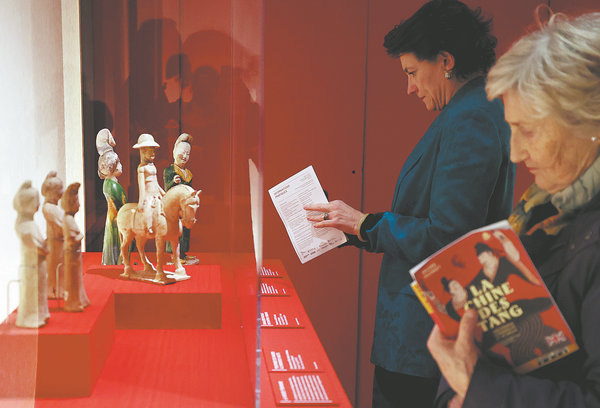
In Paris, a Tang Dynasty (618-907) exhibition attracted more than 80,000 visitors. A Tang figurine of a woman in a man's robe even sparked conversations about gender roles in ancient China.
The National Museum of China, meanwhile, is set to launch exhibition exchanges with institutions in Russia, Saudi Arabia and Italy in the latter half of 2025.
For Chu Xiaobo, director of the Shanghai Museum, the mission of museums is evolving. "They're no longer just spaces to display and preserve relics. Museums are becoming platforms for public diplomacy — places where civilizations encounter and engage with one another."
As visitors pass Roman frescoes, Egyptian mummies or Mayan masks, many end up leaving with more than just photos.
"I first learned about Pompeii 30 years ago," said Zhao Xia, as he exited with his young son. "By visiting this exhibition, we faced a moment about Earth, life and love together.
"I came to see another culture, but I'm leaving with a deeper understanding of my own," Zhao reflected.