Xizang ramps up plateau ecosystem preservation









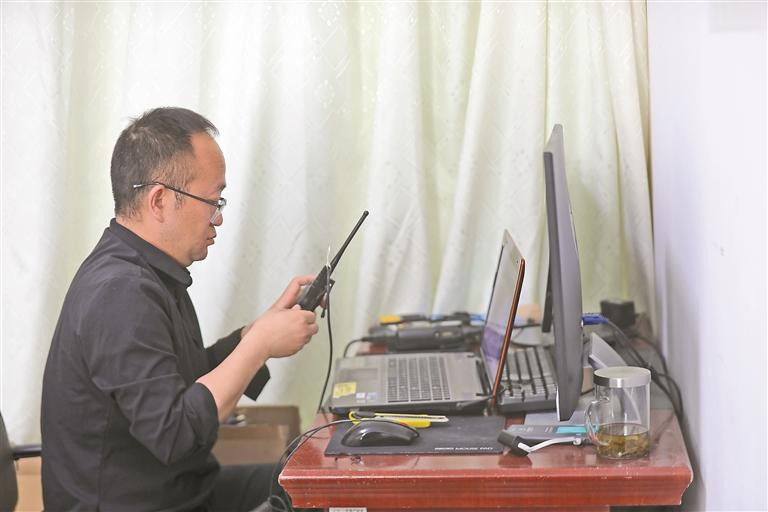
LHASA -- Yu Wenhao, project manager of an intelligent monitoring platform of the Tangbei area of Sanjiangyuan National Park, can still vividly recall the hurdles he faced while building a monitoring station right at the headwaters of the Yangtze River.
Last October, Yu and his 20-member team trekked to the remote glaciers of Mount Geladaindong in the city of Nagqu, Southwest China's Xizang autonomous region, to erect a 15-meter-high monitoring tower at an altitude exceeding 5,300 meters.
"The journey was only about 120 km, however, it took us two days to reach the site. There were no roads!" Yu recalled. "With approval from local authorities, we braved the freezing cold, following experienced local guides to minimize our impact on the fragile plateau ecosystem."
The monitoring station is one of the 14 across the vast region, scattered in the Tangbei (areas under the administration of Xizang north of the Tanggula Range) area of the Sanjiangyuan National Park, as well as the Serling Co and Changtang national nature reserves.
Established in 2021 as part of China's first batch of national parks, the 190,700-square-km Sanjiangyuan National Park sits on the Qinghai-Tibet Plateau at an average elevation of over 4,700 meters. The Sanjiangyuan region, a typical representative of the alpine ecosystem, serves as an alpine biological germplasm bank, making it a crucial ecological security barrier in China.
The Tangbei area spans 48,700 square km, accounting for roughly 25.54 percent of the park's total area.
Since 2023, Nagqu has been developing a high-tech monitoring platform integrating satellites, drones, and ground sensors for real-time ecological tracking, according to Wang Mingqing, Party secretary of the forestry and grassland bureau of Nagqu city.
So far, 14 stations, including the latest one that Yu's team established in October 2024, have enabled long-term, automated monitoring of wildlife, glaciers, rivers, wetlands, and ecological restoration efforts across Xizang.
"Nowadays, we continuously upgrade the platform with AI algorithms to improve wildlife identification accuracy," Yu said.
Beyond technology, Yu highlighted growing local conservation awareness. He was deeply moved by affluent young herders volunteering to assist construction in challenging conditions, reflecting a shared commitment to conservation.
Today, over 6,000 former park residents serve as ecological rangers, transitioning from resource users to protectors.
"Thanks to advanced technology, local residents' engagement, as well as the intensive support from the country, wildlife populations in Tangbei are steadily rising," Wang said.
Namdrol, 48, a herder from Maqu township, Nagqu, joined in an environmental protection team of the headwaters of Yangtze River in 2016.
Over the years, Namdrol and his team have voluntarily organized river cleanups, rescued trapped wildlife, and intervened to prevent environmentally harmful activities.
"We conduct five to six inspection tours every month, covering over 40 km each time. Given the extreme fragility of this ecosystem, where any damage could be irreversible, strengthening ecological protection is absolutely critical," he said.
Xizang has always prioritized eco-environmental conservation and attached great importance to the conservation of the ecology of the Qinghai-Tibet Plateau.
It prioritizes eco-environmental conservation and green development, and strives to continuously improve eco-environmental governance and protect biodiversity on the Qinghai-Tibet Plateau. Xizang has emerged as one of the regions with the healthiest ecosystems in the world.
Official statistics show that Xizang has established 47 nature reserves of all kinds, covering 412,200 square km.
The region has also rolled out an eco-compensation system to increase the income of farmers and herders and strengthen their awareness of conservation. From 2016 to 2024, an average of 516,000 jobs for eco-environmental protection were created annually, providing an annual per capita income of 3,500 yuan (about $489.5).




- Shanxi ends province-wide blanket fireworks ban
- Audit: China fixes bulk of fiscal problems tied to 2024 budget
- China reports major gains in circular economy
- Chinese lawmakers review draft revision to banking supervision and regulation law
- Top legislature to study draft laws on environment, ethnic unity, national development planning
- Administrative organs must secure people's interests: senior judge