Urban youths flock to night schools to ease stress









As dusk falls in downtown Beijing, 36-year-old Shi Jinxi slips away from the crowds of people out for dinner and commuters heading home, making her way toward a classroom filled with the aroma of tea leaves.
At the Yi Hai Xin night school, tucked away in a busy commercial building, Shi settles into her tea art class, chatting quietly with her classmates as she warms cups, measures out leaves and pours hot water with deliberate care.
As the tea leaves dance in her cup, her tension seems to melt away. "I look forward to this every day after work," she tells Xinhua.
'Feel-good spending'
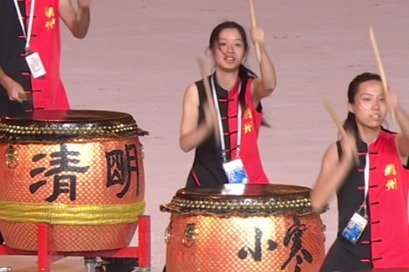
Shi is one of more than 50,000 students who have attended Yi Hai Xin since its establishment in 2023, with over half of them being young people looking to acquire a new set of skills. Classes, which include African drums, Latin dance, and wine tasting, offer far more than the chance to learn a new skill. For many students, they are a balm for urban stress and a new way to connect with others.
"At first, I just wanted to try tai chi," Shi said. "But then I signed up for everything from the drums to public speaking. It helps at work, and it gives me confidence."
Shi, who is a trainer at a securities firm, said that the night courses have improved both her skills and her social capital. "With tea art and wine tasting skills, I now have more to talk about with my boss and colleagues," she said.
"These courses add something fresh to the routine of work life. In a concrete jungle like Beijing, one needs a way to relieve stress," she added.
That blend of professional relevance and personal enrichment is attracting thousands of young Chinese people to night schools. And for newcomers to the city like night school student Yang Jing, the appeal comes from more than just learning.
"When I first moved to Beijing, I knew no one," she said. "After class, some of us would grab late-night snacks, and just like that, we became friends."
Night classes are part of a broader trend that Zhang Peili, a professor at the School of Economics at the Renmin University of China, calls "feel-good spending", where young consumers are willing to pay for emotional value and personal interests.
From the rising popularity of stress-relief toys to the global success of Pop Mart's Labubu collectibles — and now, the resurgence of night schools — "feel-good spending" continues to unlock consumer potential.
Gen Z's new tastes
Night schools are not new to China. They began with literacy and math classes in the 1950s and 1960s, shifted to vocational training courses like hairdressing in the 1970s and 1980s, and had progressed to computer and language courses by the early 2000s. Today, night schools are undergoing a quiet revival, focusing more on cultural and lifestyle-based learning rather than academic credentials.
"Young people are reshaping the market with their tastes," said Zhang, adding that by commuting, dining out, and shopping, these young people are injecting vitality into local businesses.
Data backs this potential. According to the National Bureau of Statistics, Generation Z consumers make up less than 20 percent of China's population but contribute 40 percent of overall consumption. Their purchasing power is projected to quadruple to 16 trillion yuan ($2.24 trillion) by 2035.
But supply isn't keeping pace. Wang Lulu, another student at Yi Hai Xin, said that she has wanted to learn first aid for a long time. "Every time I tried to sign up, classes were already full."
Currently, China's night schools generally fall into two categories: public night schools run by organizations like the Communist Youth League, and private institutions like Yi Hai Xin. Ensuring quality and accessibility requires collaborative efforts from the government, communities and businesses, Zhang noted.
She believes that night schools could even spark new forms of cultural and entertainment consumption — similar to the rise of grassroots sports tournaments, which are gaining steam in rural China.
"Once people develop more hobbies and skills, they may begin to crave group activities like public performances or amateur competitions," Zhang said. "That could open the door to a new sector of mass cultural entertainment."
According to Liu Guojie, principal of Yi Hai Xin, the school offers more than 100 classes across its campuses every week, about a third of which have been inspired by student requests.
"Students often tell me directly what they want to learn, and we create the classes for them," Liu said. "This model isn't just for Beijing and Shanghai. We plan to expand to second-tier and third-tier cities as young people there need an outlet just as much."
Xinhua






- Xi attends carrier's commissioning
- Senior Xi'an official facing probe by China's anti-corruption watchdogs
- Philippines risks creating trouble for itself: China's defense ministry
- Newborn with congenital heart disease receives life-saving surgery in Yunnan
- Hong Kong charity signs diplomatic talent deal with Beijing university
- Aircraft carrier Fujian, commissioned