



AI in the eyes of writers, Sinologists









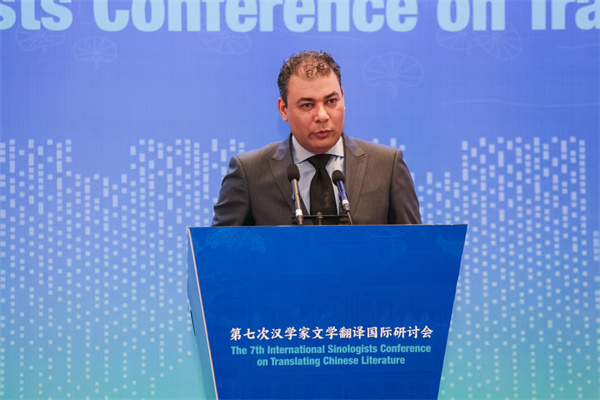
Ahmed Elsaid, Egyptian Sinologist and president of Bayt Alhekma Cultural Group, a publishing house specializing in Arabic translations of Chinese literary works, argued that the impact of AI—one of the most advanced technologies of our time—is comparable to that of personal computers when they were first introduced.
"Modern people who don't use AI, like those who refused to use personal computers, will be gradually made redundant," he said.
Consequently, the Egyptian entrepreneur, who oversees more than 100 translators, instructed his employees to view AI as a secretary that assists in research and material organization, rather than as a boss to whom they must listen.
"Currently, when AI is asked to translate excerpts from a novel, it generates only the literal meaning of the words, rather than producing true literature," said the Sinologist. He highlighted that the Chinese language is nuanced and often implicit, which presents a significant challenge for translators.
When translating literary works, translators, in addition to being proficient in both languages, must think like a Chinese person and only by doing so can they capture the style, tone, and cultural nuances of the original work in their translation, he said.
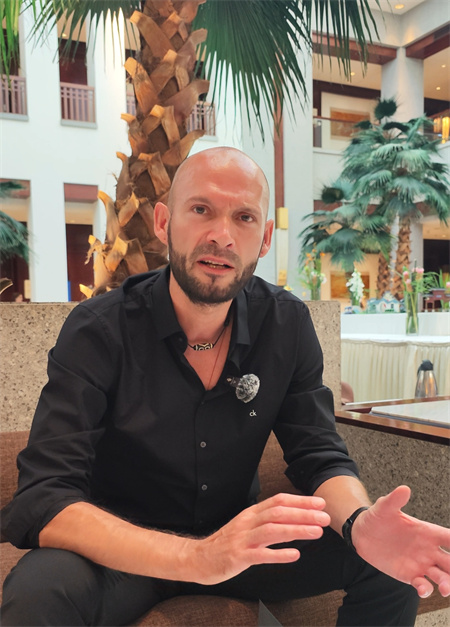
Danish Sinologist Peter Damgaard, known for translating a wide variety of modern and contemporary Chinese literary works, such as Lu Xun's Call to Arms and Mo Yan's The Garlic Ballads and Red Sorghum: A Novel of China, believes that translating Chinese novels requires conveying not only the meaning but also the style in the target language.
"Currently, AI is capable of translating the meaning of a novel, but it struggles to match the skill of a trained translator when it comes to preserving the book's unique style and flavor, which brings most of the enjoyment to readers in the target language," he explained.
Damgaard acknowledged that deciphering a book's distinct style and then finding suitable expressions in Danish to represent it is a challenging and time-consuming task.
"I typically only gain a clear understanding of a book's style after completing the first draft of my translation," he said. He also expressed his ambivalence about using AI to assist in his work, stating, "I'm concerned that I would miss out on the experience of discovering the essence of a book through careful reading and thought".
Some Sinologists noted that there are publishing companies in their countries utilizing AI to translate literary works, which are then proofread by human translators. They agree that the quality of AI translations is often so poor that they fail to meet the standards necessary for proofreading.
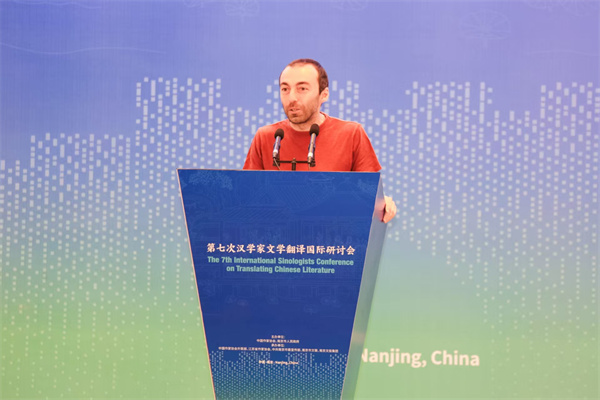
"It can be a dangerous thing for those who don't have much knowledge in literature or translation to embrace AI," cautioned Bulgarian Sinologist Stefan Rusinov. His translated works include Mo Yan's novel Sandalwood Death and Liu Cixi's sci-fi trilogy Remembrance of Earth's Past.
The Bulgarian Sinologist suggested that people should reevaluate the role of AI in literary translation.
"Instead of relying on humans to proofread AI translations, we should do the reverse. AI can check our translations for potential errors. If a writer's quote is incorrect or incomplete, we can ask AI to help fill in the missing information."
Rusinov spent three years translating Liu Cixin's trilogy directly from Chinese to Bulgarian, during which he exchanged emails with the author to clarify confusing technological details.
"I was so absorbed in the story that even when I wasn't working, I sometimes couldn't hear what my wife said to me because I was still lost in space," Rusinov recalled, laughing.
"I believe that individuals like me, who are willing to dedicate three years to translating a book, are valuable in our society. This raises an important question: if AI can fully replace humans in translating literature, are we prepared to lose people like me?" he asked.




















