Green shoots of recovery for global brands in China
Overseas carmakers regain some lost ground through localization efforts









Several global carmakers are now showing signs of recovery in China — thanks to a wave of bold localization strategies aimed at reclaiming relevance in a market increasingly dominated by domestic brands and rapid electrification.
Toyota Motor Corporation has emerged as a standout performer. The number-one carmaker in Japan sold 837,700 vehicles in China in the first half of 2025, including Lexus, representing a 6.8 percent increase year-on-year.
The performance marked its first half-year growth in four years and took its cumulative China sales past 25 million units, underscoring its long-term presence even as market dynamics shift rapidly.
Electrified models were a key contributor. Its joint venture FAW Toyota's electrified vehicle sales reached 185,000 units in the first half, making up 49 percent of total volume.
Its new electric bZ5 sedan delivered over 10,000 units just six weeks after launch, including 6,189 units in June alone.
Another joint venture GAC Toyota's electric bZ3X SUV also gained rapid market traction, with more than 30,000 cumulative orders and nearly 20,000 deliveries within three months.
Hybrid models continue to perform strongly, led by the Camry sedan, which recorded 98,100 units sold — a 62 percent year-on-year rise.
These numbers suggest that Toyota's electrification push is beginning to align with Chinese consumer expectations, especially as the transition from internal combustion to electric accelerates.
The bZ line, launched under Toyota's Beyond Zero umbrella, is designed to cater to China's increasingly sophisticated EV demands.
Toyota's localization efforts have also intensified. Under its "One R&D" initiative, the company has integrated resources from its joint ventures, placing full responsibility in the hands of local teams.
This shift includes the appointment of a "Chief Engineer for China "position, allowing local teams to lead vehicle design.
GAC Toyota's bZ3X is the first model developed entirely by the company's Chinese R&D team, signaling a more structured effort to tailor products to local preferences.
Volkswagen, once the undisputed leader in China, has also recalibrated. While its total first-half sales in the country fell slightly by 2.3 percent to 1.31 million units, June saw a 9 percent year-on-year rebound — an early sign that its localization efforts are taking hold.
VW has been investing heavily in local R&D. Its 3.5 billion-euro ($4.1 billion) engineering center in Hefei, Anhui province, has been pivotal in developing the company's new line of vehicles with functions that tech-savvy Chinese car buyers desire.
The automaker has been working with Horizon Robotics, a Chinese technology company, to develop smart driving solutions for its models.
By 2030, VW plans to offer 50 NEV models in China, 30 of which will be fully electric.
"For us, 'in China, for China' is not just a slogan, it's our execution mode," said Ralf Brandstaetter, chairman and CEO of Volkswagen Group China.
"Many companies claim this 'in China for China' approach, but for us, it's a real strategy brought to life," said Brandstaetter.
General Motors is another global automaker staging a comeback. After several years of sluggish growth, GM has now posted three consecutive profitable quarters in China.
In Q2 2025, its sales in the country jumped 20 percent year-on-year; its strongest quarterly growth in four years. NEV sales grew 50 percent, led by models like the Wuling Hongguang MINI EV.
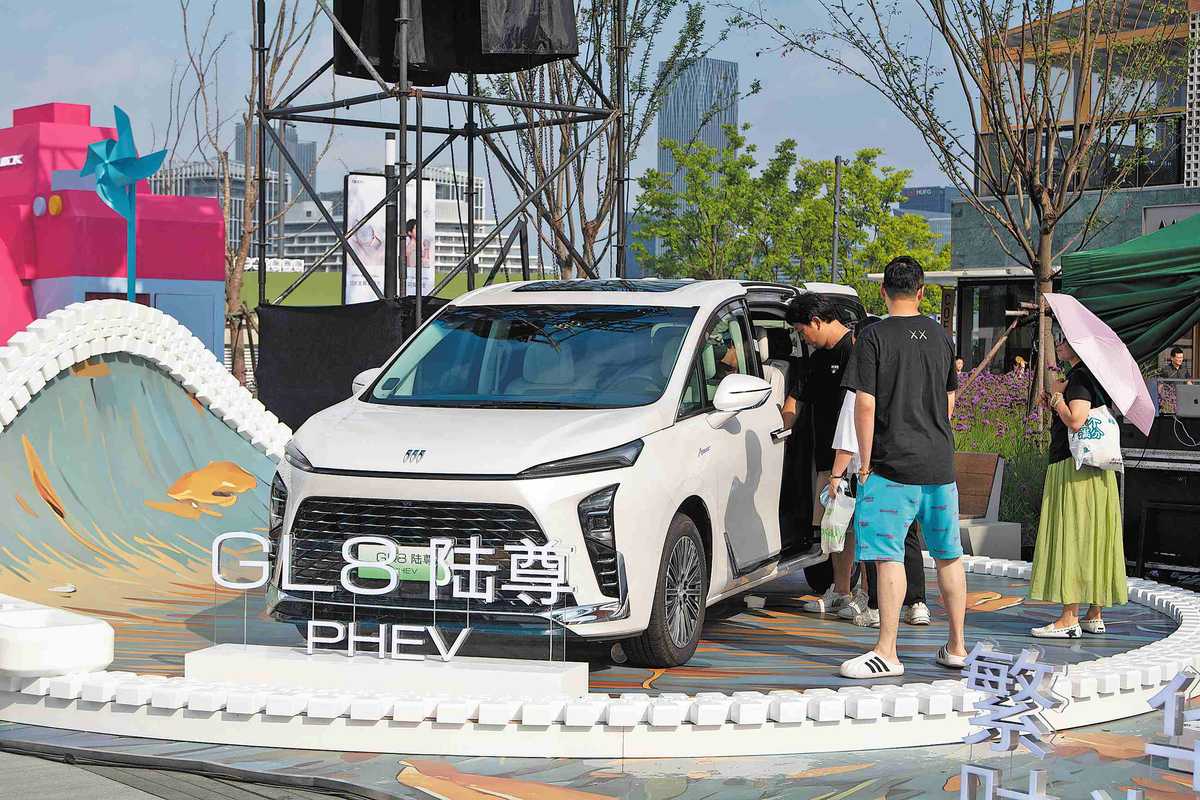
Buick, GM's key brand in China, launched its first plug-in hybrid MPV, the GL8 Lushang, in April, reinforcing its dominance in the high-end MPV segment.
Meanwhile, GM debuted Electra, a high-end EV sub-brand under Buick, backed by the locally developed Xiao Yao software and hardware platform for smart electric vehicles.
Foreign manufacturers are facing an increasingly complex environment in China. Domestic brands accounted for 68.5 percent of total passenger car sales in H1 2025, while NEVs made up 44 percent, according to the China Association of Automobile Manufacturers.
Analysts said price competition, shorter product cycles and rising consumer expectations around digital features have forced global brands to adapt more rapidly.
While Chinese automakers continue to gain market share, especially in entry-level and mass NEV segments, foreign carmakers are seeking to retain relevance through differentiation, platform flexibility and product localization.
Their recent performance suggests these adjustments may be beginning to yield results, albeit within a much narrower competitive margin than in previous years, said analysts.