Industrial prowess of China a subject of serious study









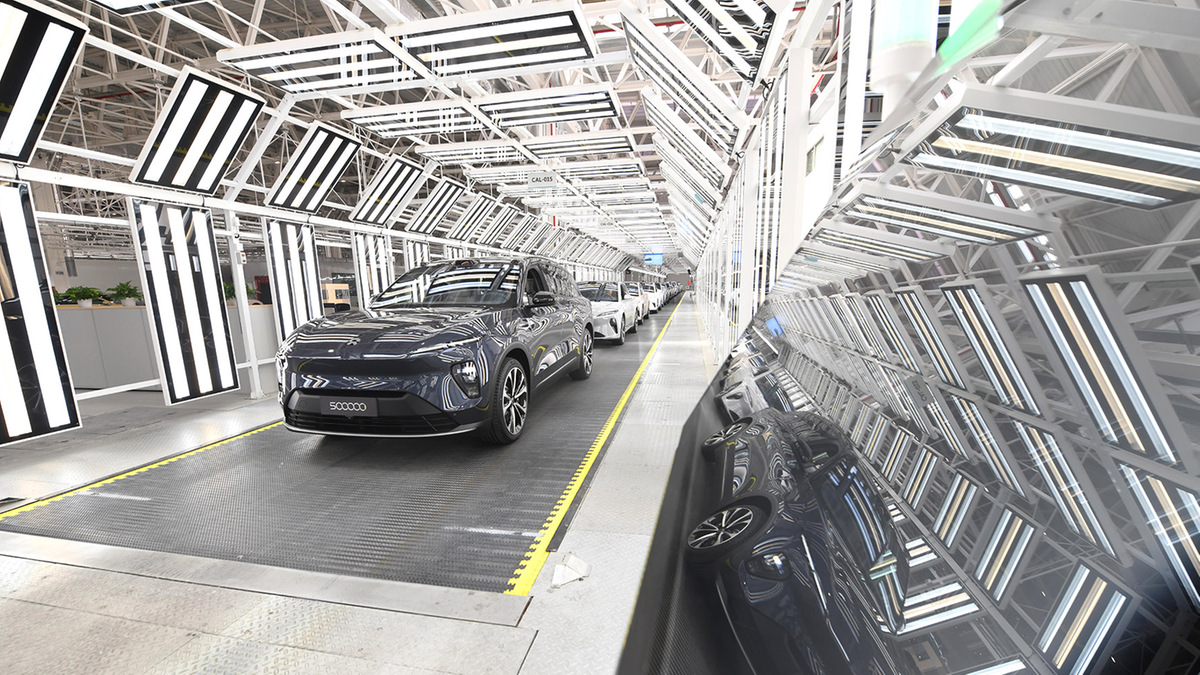
China now accounts for some 30 percent of global manufacturing output, almost equal to the entire G7 member states' combined share. And its share is still growing.
To truly understand this shift, though, we have to leave behind old stereotypes. The image of China as merely the "world's factory" churning out inexpensive toys and knockoff electronics is outdated. Today's China has an industrial system that is expansive, deep and remarkably adaptive.
China has an advantage in not just one thing. It enjoys advantages in raw materials, advanced manufacturing, scale, speed and integration — and its manufacturing prowess rests on a foundation that is both broad and deep.
From steel, cement and aluminum to rare earth elements, China enjoys unmatched scale and cost efficiency, ensuring stable supplies that underpin industrial security. In sectors such as solar photovoltaic panels, lithium-ion batteries, electric vehicles (EVs) and consumer electronics, China has advanced beyond mere participation in to shaping global supply chains and export markets. Even in traditional, labor-intensive industries — clothing, toys, home appliances, furniture — it has managed to keep its production costs competitive because of its expanding automation and production capacities.
More important, China is rapidly moving up the value chain in equipment manufacturing, from high-speed railways and EVs to industrial robots and advanced machinery, transforming itself from a mid-tier manufacturing powerhouse to a serious player in high-end equipment.
Sure, there are still areas such as advanced chips, aircraft engines and high-end medical devices in which the United States continues to enjoy an edge. But China is closing the gap thanks to its increased investment in R&D and intensive high-tech development. This isn't about confrontation or replacement, but about resilience and standing on one's own feet.
China's journey has been far from easy. Decades ago, its steel production targets were met with skepticism. Yet today, China produces more than 1 billion tons of steel a year, with Hebei province alone producing more steel than many countries due to the country's steely resolve.
China's industrial strength is not only about numbers. It's about security and stability too. In this information age, manufacturing remains a major source of national power, with recent conflicts underscoring the fact that whether a country produces jet fighters, artillery shells or drones, industrial capacity matters.
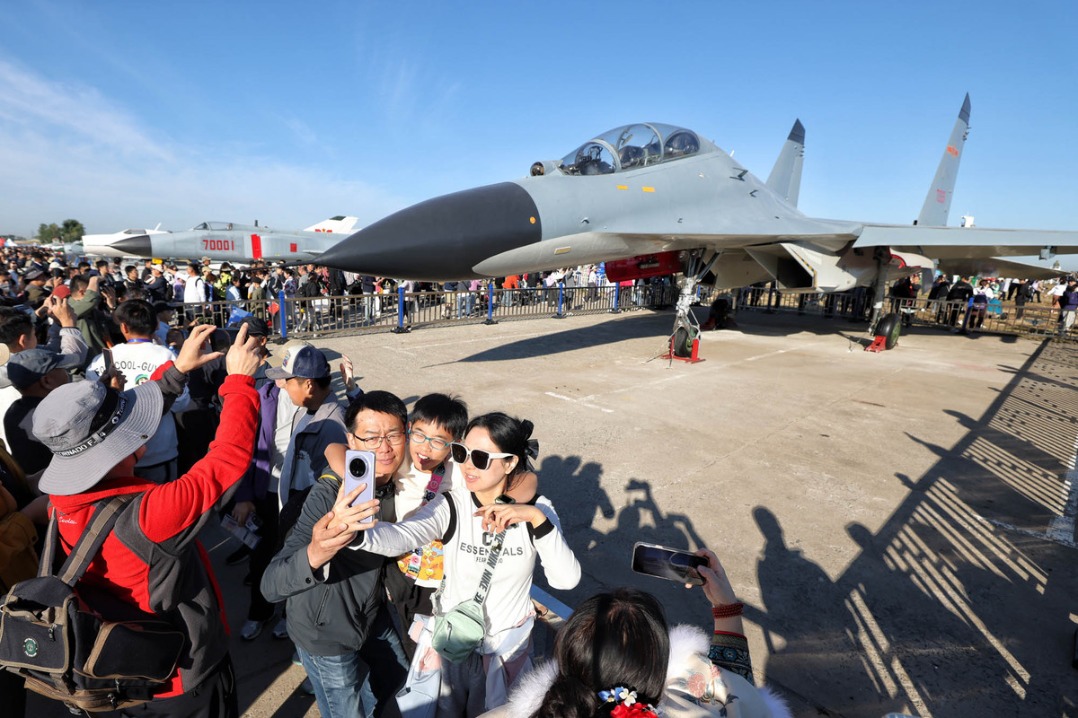
China's industrial base supports its defense capabilities, with new-generation products like the J-20 fighter jet demonstrating how its homegrown technology has advanced to boost its ability to safeguard national security.
China leads by a wide margin in terms of production of civilian drones, with Guangdong province alone producing about 7 million such drones in 2024.
Even among observers with reservations about China, there's growing recognition that there are development lessons to be learned from China.
In a recent article in The New York Times, Jacob Dreyer, a US writer who's spent nearly two decades in Shanghai, praises China's "far-sighted industrial policy", noting how AI isn't just strengthening the country's defense or high-tech sector, but also improving its education and healthcare systems. Dreyer has also highlighted China's massive investments in clean energy and the fact that its carbon emissions may be peaking.
Dreyer has described Chinese cities as clean, safe and well-connected, with gleaming highways and high-speed railways. His message is clear: don't dismiss China; instead, study it, and learn from its commitment to improve its infrastructure, education, and other systems.
Besides, an article in Foreign Affairs magazine recently said that if the US wants to achieve similar results, it needs to devise a clear-cut industrial strategy. The article cited how Hefei, Anhui province, once underdeveloped, has now become an EV production hub — and even called it "the Detroit of the 21st century".
These aren't small shifts in tone. For years, many in the West viewed China's development model with skepticism, or dismissed it outright by calling it "authoritarian" or "unsustainable". The West's broader narrative often frames things as an ideological rivalry between "democracy" and "authoritarianism", which is incorrect and reflects the West's shortsightedness.
Political systems may differ and their values may be different, but the results are hard to ignore. Whether in EVs, batteries, solar power or shipbuilding, China isn't merely catching up; it's leading.
This shift in perception echoes history. In the late Qing Dynasty (1644-1911), China underestimated the power of foreign technology and paid a steep price for it. Reformers then argued that "Western learning is necessary for practical use".
Today, the same humility to learn from others is emerging globally. Some Americans suggest combining "American essence and Chinese learning" to derive more mutual benefit, instead of ignoring each other and not capitalizing on the two economies' complementarity.
Of course, China has its own challenges. Issues such as uneven regional development and social pressures aren't going away. But these aren't signs of stagnation. Instead, these are development opportunities.
China's industrial rise is not just China's story. It's a global story that demands global reflection. In a world of shared challenges, openness to learning from one another may be the most important lesson of all.
The author is an independent content creator who operates the account "Ming Shu Za Tan" across multiple social media platforms. The views don't necessarily reflect those of China Daily.
If you have a specific expertise, or would like to share your thought about our stories, then send us your writings at opinion@chinadaily.com.cn, and comment@chinadaily.com.cn.