Japan's creative visual language reaches worldwide design communities










Creative communities worldwide hold Japanese graphic designs in high regard, and the ongoing exhibition at the Fosun Foundation Shanghai features works by some of the country's best-known designers.
The exhibition, Yitisiga: Graphic Design in Japan, opened on July 26 and runs to Aug 23. It is jointly presented by the Fosun Foundation and the Japan Graphic Designers Association, one of the most influential organizations for graphic designers in Asia.
The exhibition is one of the largest and most comprehensive displays of Japanese graphic design in China to date, featuring over 300 original works by more than 100 legendary figures across 1,200 square meters, arranged in five sections.
"Yitisiga" is a colloquial phrase in the dialects of the Yangtze River Delta region used to describe a large variety of things, extensiveness, and sometimes chaotic states. The title signifies the inclusiveness, diverse visual elements, and rich styles of graphic design, according to Gong Qijun, co-curator of the exhibition.
The Japanese association was founded in 1978 and has more than 6,000 members today, the majority of whom work in Japan. The JAGDA Award is the highest accolade in Japanese design, representing the shifting winds of visual Japanese creativity each year, Gong says.
The first section of the exhibition showcases award-winning works by 10 leading designers, including Kenya Hara, Issay Kitagawa, and Ryosuke Uehara.

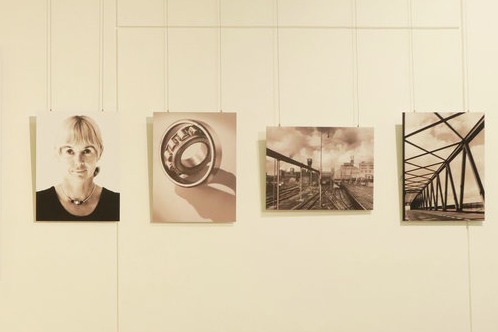
The second section features the original works included in the yearbook Graphic Design in Japan, which is compiled by the association and spans posters, packaging, digital media, signage, and spatial presentation. Presenting the yearbook's past 30 years, it offers viewers a panoramic view of the shifts in visual language as Japanese society changes, while bearing witness to the expanding boundaries of visual vocabulary and media.
The third section focuses on Issay Kitagawa, winner of the Yusaku Kamekura Award, the highest honor in graphic design in Japan, which is named after the association's first president, who has continued to influence the worldwide designer community.
Kitagawa is "difficult to categorize", Gong says. Kitagawa and his company GRAPH follow a principle of "compressed design", which emphasizes a unified innovation chain linking materials and craftsmanship to communication and social significance, Gong says.
As Kiyonori Muroga, former editor-in-chief of the magazine Idea, notes: "Kitagawa's visualized thinking pursues the possibility of something beyond information, like the mechanisms for the reestablishment of human relationships. This kind of 'wild thinking'is what makes communication design possible."
Kitagawa's unique "wild thinking" enabled him to achieve the perfect balance between design and artistic expression, along with commercial success, Gong says. Gong invited six guests, including designers, editors, critics and educators from China and Japan, who he believes have a better understanding of Kitagawa's creative ideas, to choose which of Kitagawa's works would be included in the exhibition.
The fifth section is the reading area, and the fourth section features the documentary 25 Conversations between Chinese and Japanese Designers.
In the documentary, curators Gong and Sun Mingyuan introduce 25 creative professionals, including designers, curators, university professors, and science fiction writers from Tokyo and Osaka, as well as Shanghai, Beijing, Hangzhou in Zhejiang province, Shenzhen and Guangzhou in Guangdong province, and Macao.
Each professional shares their creative experiences, circumstances, observations, and thoughts on topics in contemporary society, technology, and culture.
Kitagawa speaks of the differences between art and design in the video, saying that "art is from 0 to 1, and design is from 1 to 10. … It has key importance and great value to society".
Guang Yu, a Chinese designer, talks about book designs. Designers must respect the viewers instead of just piling up elements of design, he says. "I think appropriate propriety is most important."