Jin Jiang Hotels expanding presence in SEA markets
Chinese hotelier has partnered with Malaysia's Riyaz as part of its regional expansion









Riding the wave of travel to and within Southeast Asia, Shanghai Jin Jiang International Hotels Co Ltd is extending its footprint around the world.
Currently, the scale of Jin Jiang's hotel portfolio tops Asia and ranks second in the world. By the end of 2024, Jin Jiang had invested in and was operating over 14,120 hotels, covering more than 100 countries.
In the overseas market, Jin Jiang owns over 3,400 hotels, ranking first, second and third in terms of scale in India, Europe and Africa, respectively.
Taking its sub-brand Radisson as an example. Radisson owns 1,526 hotels in more than 95 countries.Specifically, newly opened hotels are favored by overseas consumers.
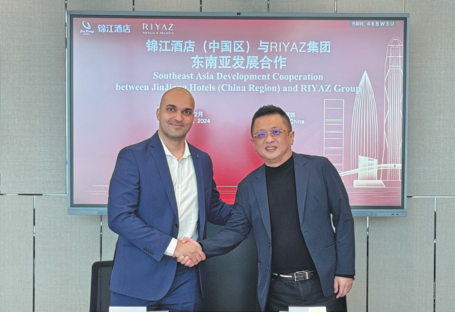
Starting from 2024, Jin Jiang has been ramping up efforts in the Southeast Asian markets. In December, Jin Jiang Hotels China Region inked a deal with Riyaz International Sdn Bhd, a Malaysian hospitality and lifestyle group, to promote the commercialization of five hotel brands in Southeast Asia. The hotels would be developed, constructed and operated in Malaysia, Indonesia, Vietnam, Laos, Cambodia and the Philippines.
In April, as the first project under the overseas strategy of Jin Jiang Hotels China Region, the Metropolo Jinjiang Hotels' first property in Laos, was officially signed in Luang Prabang. On June 27, another brand of Jin Jiang — the Lavande Hotel's first property in Malaysia — was established in Victoria Street in Penang.
According to Zhang Zhonghao, senior vice-president of Jin Jiang Hotels China Region, during the process of going global, Jin Jiang has adjusted its measures to local conditions, by deeply learning about local culture, customer needs and the market environment, to make targeted adjustments to achieve the integration and balance of brand standards and local culture.
Take Metropolo Jinjiang Hotels' property in Laos as an example. The dominant color scheme adopts the brown tones commonly seen in Southeast Asian wood veneers, stone materials and wall coverings.Meanwhile, it continues to use blue and gold colors, which are part of Metropolo Jinjiang Hotels' standard color scheme, proportionally on walls, furniture and artwork.
"The color combination cleverly balances Southeast Asian regional characteristics with Metropolo Jinjiang Hotels' brand identity — the brown color scheme lays the foundation for the overall atmosphere, while the brand's blue/gold serves as a visual focal point, enhancing brand recognition," Zhang said.
Furthermore, as Laos advocates handicrafts, Metropolo Jinjiang Hotels' property in Luang Prabang has incorporated handmade wall coverings in some of its designs, and extracted elephant group patterns from local culture, reinterpreting them with abstract lines, and integrating them into a spatial design, reflecting both local cultural characteristics and modern design sense.
Speaking of why Jin Jiang has accelerated its going global pace in the Southeast Asian market, Zhang said: "With the gradual implementation of a series of visa free agreements and other entry and exit policies, China has entered the 'visa free era' with Southeast Asian countries such as Singapore, Malaysia and Thailand."
As a global tourist destination, Southeast Asia holds an important position in China's outbound tourism market. Take Malaysia as an example, official data show that in 2024, Malaysia received a total of 37.96 million international tourists, with an increase of 24 percent in overnight visitors compared to 2023.
"At the same time, the hotel industry in Southeast Asia generally exhibits a low rate of chain operation, coupled with factors such as a high proportion of Chinese, making it a strategic market with enormous development potential for the domestic hotel industry," Zhang said.
Wang Peng, an associate research fellow at the Beijing Academy of Social Sciences, said: "Southeast Asia, as an emerging hot spot in the global tourism landscape, has attracted a large number of international tourists with its unique natural landscapes and cultural diversity. In recent years, global tourism consumption has shown a trend of 'experience oriented' and 'cultural depth tourism', and Southeast Asia happens to meet this demand. Chinese hotels going global to Southeast Asia can seize the opportunity of the shift of global tourism focus to emerging markets and strategically plan for high growth potential areas in advance."
"Southeast Asia is a key node of China's Belt and Road Initiative. The process of regional economic integration has accelerated, providing Chinese enterprises with the convenience of policy coordination and market interconnection. As an important component of the service industry, the hotel industry can participate in regional industrial chain integration by going global, while leveraging the geographical proximity between Southeast Asia and China to reduce logistics and operational costs," he said.
According to Zhang, during the process of going global, it has run into some challenges. Take the Southeast Asian markets as an example, there are cultural and legal differences. The work style of employees in Southeast Asia is different from that in China, and management strategies may need to be adjusted. In addition, hotels need to make localized adjustments in service etiquette, catering content and other aspects to meet the needs of local consumers.
Furthermore, there are significant differences in the laws and regulations of different countries and regions regarding hotel operations, labor employment, environmental protection, and other aspects, Zhang said.




Today's Top News
- Trump says 'a lot closer' to Ukraine peace deal following talks with Zelensky
- China pilots L3 vehicles on roads
- PLA conducts 'Justice Mission 2025' drills around Taiwan
- Partnership becomes pressure for Europe
- China bids to cement Cambodian-Thai truce
- Fiscal policy for 2026 to be more proactive