Partnership seen as key to Sino-Indian relations









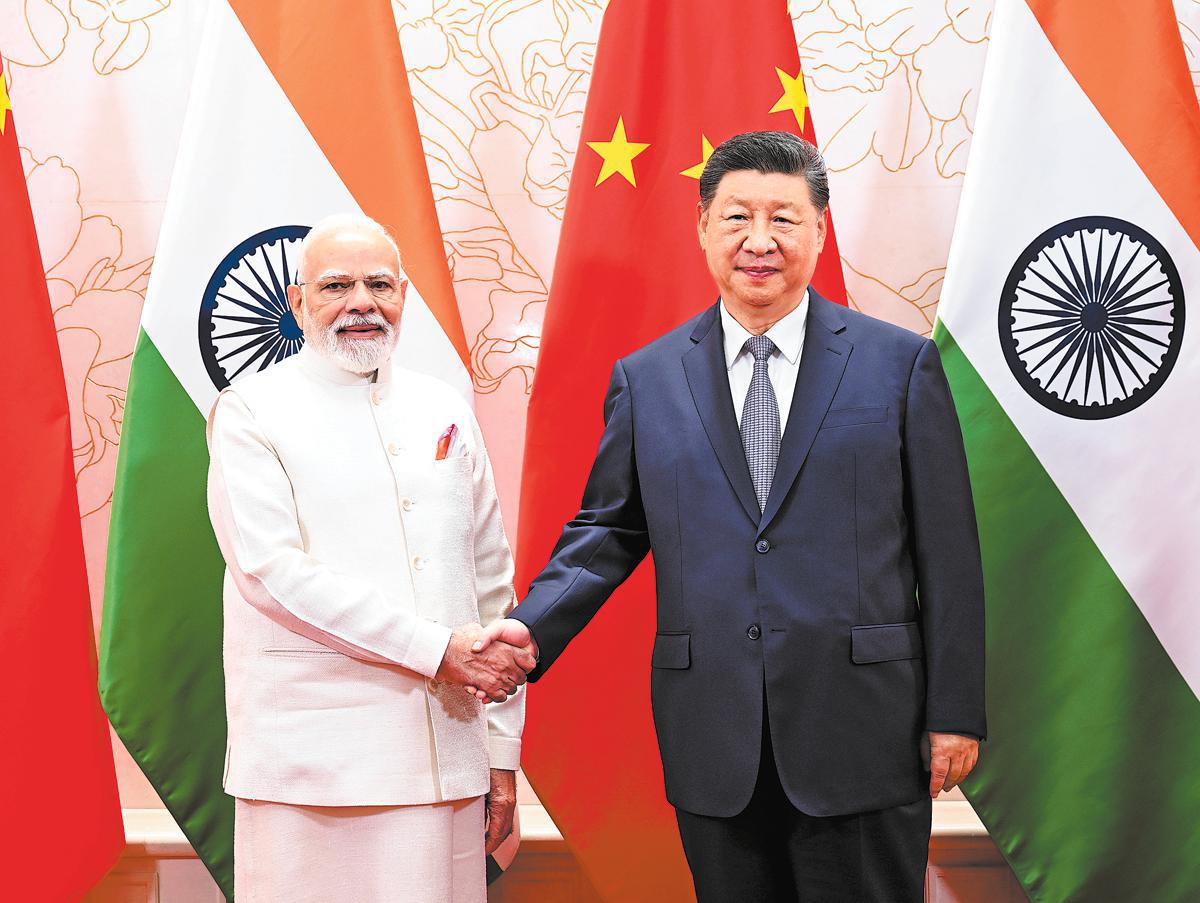
The much-anticipated meeting between the leaders of the world's two most populous nations took place in Tianjin on Sunday, as President Xi Jinping and Indian Prime Minister Narendra Modi stressed that both nations must act as partners rather than rivals and expand exchanges and cooperation.
Xi welcomed Modi on the sidelines of the Shanghai Cooperation Organization summit, which marked the Indian leader's first visit to China since 2018.
On Aug 19, Beijing and New Delhi reached a 10-point consensus on boundary management during talks between special representatives, signaling the latest step toward stabilizing engagement and cooperation between the two neighbors.
Xi said the two nations should work together to maintain peace in the border regions and avoid letting the boundary question define overall relations.
As long as both countries keep to the overarching direction of being each other's cooperation partner instead of rival, and seeing each other as development opportunity instead of threat, the specific matters in the relationship will fall into place and there will be steady and sustained progress in bilateral ties, he said.
The right choice should be for China and India to be good-neighborly friends and partners that help each other succeed, and have the dragon and the elephant dance together, he said.
The Tianjin meeting was the second sit-down between the two leaders in a year, after both leaders met in Kazan, Russia, in October, which enabled "a reset and start anew" in bilateral relations.
Xi also called on the two nations, both key members of the Global South, to handle bilateral ties from a strategic and long-term perspective, pursue further improvement of ties from the Tianjin meeting onward, and work for sustained, sound and steady development.
The Chinese president stressed the need for heightened exchanges and cooperation, saying that the two nations, both at a crucial stage of development and rejuvenation, should focus on development and promote mutual support, mutual complementarity and mutual success.
It is important for both sides to accommodate each other's concerns and get along in peace and harmony, Xi said. "We should also step up to shoulder our responsibility for history, uphold multilateralism, strengthen communication and coordination on major international and regional issues, defend international fairness and justice, work together for a multipolar world and greater democracy in international relations."
Modi, who later described the meeting as "fruitful" on social media, told Xi that India and China are partners, not rivals, and the two nations' consensus far outweighs any dis-agreement.
"The cooperation between us is linked to the interests of 2.8 billion people of our two nations," Modi said, according to a statement on his website.
"This will also pave the way for the welfare of all humanity. We are committed to further strengthening our relations on the basis of mutual trust, respect and sensitivity."
He noted the progress in bilateral ties such as peace and stability in the border regions, adding that direct flights between the two nations, which were suspended in 2020, are about to be resumed.
Modi also stressed India's readiness to seek a fair, reasonable and mutually acceptable resolution of the boundary question with China.
Both India and China pursue strategic autonomy and an independent foreign policy, and the bilateral relationship is not subject to the influence of any third party, Modi said. India-China cooperation will make the 21st century a genuine Asian century, and the two sides joining hands will increase the strength of multilateralism in international affairs, he added.
Liu Zongyi, director of the Center for South Asian Studies at the Shanghai Institutes for International Studies, said strategic perception remained crucial for sustained growth in ties.
xuwei@chinadaily.com.cn




- Xi attends carrier's commissioning
- Senior Xi'an official facing probe by China's anti-corruption watchdogs
- Philippines risks creating trouble for itself: China's defense ministry
- Newborn with congenital heart disease receives life-saving surgery in Yunnan
- Hong Kong charity signs diplomatic talent deal with Beijing university
- Aircraft carrier Fujian, commissioned