Chinese researchers identify a key gene to combat 'cancer' in cruciferous crops









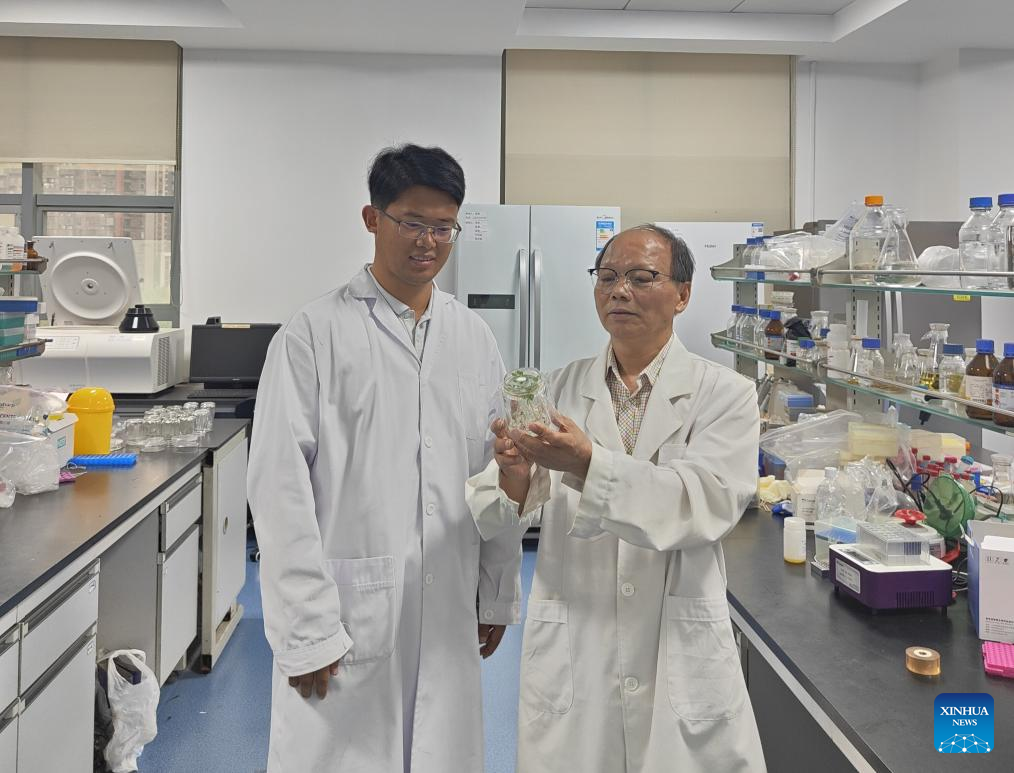
WUHAN -- A recent study led by Chinese scientists has identified a key susceptibility gene linked to clubroot disease, often called the "cancer" of cruciferous crops, offering durable resistance resources for cruciferous clubroot disease control and fresh insights into how plants defend against invasive eukaryotic protozoon pathogens.
This study, conducted by a team from the Oil Crops Research Institute of the Chinese Academy of Agricultural Sciences, was published in Nature Genetics on Monday.
Cruciferous crops hold significant economic and nutritional value, providing vegetables, edible oil and protein. However, their production faces a growing threat from clubroot disease, which has spread rapidly across more than 80 countries in recent years, causing global yield losses of 10 to 15 percent annually. In China alone, the disease affects over 20 million mu (about 1.3 million hectares) of farmland each year.
This disease is caused by the protozoon Plasmodiophora brassicae, which exclusively jeopardizes cruciferous species. Traditional breeding methods to control this disease, such as interspecific or intraspecific hybridization, often encounter challenges, including lengthy cycles and rapid loss of resistance.
According to Liu Lijiang, chief scientist of the research team, it took nearly a decade to identify the role of GSL5, a gene that facilitates infection. This gene can easily be hijacked by Plasmodiophora brassicae. This hijacking can result in the reinforcement of immune repression, disabling disease resistance signaling and enabling pathogen proliferation.
After identifying the gene, the researchers performed genome editing to knock out GSL5 in cruciferous plants. The genome-edited plants demonstrated broad-spectrum, high-level resistance to Plasmodiophora brassicae pathotypes with no adverse effects on plant growth or seed yield in the field trials.
This innovation provides a durable, efficient strategy for controlling cruciferous clubroot disease and supports the breeding of high-resistance varieties of cruciferous crops like rapeseed, Chinese cabbage and broccoli, Liu said.





- Xi urges deepening reform, opening-up during Guangdong inspection tour
- Xi attends carrier's commissioning
- Xi inspects Meizhou in South China's Guangdong
- Senior Xi'an official facing probe by China's anti-corruption watchdogs
- Philippines risks creating trouble for itself: China's defense ministry
- Newborn with congenital heart disease receives life-saving surgery in Yunnan