Chinese smart devices give AI ecosystem edge









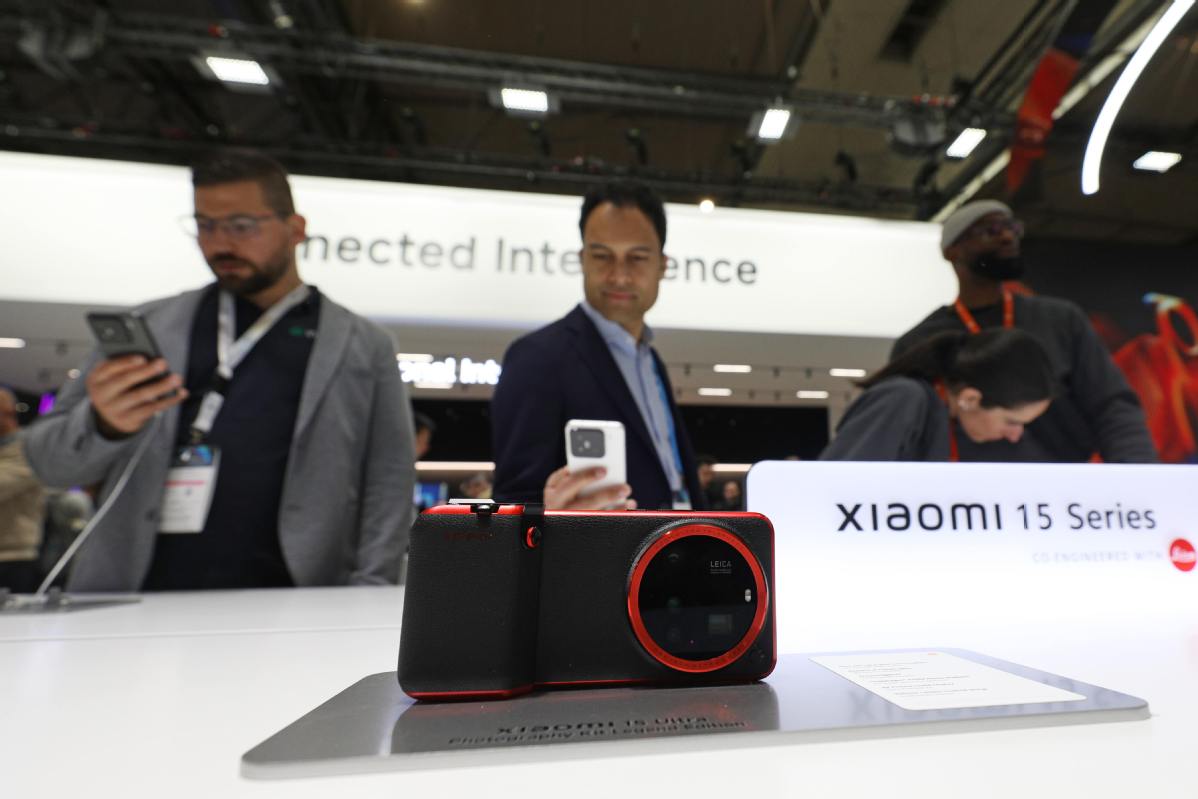
BEIJING — Step into any Xiaomi Store that has opened overseas this year — whether in Germany, Japan or South Korea — and you'll find more than just the Chinese tech giant's flagship smartphones.
Rows of connected devices line the shelves: wearables, smart TVs, robot vacuum cleaners, home appliances and electric scooters, showcasing an AI-powered smart life ecosystem — a vivid example of the latest trend driving the global push among Chinese smart device brands.
Backed by robust supply chains and cutting-edge AI innovation, companies like Xiaomi, iFlytek, Lenovo and Huawei have moved beyond competing solely on price.
Today, they're racing to become essential parts of global consumers' daily lives by seamlessly integrating into living rooms and offices, and even the cars people will drive in the future.
"AI empowerment and full-ecosystem synergy are emerging as key trends propelling Chinese smart device brands' global expansion," said Evan Kirchheimer, chief research officer at global technology research and advisory firm Omdia. "AI is fundamentally reshaping how consumer electronics interact with users — and with each other."
Xiaomi's global journey illustrates this shift perfectly. In its early days, the company focused nearly exclusively on smartphones to break into international markets. But since 2018, it has steadily expanded its product lineup to include other smart devices, building a product ecosystem featuring the integration of smartphones and the artificial intelligence of things, said Zeng Xuezhong, Xiaomi's senior vice-president and president of its international business.
This year, Xiaomi began its first major push into overseas markets for large home appliances, entering Southeast Asia. It has also announced plans to export electric vehicles by 2027.
"Our goal is to gradually build a global human-vehicle-home ecosystem, where smartphones, cars and household devices connect seamlessly," Zeng said. "This will be a key pillar underpinning our next phase of globalization, which features the export of business models."
Xiaomi is far from alone in this AI and ecosystem-driven global push. Leading Chinese AI firm iFlytek revealed in its 2025 half-year report that sales of its overseas AI hardware had more than tripled year-on-year, with its AI laptops gaining remarkable popularity in Japan and South Korea.
Liu Qingfeng, iFlytek's chairman, points to three clear growth drivers in the company's global expansion. "The overseas rollout of our large AI models, our integrated AI hardware-software products, and the globalization of our ecosystem will be critical to our success."
Industry data from Omdia paint a promising picture for the sector.
In 2025, shipments of AI-powered consumer electronics, including AI phones, AI PCs and AI headphones, are projected to surpass 500 million units, which will account for 40 percent of all consumer electronics sold worldwide. Chinese brands are already standing out in these high-growth categories.
Omdia data show that in the second quarter, international shipments of AI-equipped smartphones from Chinese brands surged 195 percent year-on-year, with Xiaomi, Honor and Oppo leading the pack. In the AI PC space, 30 percent of all global PC shipments in the second quarter were AI-capable, and Chinese tech firm Lenovo held a 21 percent share of that segment.
Kirchheimer noted that the success of Chinese brands stems from two key strengths. First, their complete supply chains and massive manufacturing scale, which have enabled them to respond quickly to global demand, keep costs competitive and deliver products on time. Second, their heavy investment in innovation — particularly in AI, system-level synergy and intelligent sensing technologies.
This global expansion is also boosted by policy support. In a recent directive, the Chinese government laid out clear targets for AI adoption: By 2027, the adoption rate of next-generation smart devices and intelligent agents should exceed 70 percent, and by 2030, that figure should rise to over 90 percent as AI becomes a cornerstone of China's high-quality economic development.
To capitalize on these emerging opportunities, Kirchheimer said that market players must double down on innovation — roll out new products for niche markets, and deepen the application of AI in devices to enhance cross-device collaboration and user experience.
"Once, Chinese brands were known for being affordable," he said. "Now, they're known for being innovative. Tomorrow, they could be known for the ecosystems that make their devices indispensable."
Xinhua