Faithful supporter









As the world becomes multipolar, China's role in UN-led global governance is continually growing
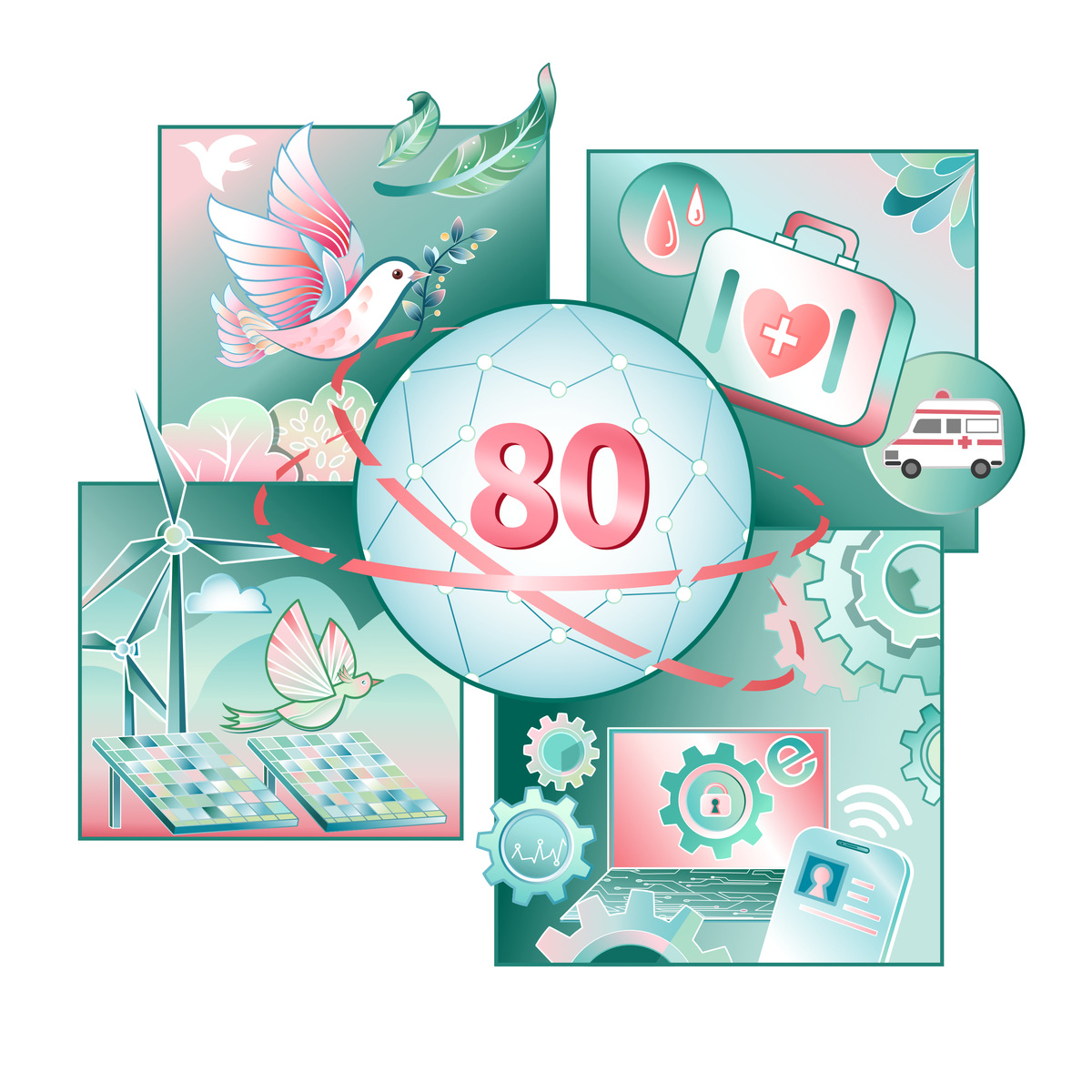
As the United Nations celebrates its 80th anniversary, the organization faces exceptional challenges — from climate change and digital governance to conflicts and public health. At the same time, we are living in an era in which hegemonism generates shocking issues such as the abysmal inequalities and exclusionary politics yielded by the emergence of protectionism and its sequential crises. In addition, the Cold War mentality, in all its dreadful forms, still poses a threat for humanity by creating conditions for conflict, violence and a breakdown of social cohesion.
Since the restoration of the lawful seat in the UN in 1971, the People's Republic of China has transformed into a leading contributor to peacekeeping, development and institutional reform. Over the years China's cooperation with the UN has continually expanded and deepened. It provides both active political engagement on various global security issues and a necessary dialogue for a community with a shared future for humanity. Furthermore, it has joined more than 20 international arms control treaties and mechanisms, including the Treaty on the Non-Proliferation of Nuclear Weapons, and the Convention on the Prohibition of the Development, Production, Stockpiling and Use of Chemical Weapons and on their Destruction.
In recent years, Beijing has initiated the Group of Friends on the Safety and Security of UN Peacekeepers, and facilitated the adoption of resolutions addressing the safety of personnel in peacekeeping missions. In peace and security, China is the largest provider of peacekeeping troops among the UN Security Council's five permanent members and the second-largest financial contributor to peacekeeping operations. It has deployed over 50,000 personnel across more than 20 missions, including South Sudan, Lebanon and Mali. Through the China-UN Peace and Development Fund, Beijing has financed over 80 projects and activities that support world peace and security. It is worth noting the fact that China will continue to make contributions to the China-UN Peace and Development Fund for an additional five-year period (2026-30).
About 160 UN projects in the field of peace and development are supported by China through the fund and more than 100 countries benefit from the projects that provide strong support for the implementation of the UN's 2030 Agenda for Sustainable Development and UN-related initiatives. China's approach is distinct: As it supports the UN's leading role in global governance on cyberspace, it emphasizes non-interference and sovereignty, while combining practical contributions with multilateral diplomacy.
Rather than replacing UN mechanisms, Beijing is integrating four interconnected global initiatives within existing UN structures to enhance inclusivity and well-being. In development and well-being, China has achieved remarkable milestones. Domestically, it has lifted nearly 800 million people out of abject poverty, reaching the UN's 2030 poverty-reduction target a decade early. Internationally, China drives South-South cooperation through around 10,000 technical cooperation and human resource development projects, and its Belt and Road Initiative links over 150 countries and over 30 international organizations, advancing the UN's Sustainable Development Goals. Meanwhile, China's contributions extend to climate, health and digital governance. It has pledged to be carbon neutral before 2060, delivered vaccines and medical aid to over 150 countries during COVID-19 pandemic and introduced the Global Initiative on Data Security to shape equitable digital governance frameworks. For instance, in April 2022, President Xi Jinping proposed the Global Security Initiative as a framework for the international security order. A year later, China launched the Global Artificial Intelligence Governance Initiative as the country's broader foreign policy objective for a people-centered approach to AI governance. In 2024, the 78th Session of the UN General Assembly adopted by consensus the China-tabled resolution on the International Day for Dialogue among Civilizations, aimed at stimulating global awareness of the value of diversity of civilizations.
By prioritizing cooperation on climate change policymaking, digital governance, and global health and food security, China is broadening its engagement beyond traditional development support and peacekeeping roles.
China will further integrate its global initiatives and projects with existing UN frameworks to ensure greater alignment with the organization's global agenda for peace and prosperity by 2030, which is focused on ending poverty, protecting the planet, and ensuring health, education, equality and sustainable growth. These non-legally binding goals require universal action to address issues such as climate change, inequality and hunger, while promoting strong partnerships. China's newly proposed Global Governance Initiative provides Chinese wisdom and solutions to the UN to help maintain global peace and development. In addition, China also supports UN agencies playing a coordinating role in food security, especially in the most vulnerable countries.
In the shifting 21st century landscape, China has emerged as a pivotal actor in shaping the UN's future, while smaller states, such as Cyprus, demonstrating how strategic partnerships under the UN framework can contribute to inclusive multilateral governance and policies to strengthen collective action in the decades ahead.
China and Cyprus established diplomatic relations in 1971. Following Cyprus' accession to the European Union in 2004, Sino-Cypriot relations further developed, notably in the domains of the economy, technology and culture. Amid China's growing influence globally, Cyprus offers a convincing example of how smaller states can benefit from and contribute to UN-aligned partnerships. China has provided personnel to the UN Peacekeeping Force in Cyprus, helping uphold peace and stability. Moreover, for the Chinese government, Cyprus provides a valuable gateway to Europe while facilitating South-South cooperation aligned with the UN's SDGs. This cooperation reflects China's commitment to UN-led multilateralism, while reinforcing Cyprus's strategic role as a bridge between Europe, the Middle East and Asia. For Cyprus, the strategic partnership with China enhances diversified development, positioning the island as a regional hub linking three continents. It also reflects a shared commitment to global solidarity and to supporting the UN's call for equitable access to public well-being resources. Furthermore, it strengthens multilateral solidarity, showcasing how diverse stakeholders can pool resources and influence to tackle shared challenges; it also aligns national strategies with UN priorities, enhancing the organization's credibility as a platform for collective solutions.
International political analysts have underscored the fact that the so-called liberal international order of the UN, which has been predominant and habitually contentious since 1945, is being challenged as never before. Meanwhile, many countries have raised the necessity for the UN to reform its governance structures to better reflect the multipolar reality and elevate voices from the Global South by ensuring efficient use of resources and measurable outcomes.
Overall, China's growing influence and strategic engagement in Central Asia, in regions across the Global South, such as South America, Africa and South Asia, exemplify the capability of multilateral collaboration to address shared global challenges. The combining of China's resources and four global initiatives within the UN's institutional framework demonstrates a practical pathway toward more inclusive and cooperative global governance. In particular, the four global initiatives reinforce both China's growing international leadership strengths and its role as a global peacemaker.
The author is a recipient of the 2024 Chinese Government Friendship Award and a former rector of the European University Cyprus. The author contributed this article to China Watch, a think tank powered by China Daily.
The views do not necessarily reflect those of China Daily.
Contact the editor at editor@chinawatch.cn.