Xinjiang, a magic land that merits greater understanding









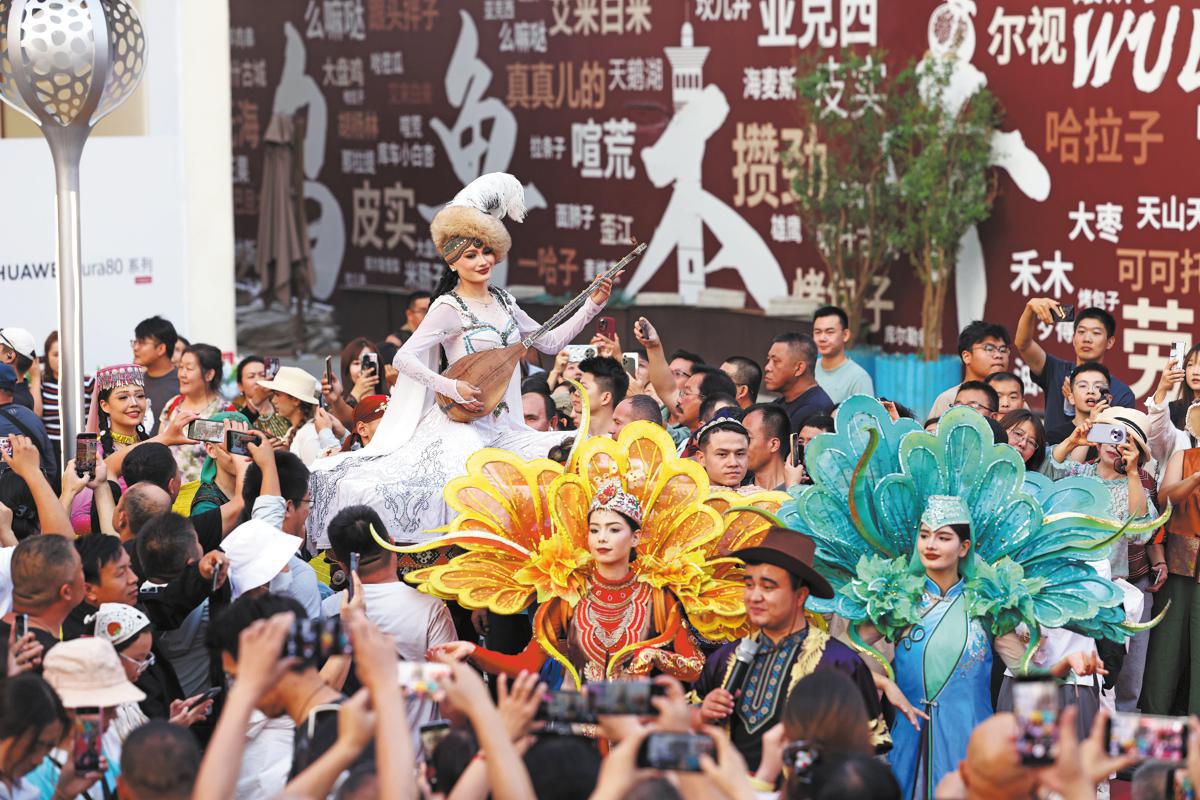
The Xinjiang Uygur autonomous region is perhaps one of the most misunderstood places in China by foreigners, if not the most.
I still remember a video clip I once watched on social media. A young woman of the Uygur ethnic group from Xinjiang was practicing for an IELTS test with a foreign teacher. She introduced herself as "Alina Amare". The teacher assumed it was only an English nickname and pressed her to say her "real Chinese name". What the foreign teacher didn't realize was that Alina was her Chinese name. That small moment spoke volumes about how easily Xinjiang is misread as a region inhabited by multiple ethnic groups since ancient times.
My first visit to Xinjiang was a few years ago, with a delegation of foreign diplomatic envoys from 25 countries. For many of them, Xinjiang was not only a novel experience, but their very first glimpse of China. Over five days, we traveled through Kashgar, Aksu and Urumqi, the regional capital.
I remember most vividly the old town in Kashgar, with stalls overflowing with local handicrafts and children darting through the mazelike alleys. It was such a lively scene — so far from the bleak picture painted by some foreign reports.
The diplomats were frank. Much of what they had previously heard about Xinjiang came from Western media, often framed in negative terms.
Seeing the region firsthand, they told me, gave them a different picture. They noted the harmonious coexistence of various ethnic groups practicing different religions, and they remarked on the sense of economic dynamism. Some even expressed an interest in exploring new cooperation between their countries and Xinjiang.
According to official figures, Xinjiang received more than 500 foreign delegations in 2024 alone, including political leaders, diplomats, entrepreneurs, academics and journalists. It was the busiest year yet for international exchanges.
I believe that behind the numbers are individuals, each forming their own impressions to take home.
This year marks the 70th anniversary of the founding of the Xinjiang Uygur autonomous region. Like many other reporters, I arrived in Urumqi by plane on Monday, ready to hear the stories of locals and their memories of the past seven decades.
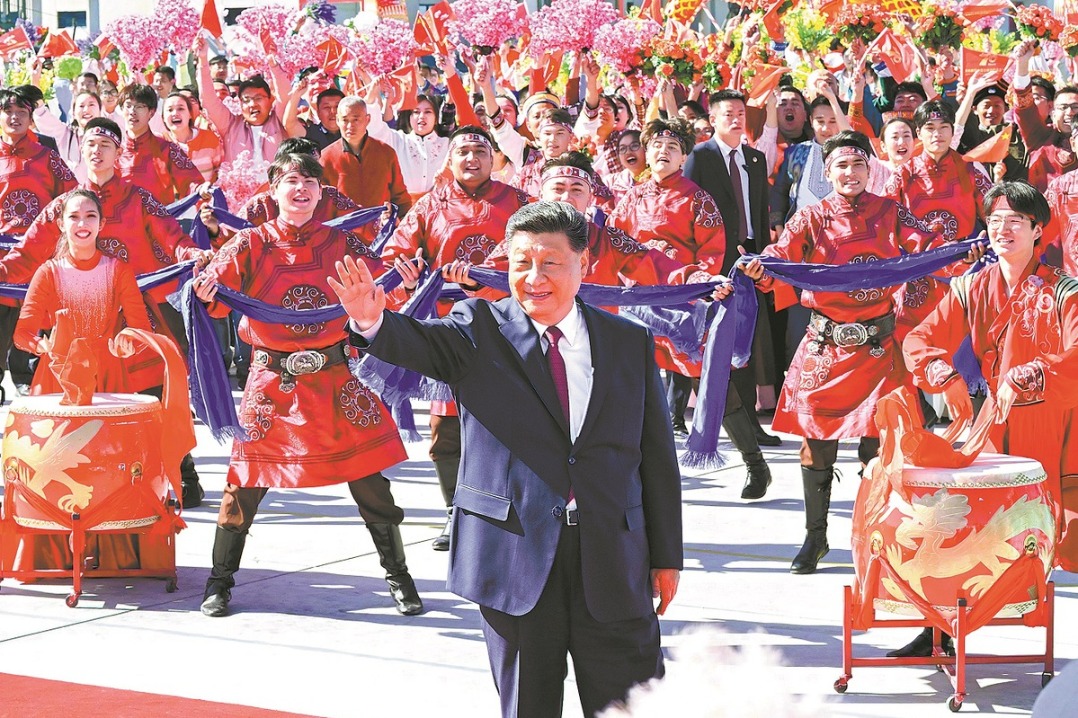
At Urumqi Tianshan International Airport, I met Muharem Memetmin, a Uygur dancer, along with her colleagues from Hotan, who were welcoming President Xi Jinping with traditional dances on Tuesday.
She told me that sometimes, when they perform outside the region, they are even mistaken for foreigners. When it comes to misunderstandings or a lack of knowledge about Xinjiang, she simply smiles. "If people don't know much about Xinjiang, we just explain it so they can learn more. What matters is that we ourselves know how good our lives are now," she said.
Her own memories underline that transformation. "When I was a child, our roads were dirt, and our only means of transport was a donkey cart. Now planes connect different cities in Xinjiang, and trains run between counties. I feel so proud to be Chinese and grateful to the motherland for giving us such a good life," the 35-year-old told me.
Later, after attending Thursday's grand gathering celebrating the 70th founding anniversary of the autonomous region, I met Abay Peryzat, a doctoral student of the Kazak ethnic group, who specializes in ecological and environmental studies at Xinjiang University.
She explained that in recent years, as local universities have deepened academic exchanges with international research institutions, many foreign scholars who have actually visited Xinjiang and witnessed its development firsthand have spoken highly of the region.
She recalled how one of her professors once brought a German scholar to attend a local wedding in Xinjiang. "I feel that beyond academic exchanges, it is also through daily life and cultural experiences that outsiders can gain a more objective view of the real Xinjiang," she told me.
Her words reminded me of Alina again. Just as a name can carry an identity that deserves to be understood on its own terms, so too does Xinjiang. Each encounter, each exchange, each story told — they are all small steps toward replacing myths with realities, and misunderstandings with comprehension.



- China increases basic pensions by another 2%
- Traditional medicine has key role in global scenario, SCO forum stresses
- China concludes 15th Arctic Ocean scientific expedition
- Global peace-loving representatives attend conference in Beijing
- Beidou technology revolutionizes daily life applications
- Former Shandong official given death sentence for taking bribes