Exploring Mongolia's heritage in the wild west









If not for seeing it with my own eyes, I would never have believed that a single county in China could be larger than some provinces — a fact that defines Subei Mongolian autonomous county, nestled in the northwest of Gansu province, bordering Mongolia.
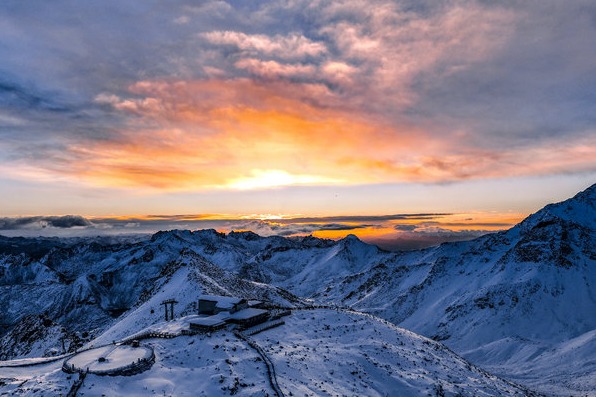
This vast, sprawling land is a tapestry of snowcapped mountains, lush grasslands, serene lakes and the arid Gobi Desert, all while serving as a vibrant hub for the Mongolian ethnic group.
Subei county is predominantly inhabited by the Mongolian ethnic group. Visitors can experience traditional customs, music, dance, cuisine and gain an insight into the lifestyle and traditions of the Mongolian people.
My adventure began with a flight from Beijing to Dunhuang, followed by a two-hour drive through the stark beauty of the Gobi Desert. As we approached Subei, the majestic Qilian Mountains loomed in the distance, their peaks dusted with snow.
To quickly immerse myself in the local culture, I headed straight to the county's intangible cultural heritage center, a sprawling museum that serves as a gateway to the life of the Mongolian ethnic people.
One of the museum's highlights is the costume exhibition hall. Subei Mongolians are known for their distinctive attire, dominated by vibrant reds and blues and adorned with intricate embroidery inspired by nature — floral patterns and animal motifs that reflect a deep reverence for the environment.
Visitors can don these traditional robes for free, and I eagerly slipped into a green Mongolian robe, feeling an instant connection to the heritage around me.
As I explored further, the sound of live music drew me to a performance by the Deji Band, a local group showcasing pure, raw Mongolian melodies. The deep, resonant tones of throat singing (khoomei) blended with the lively strains of the horsehead fiddle (morin khuur) and the rapid beats of a sheepskin drum, created a sensory symphony that transported me to the vast grasslands.
After this cultural immersion, a local friend guided me to the home of an internet-famous grandmother. She welcomed us into her yurt with warmth and generosity. Inside, she had prepared a feast of traditional delicacies, including freshly made yogurt, Mongolian dried curds made from drained and sun-dried curdled milk, salty milk tea, and an assortment of fruits such as grapes and peaches.
Dairy is a staple of the Mongolian diet, and over just one day, I sampled an astonishing variety — from goat and camel milk to mare's milk, which the grandmother insisted on serving fresh, squeezed right from her horses in the backyard. The warm, slightly sweet liquid was a revelation, unlike anything I had ever tried.
Behind her yurt, a small clearing served as an archery range, a nod to the "Three Manly Games" central to Mongolian culture: wrestling, horse racing and archery.
Though I missed the annual Naadam Festival — a summer celebration of these skills — trying my hand at shooting arrows felt like touching a piece of that spirited tradition.
The talented grandmother had also dedicated a yurt to showcase her intricate handicrafts, many of which depicted vibrant animal motifs — a testament to her connection with nature. Part of the majestic Qilian Mountain National Park falls within Subei, where diverse wildlife, including many rare species, thrives in pristine habitats.
To get a closer look at these animals, I headed to the exhibition center of Qilian Mountain National Park in Subei county, established just last year. There, I marveled at lifelike specimens of snow leopards, golden eagles, wild yaks and black-necked cranes.
To truly experience Subei's expansive grasslands, shimmering salt lakes, majestic glaciers and the authentic nomadic lifestyle, one must embark on a five-hour journey into the heart of the pastoral regions.
It's recommended to spend at least three to four days here to get fully immersed in the culture. Sadly, my visit was brief, so I'll cherish these memories and save the deeper exploration for the future.
But if you seek an authentic cultural experience, look no further than Subei — a hidden gem in China's wild west.