


Paper models preserve the soul of Qing architecture









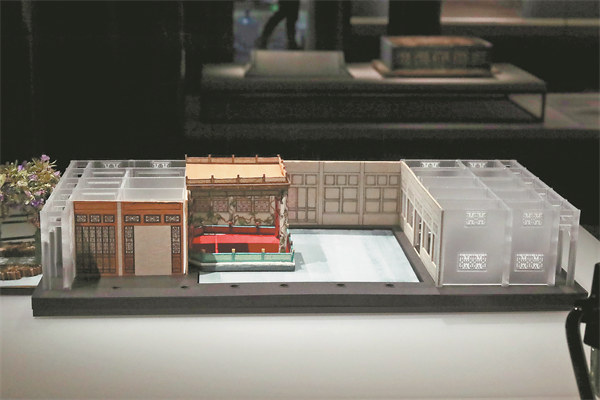
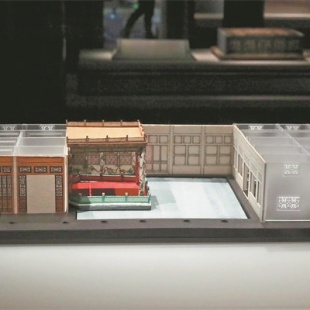
In the hushed halls of Prince Kung's Palace Museum, a singular exhibition invites visitors to rediscover a forgotten craft that once shaped imperial skylines. It unveils the art of tangyang, literally, an iron-smoothed model in which artisans use hot irons to shape and set paper into precise architectural forms, from sweeping eaves to finely carved brackets.
These intricate three-dimensional paper models once determined the fate of the Qing Dynasty's (1644-1911) most ambitious construction projects.
The exhibition, From Model to Masterpiece: Tracing the Legacy of Ironed Paper Models, offers the first systematic presentation of this refined architectural art. It features 72 original tangyang alongside six newly crafted models, jointly curated by Prince Kung's Palace Museum and the Palace Museum, and runs until Dec 25.
Wang Qian, a senior engineer at Prince Kung's Palace Museum, explains that most surviving tangyang artifacts were created during the Qing era for imperial review. Because of their delicate paper materials and exposure to humidity, fewer than 100 intact examples are known to survive today.
These models were fully painted and functioned as today's construction drawings, with dimensional accuracy being their top priority, Wang adds.
The basic crafting process of tangyang involves multiple intricate steps, including mounting cardboard backing, applying paper layers, crafting roof ridge ornaments, painting panel sections, attaching incense components, ironing for shaping, applying color, and final assembly.
Exhibition organizers describe these tangyang as "miniature show suites of ancient architecture". Every element — from palace layouts and interior furnishings to garden pavilions and painted beams — was faithfully rendered. Beyond their beauty, these models now serve as invaluable references for conservation work, guiding the restoration and reconstruction of historical sites with unparalleled accuracy.
A highlight of the first section, Perceiving the Grand From the Minute, is the exquisitely detailed Di'anmen tangyang, with its top layer of yellow glazed tiles removed to expose the complex wooden roof trusses beneath. Di'anmen was an imperial gate in Beijing.
These are meticulously labeled with yellow tags specifying key structural data — bay widths, column heights, diameters — an invaluable record of architectural logic.
"Built at a 1:20 scale by modern standards, it is crafted using a combination of paper and wood. Due to its relatively large scale, the structural framework, such as beams, columns and walls, is supported by softwood like pine," Wang says.
Exemplifying this approach, this section uses residential and garden architecture to demonstrate how tangyang and archival drawings recorded the sophisticated interior decoration and diverse exterior forms of traditional Chinese buildings. Central to this narrative are models from the Old Summer Palace (Yuanmingyuan), on loan from the Palace Museum.
The second section, Form and Function, presents a collection of design drawings, molds and the finished objects drawn from the Palace Museum's collections. The narrative begins with an elaborate design scroll for the ceremonial wedding pavilion of Emperor Tongzhi (1856-75) of the Qing Dynasty. It then turns to porcelain designs, including ceremonial vessels for Tongzhi's wedding and pieces commissioned for the exclusive use of Empress Dowager Cixi.
The exhibition expands to showcase official patterns and molds for everyday court life, such as seals and small personal accessories — some of which are being displayed alongside their finished products for the first time.
Together they paint a vivid picture of formal court ritual and daily life, allowing visitors to appreciate the sophisticated design philosophy, technical mastery, and distinctive aesthetic that defined the workshops of the Qing court, the organizers say.
The exhibition's third and final section, Reverence in the End as in the Beginning, is dedicated to imperial tomb models, which were the most symbolically significant and exquisitely crafted category of tangyang.
These held a unique gravity, reflecting emperors' profound personal concern for their final resting place.
As a result, these models had to transmit the imperial will with absolute precision, leaving no room for error, experts say.
A centerpiece of this section is the relatively well-preserved surface and underground structural model of the Puxiangyu tomb for Empress Dowager Ci'an in the late Qing Dynasty, from the Palace Museum collection.
"When this tomb complex for Empress Dowager Ci'an is fully assembled, it truly is awe-inspiring," Wang says.
"It perfectly captures the mountainous terrain and the entire architectural layout and structure," she adds.
For Wang and her colleagues, the exhibition's deeper meaning lies in reviving the creative process behind these fragile yet enduring masterpieces. "Our core theme is to let the audience experience how ancient builders conceived, designed and completed their monumental works… to truly appreciate their expression of architectural aesthetics and philosophy of beauty in daily life," she says.