Young Xinjiang artists shape modern culture
Beats, threads, and bold ideas: Xinjiang's next generation is turning local culture into a dynamic, trendsetting youth movement, Gui Qian reports.









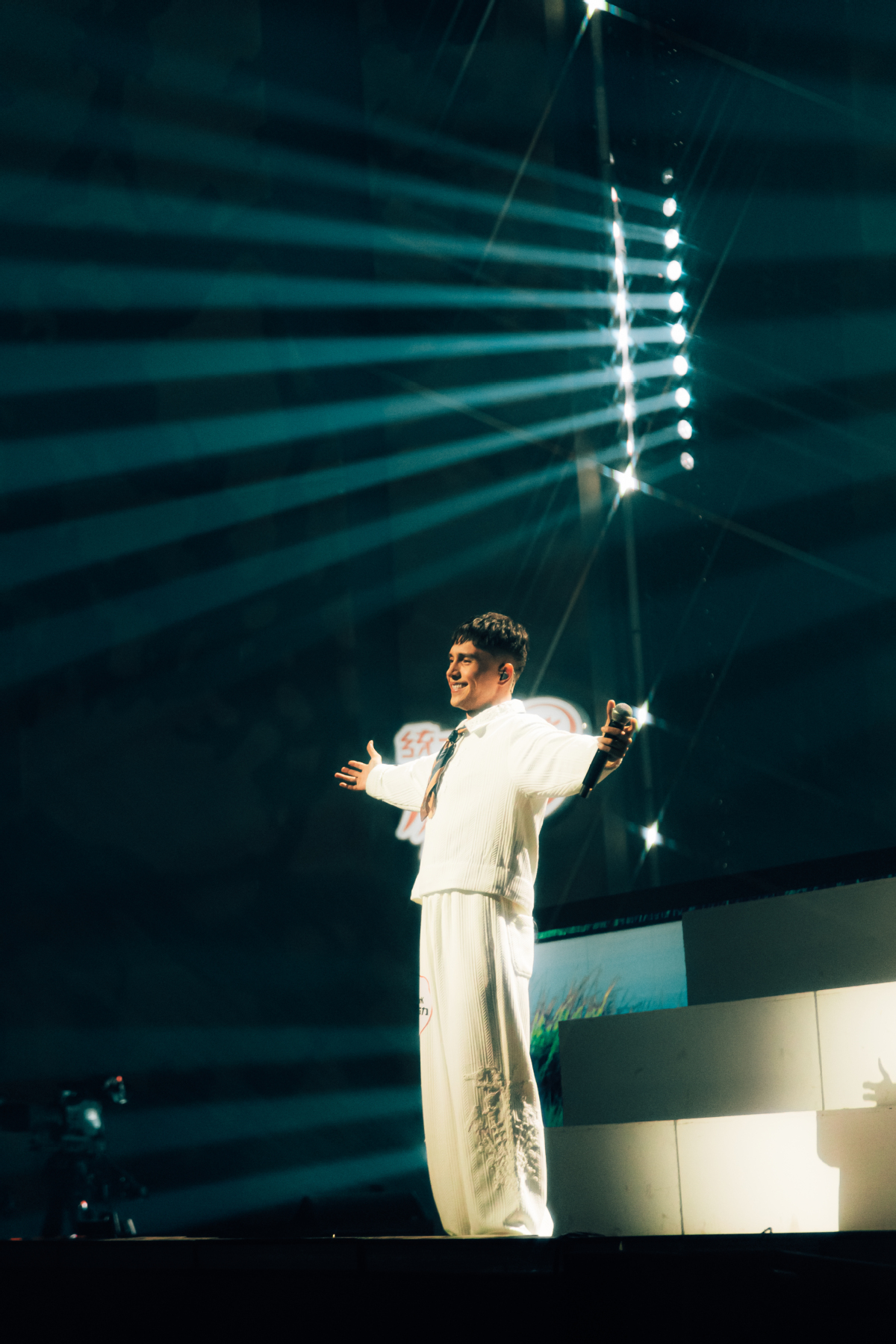
This summer witnessed the rise of a new rap star — Mirali Maxrap, better known as SHarK — from Urumqi in the Xinjiang Uygur autonomous region. The 23-year-old claimed the championship title on The Rap of China 2025, adding another name to Xinjiang's growing list of top-tier rappers.
During the competition, SHarK delivered several hit tracks, including Shuffle and Riddled With Holes. His standout performances, along with the emergence of other talented Xinjiang rappers in recent years, have sparked curiosity online about what makes the region's rap scene so powerful.
SHarK believes the answer lies in Xinjiang's unique musical environment.
Due to the region's geography and cultural links, many young people there grow up listening to pop music from Central Asia, West Asia, and beyond — sounds that remain relatively niche in other parts of China.
"From a young age, we've been naturally surrounded by music that people outside Xinjiang might have to seek out intentionally," he said.
This exposure to diverse styles, SHarK said, encourages local artists to explore even further. "We eagerly look for music we haven't heard before — music from Morocco, South Africa, or even Iceland," he added.
SHarK's track Shuffle went viral not only on domestic social media but also on international platforms, garnering millions of views. He attributes this to the region's international outlook.
"Thanks to frequent trade and cultural exchanges with Central Asian countries, we've been familiar with global trends since childhood," he said.
To him, the global appeal of Chinese rap also lies in the language itself.
"Unlike English, French, or Spanish, Chinese operates within a completely different linguistic system," he explained. "With precise pronunciation, we can create a smooth flow, convey more meaning in fewer words, and use our syllable-based structure to develop unique rhythmic styles — all of which leave a fresh impression on international listeners."
Although deeply rooted in Uygur culture, SHarK does not deliberately emphasize ethnic elements in his music. Instead, he seeks to blend diverse influences to create a sound that is highly personal, experimental, and fashionable.
He sees this attempt to break free from ethnic labels as both his personal challenge and the biggest hurdle facing Xinjiang's youth culture — what he calls its "dependence on labels", or an overreliance on traditional symbols.
He believes young people in Xinjiang should draw inspiration from ancient and regional cultures while also creating new cultural symbols that reflect the present era.
"Xinjiang's youth scene will be even more vibrant when it's recognized simply as 'youth culture', not 'Xinjiang's youth culture'," he said. "The essence of trends lies in exploration, innovation, and progress."
Wearable identity
This spirit of experimentation is not limited to music.
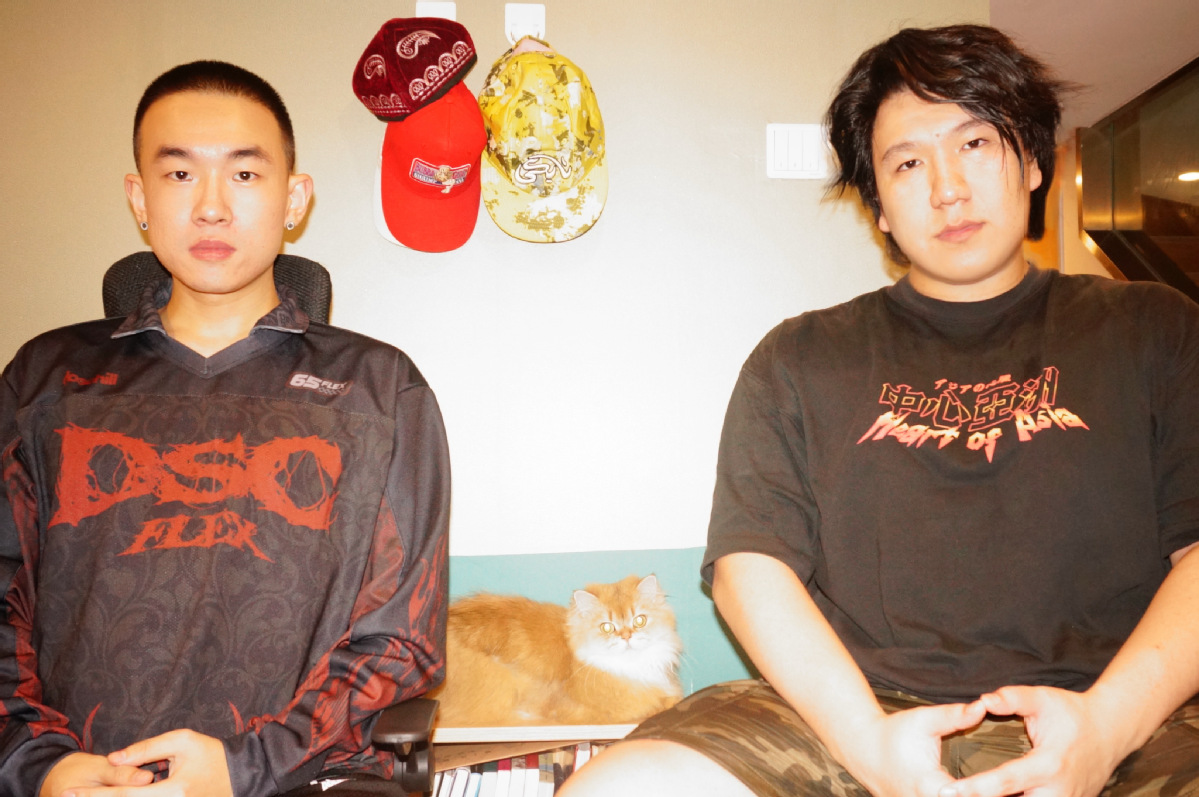
Two young men are redefining Xinjiang's distinctive cultural symbols through a contemporary lens. They are Zhu Shixuan, founder of the streetwear brand Doschill, and Amanbieke Adilijiang, the brand's design director.
Zhu, 29, grew up on a farm in Manas county, Xinjiang, a region known for its abundant cotton production. Amanbieke, 22, is Kyrgyz and hails from Urumqi, Xinjiang's capital, where his passion for painting and streetwear began at a young age.
"We come from very different backgrounds but share the same love for Xinjiang's culture," said Amanbieke.
The vast grasslands, snow-capped mountains, and intricate patterns of Xinjiang's diverse ethnic groups have long fascinated the two friends. Their challenge was to turn these inspirations into products that young people would both love and find accessible.
In 2022, they launched their first product: a hoodie featuring the Chinese characters "Child of Xinjiang" on the front and a detailed map of Xinjiang on the back, marking every prefecture and city. "Anyone from Xinjiang can find their hometown on it," Zhu said.
Today, the "Child of Xinjiang" line has expanded to include six products, from T-shirts to hats.
The designs have resonated with a wide audience. Nearly 100 musicians from Xinjiang, including the popular rapper SHarK, have worn their creations.
"Many artists are proud to wear what we've made," Zhu said. "They're eager to showcase our products, which they see as a form of identity."
For Amanbieke, streetwear is more than just clothing. "Its essence lies in cultural significance," he said. "Consumers are looking for emotional resonance and a sense of belonging."
"Streetwear is becoming a new kind of local specialty. Through our designs, people from other provinces are beginning to understand Xinjiang's culture," Zhu added.
Currently, Doschill's products are primarily sold in Northwest China, but its customer base along the eastern coast is steadily growing.
The brand has also entered markets such as Vietnam and Kazakhstan. Building on this momentum, Doschill plans to expand further overseas, especially in countries and regions involved in the Belt and Road Initiative.
Style roots
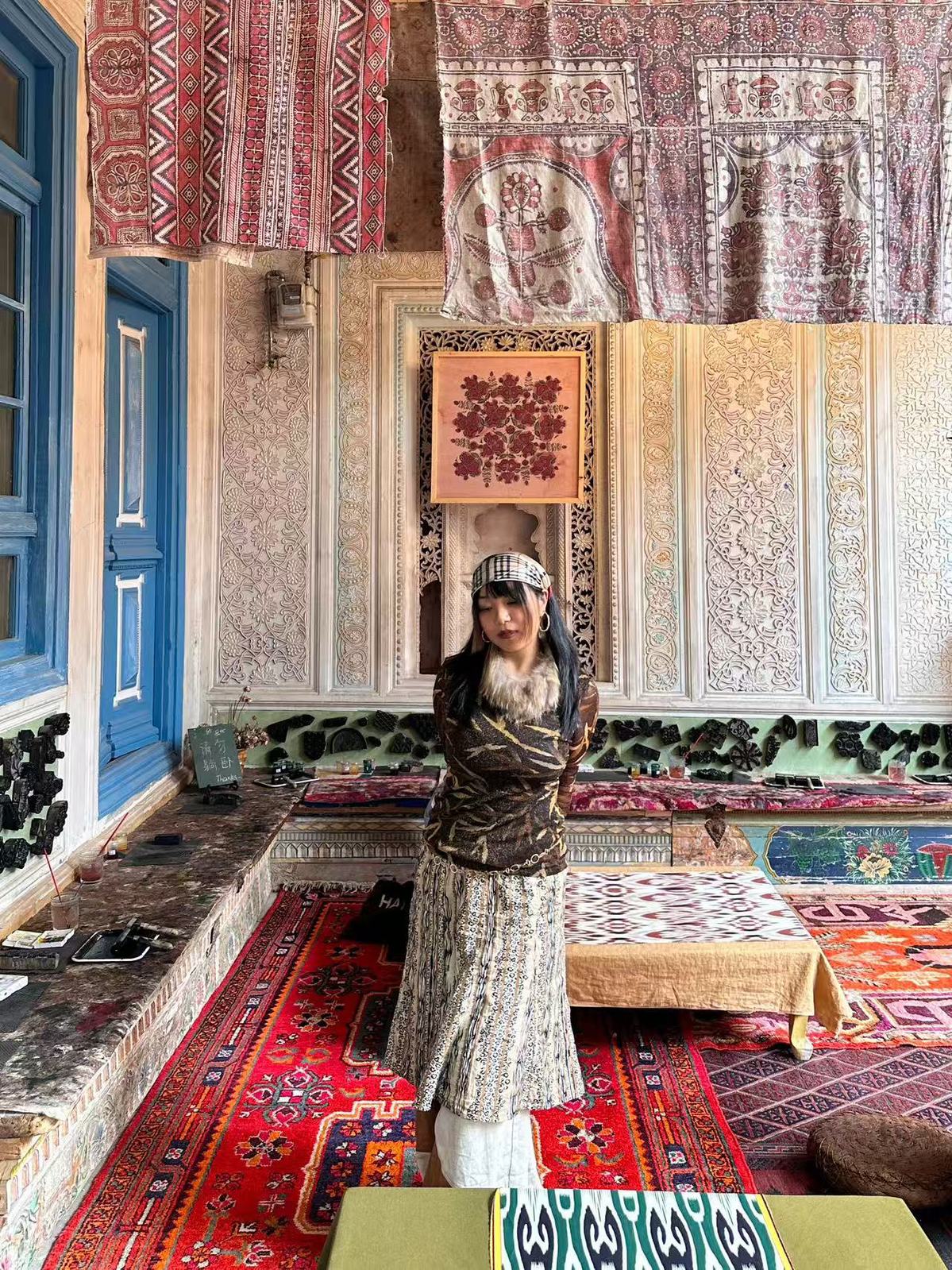
"Youth culture doesn't have to revolve around fast fashion or mass-produced goods," said He Yuxuan, a 27-year-old designer from Shihezi, Xinjiang. "By drawing inspiration from local culture and adding a personal touch, anyone can create cultural products that are truly unique."
After studying and working outside Xinjiang for several years, He returned in 2024 to establish her own design studio in the ancient city of Kashgar.
She prints Uygur proverbs on rolling paper for poetry collections, weaves flower vessels shaped like nomadic boots, and designs typefaces inspired by traditional Uygur sweets.
She has observed that a "more local, more trendy" philosophy is becoming increasingly popular among young people today. Many young designers and artists in cities like Shanghai and Chengdu are developing products rooted in local culture, and He believes Xinjiang has immense potential in this area as well.
"Xinjiang is rich in local culture and home to remarkable talent," she said, attributing the region's uniqueness to its diverse geography and ethnic communities.
She uses her woven wall-hanging flower vessel as an example. Shaped like a boot, it beautifully blends Xinjiang's carpet culture, the nomadic spirit, and modern home aesthetics.
"In Xinjiang, almost every household has carpets," she explained. "Many people love to take a carpet outdoors, spread it on the grass, and just lie down to relax."
"A carpet is like a compact version of home. And boots, cherished by nomadic people, symbolize constant movement," she added.
What fascinates He most is the humor and ease woven into everyday life in Xinjiang.
A Uygur proverb she included in her poetry collection captures this spirit: "If the sky falls, lie on the ground and eat steamed buns." She sees this laid-back attitude toward life as perfectly aligned with young people's growing desire to resist "involution" — the intense social competition and pressure.
She is particularly drawn to the bold, confident fashion of Xinjiang's women. "They dress beautifully wherever they go. I love how they mix clashing colors and wear gold jewelry with such ease," she said.
When it comes to home decor, He noted, people in Xinjiang also show distinctive taste — a fondness for lace coverings, large grandfather clocks, curved wooden ornaments, artificial flowers, and crystal tableware. These elements, she said, reflect what netizens describe as "an aesthetic reminiscent of a period of economic prosperity".
She is aware that some people from other regions may still view Xinjiang as a distant, exotic place. But the region's vibrancy and richness are evident everywhere.
"Xinjiang is very modern and fashionable," she said. "And so are the young people here."
Contact the writer at guiqian@i21st.cn


Today's Top News
- National Games an embodiment of China's strength, unity and progress: China Daily editorial
- Xi declares 15th National Games open
- Xi attends opening ceremony of 15th National Games
- Xi meets national honorees in sports
- Xi meets IOC president, honorary president
- China suspends part of control measures on dual-use items export to US