HKEX sees record surge in listing applications









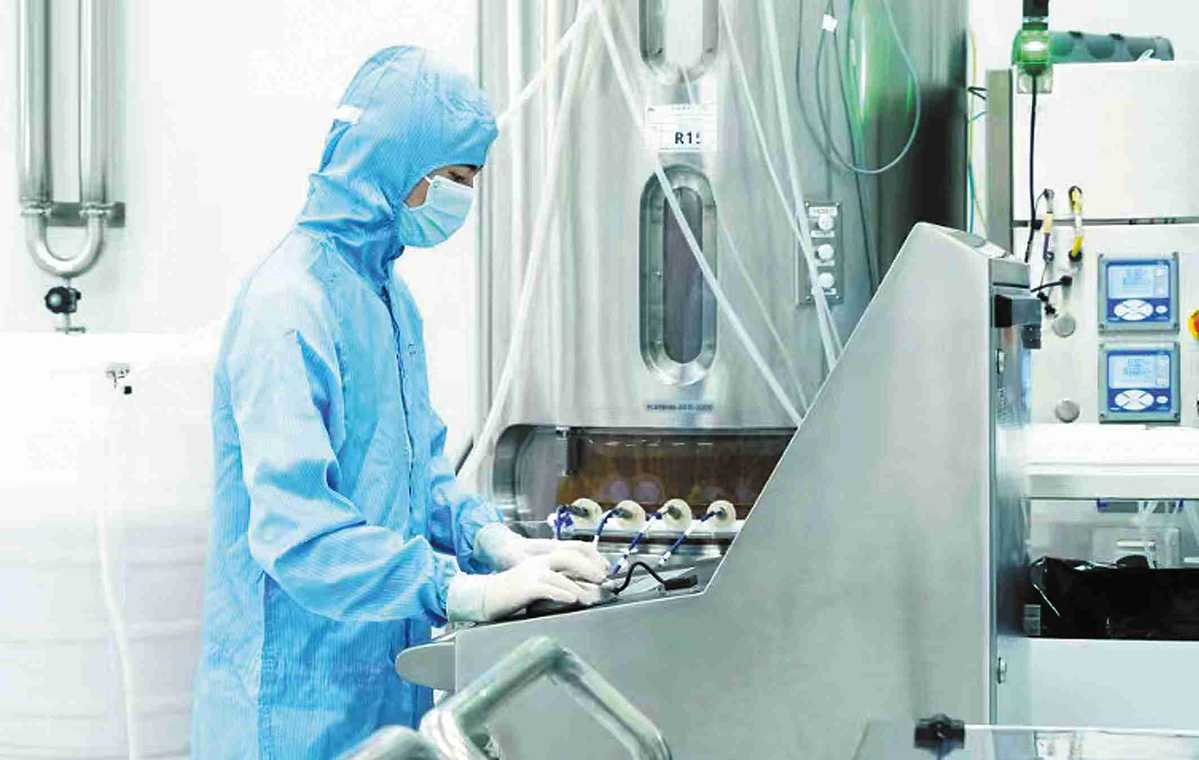
The Hong Kong stock market is seeing an unprecedented surge in listing applications from A-share companies, with pharmaceutical firms at the forefront.
According to market tracker Wind Info, as of Oct 13, a total of 83 A-share companies had sought dual listings on the Hong Kong stock exchange since the start of the year, more than the total from the past decade combined, underscoring that the "A+H" dual-listing trend has shifted into high gear.
Among these applicants, healthcare companies stand out both in number and ambition. Kexing Biopharm, for instance, said in a recent statement that its board had approved an H-share issuance and listing in Hong Kong. The company described the move as part of its "innovation + internationalization" strategy to accelerate overseas expansion, optimize capital structure and enhance brand visibility abroad. The firm specializes in research and development, production and sales of recombinant protein drugs and microecological preparations, according to its website.
That announcement coincided with a flurry of filings at the end of September. Over the two days of Sept 29 and 30, more than 10 pharmaceutical and biotech firms submitted IPO applications to the Hong Kong stock exchange.
Dong Ximiao, chief researcher at Merchants Union Consumer Finance, said the momentum is "the combined result of policy, market and corporate factors".
"The Hong Kong stock exchange's Chapter 18A, introduced in 2018, opened a financing channel for pre-profit biotech companies," he said. "The Technology Enterprises Channel launched in May this year further streamlined the process, allowing confidential submissions and one-stop consultations, making listings faster and safer for biotech firms."
Dong added that Hong Kong's deep pool of long-term institutional investors makes it "not just a financing platform, but a stage for biotech companies to build international credibility and partnerships".
Meanwhile, the Southbound Stock Connect continues to direct mainland capital into Hong Kong's equity market. Adjustments made by the Shanghai and Shenzhen exchanges in March this year widened investor access, fueling steady inflows into biotech H-shares.
Earnings momentum has strengthened sentiment. According to Southwest Securities, the innovative drug sector in the Hong Kong stock market saw its first turnaround from loss to gain in the first half. Analysts at Southwest Securities said the industry has "entered a new, profit-driven cycle", with leading firms benefiting from successful commercialization and overseas licensing that are finally converting years of R&D into tangible returns.
Some applicants remain unprofitable but qualify under the 18A framework. Yantai Lannacheng Biotechnology Co Ltd, for example, is a pre-profit company founded in 2021 with a pipeline of 13 drug candidates, including seven diagnostic and six therapeutic radiopharmaceuticals.
Experts describe the 18A segment as a vital "innovation incubator "within China's biotech ecosystem. Lou Feipeng, a researcher at Postal Savings Bank of China, said lighter requirements for profitability, cash flow and lock-up periods make the Hong Kong stock exchange "particularly appealing to early-stage drug innovators".
Still, Lou cautioned that stronger oversight is needed to ensure funds are used effectively.
"To make sure capital truly fuels innovation, regulators should adopt milestone-based assessments, tie management incentives to R&D outcomes, and encourage commercialization and mergers that boost industry concentration," he said. "Innovation should be judged by clinical value and market potential, not just patent counts."
Experts agree that the A-share companies' dual listing boom on the Hong Kong stock exchange is reshaping China's biotech industry.
Dong believes it will accelerate both consolidation and innovation. "Capital will increasingly concentrate in well-funded leaders, strengthening their market position and triggering a reshuffle across the industry," he said. "At the same time, greater access to capital will encourage firms to invest boldly in long-cycle, high-risk innovation, fueling faster development of new drugs and technologies."
On Oct 14, the Hong Kong stock exchange announced plans to launch Hang Seng Biotech Index Futures, which track the performance of the 30 largest Southbound Stock Connect-eligible biotech, pharmaceuticals and medical devices companies listed in Hong Kong. The futures are expected to offer investors a targeted risk management tool for one of the fastest-growing and most dynamic sectors, complementing the exchange's existing suite of biotech-related offerings and flagship equity index derivatives.