Global South consensus on 'pluriversal' future










Editor's note: The fourth plenary session of the 20th Communist Party of China Central Committee took place from Oct 20 to 23. The 15th Five-Year Plan (2026-30) period will be a critical time for laying a solid foundation and making comprehensive efforts to basically achieve socialist modernization. Three experts share their views with China Daily.
President Xi Jinping proposed the Global Governance Initiative at the Shanghai Cooperation Organization Summit in Tianjin in September. It was followed by the Sept 3 military parade in Beijing to mark the 80th anniversary of the victory in the Chinese People's War of Resistance Against Japanese Aggression (1931-45) and the World Anti-Fascist War.
In addition, the communique of the fourth plenary session of the 20th Central Committee of the Communist Party of China highlighted the importance of pursuing major-country diplomacy with Chinese characteristics, a cornerstone for China's evolving global role in the coming years.
And the Global South, instead of continuing to be a spectator, is helping shape a fairer global order.
However, at the session of the United Nations General Assembly marking the UN's 80th anniversary in New York, the US leader insulted many people, from the UN itself to Washington's allies, by questioning the effectiveness of the 80-year-old world body.
The irony is that while the Global South has for years been calling for the reform of the UN in order to transform it into a truly representative and equitable world body, the US leader has been dismissing these calls and clinging instead to the belief that his coercive deal-making holds the key to preventing wars. In doing so, it is not only disregarding global institutions but also undermining the very spirit of collective action that the UN was created to uphold.
Peace is not merely the absence of war. It is a virtue, a disposition for benevolence, confidence and justice. Yet today, we are seeing a different kind of violence, one waged through tariffs, sanctions and economic coercion, which is undermining the pursuit of shared goals by organizations such as the African Union, BRICS and the UN. This suggests the post-war consensus remains unimplemented, especially because the Global North speaks of peace but pursues neocolonialism.
What is needed is developmental statecraft, a counter to the hegemonic statecraft of the Global North. Developmental statecraft can be defined as people-centric exercise of state power, rooted in human solidarity, mutual respect as well as equitable growth and fair trade. It is this humanistic outlook that Global South countries such as South Africa, Brazil, Malaysia, Algeria and China have been championing, which now informs the Global Governance Initiative.
The GGI builds on earlier initiatives in development, security and civilization, offering a suite of principles that form an architecture of "pluriversality" — an architecture that is a departure from "the paradigm of the one", which is predicated on a strong belief in one state, one knowledge, one nation, one economic system, one political system among many others. The GGI, its core commitments being sovereign equality, international rule of law, multilateralism, people-centric development, and real outcome, is aimed at strengthening the factors promoting multipolarism.
Unlike the unilateral practices of the West, it seeks to reform global governance without overturning the system, and upholds the UN system. It is about making existing institutions more effective, inclusive and responsive. That's why the GGI resonates with Global South countries.
Global South countries support initiatives that don't demand subservience and instead promote solidarity.
At a time when some Global North countries are using punitive tariffs, sanctions and military interventions to subdue weaker nations, the Global South promotes the development of infrastructure and education, and facilitates green transformation.
Mutual respect nurtures dialogue and understanding, creating the conditions for peaceful development and collective progress. A fair world is one where opportunities are shared, diversity is celebrated. Only through this spirit of equality can humanity build a future grounded in justice, dignity and sustainable, inclusive prosperity.
The SCO has already shown what this looks like in practice by launching platforms in clean energy, green industries and the digital economy, and setting up centers promoting innovation, education and vocational training.
China has committed to expanding renewable capacity and sharing the dividends of AI development. This is not a symbolic gesture but evidence of the potential of "pluriversality" to help build better with the intellectual and technological endowments of all countries.
"Pluriversality" means recognizing that there is no superior civilization, no single governance system, and no single way of learning. The coexistence of civilizations and the knowledge they bring is fundamental to national and global prosperity. The call for "pluriversality" and dialogue is also a call for solidarity, equality and sustainability.
Hence, the Global South consensus is about not only institutions and policies but also ethics, inclusive development, peace and justice, as well as improved education and healthcare.
September 2025 will be remembered as a milestone month, because it witnessed the introduction of the Global Governance Initiative, the celebration of the victory over fascism in World War II and gestures of reconciliation across Asia, and because the Global South offered the grammar for our shared future.
The views don't necessarily represent those of China Daily.




Today's Top News
- Foreign ministers of China, Egypt call for Gaza progress
- Shield machine achieves Yangtze tunnel milestone
- Expanding domestic demand a strategic move to sustain high-quality development
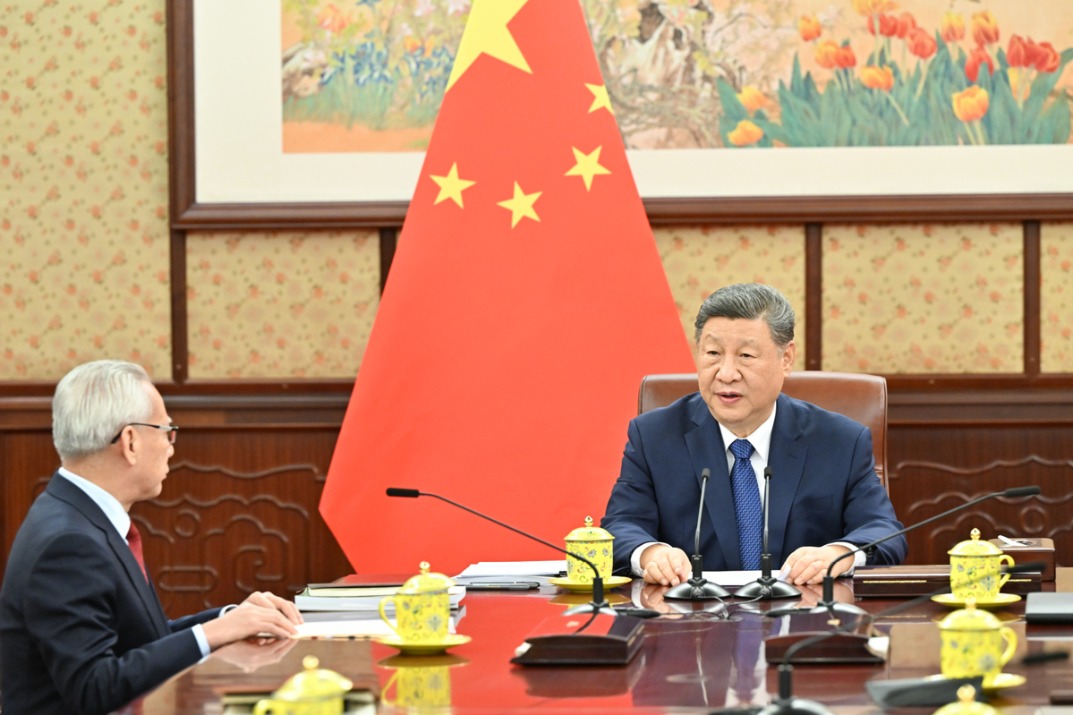
- Xi hears report from Macao SAR chief executive
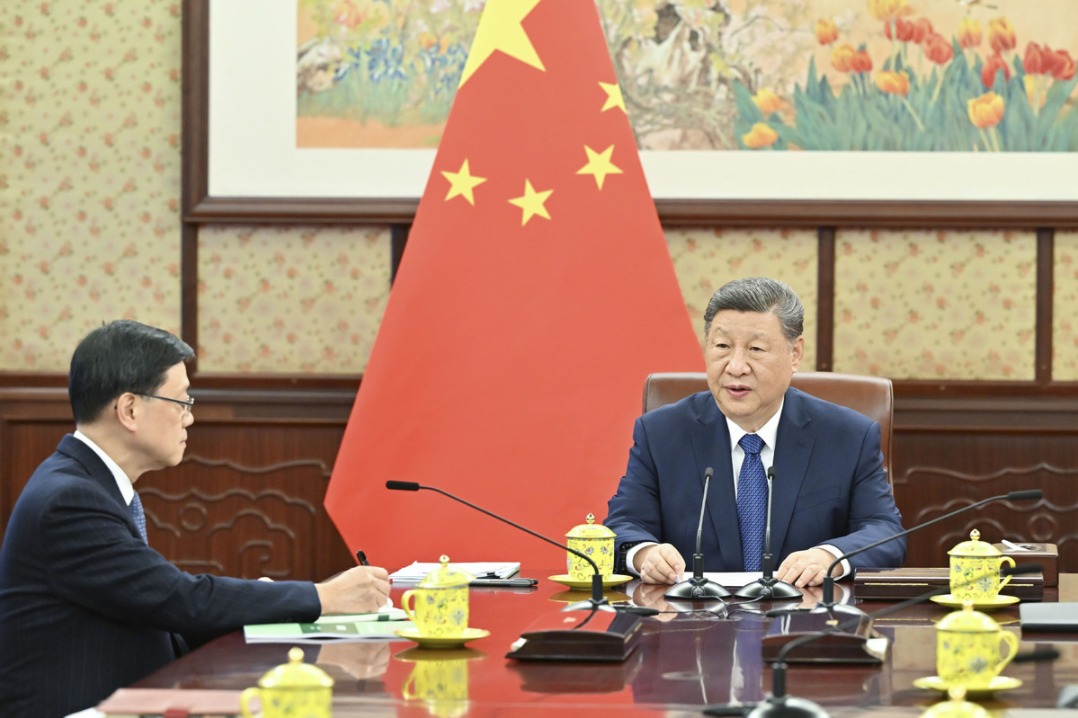
- Xi hears report from HKSAR chief executive
- UN envoy calls on Japan to retract Taiwan comments