
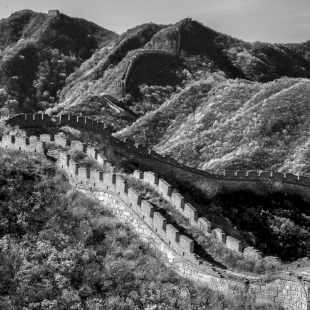



A long exposure to history
Photographer captures the spirit of endurance and untold stories embedded in the Great Wall's weathered stones, Wang Ru reports.









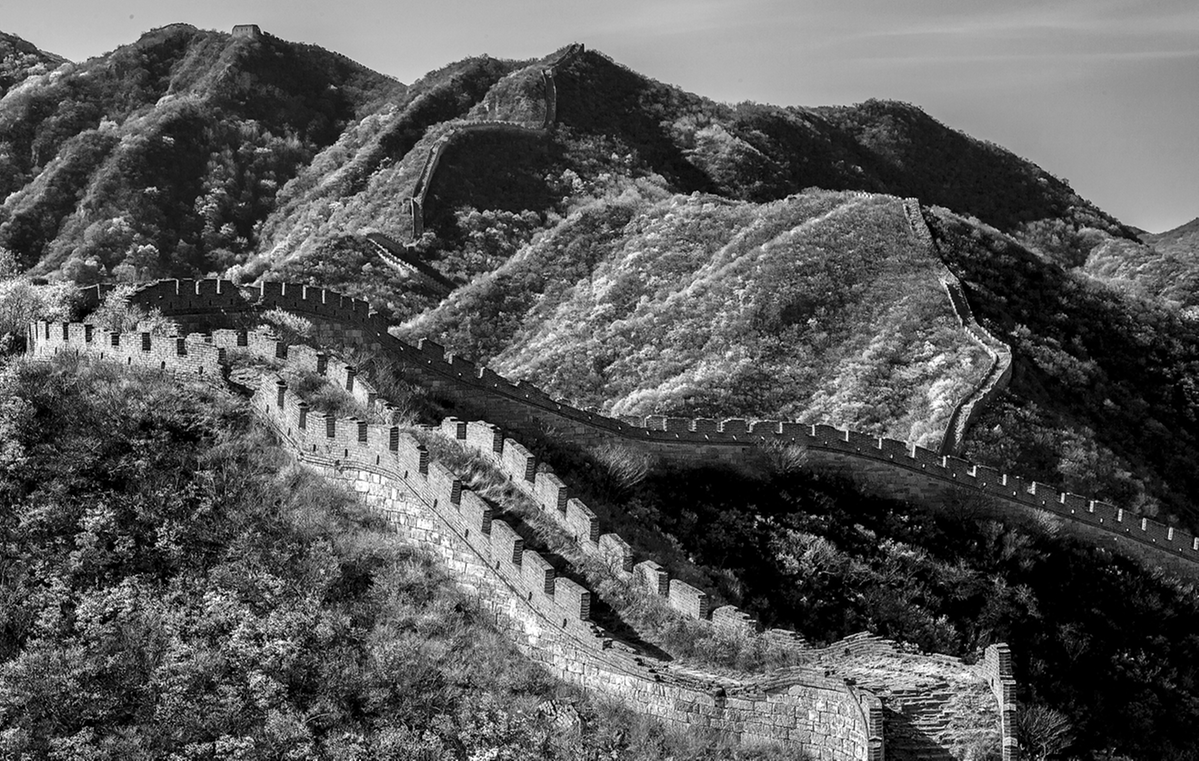
With its commanding presence and timeless silhouette, the Great Wall of China — winding over mountains and through valleys — has long captivated photographers. Now its enduring spirit is the focus of The Eternal Great Wall, a photography exhibition held at the Butterfly Effect Art Museum in Beijing from Oct 12 to Nov 5.
The show presented more than 80 works by Yang Yueluan, vice-chairman of the China Photographers Association, who has devoted more than two decades to capturing the Great Wall's many faces — majestic, eroded, and often unseen. Many of his images feature remote sections rarely visited, places where the wall still bears the full mark of time.
According to Yang, the Great Wall, described by the late architectural scholar Luo Zhewen as "spanning more than 100,000 li (50,000 kilometers) across 2,000 years", embodies the endurance of a civilization. Construction began as early as the Spring and Autumn Period (770-476 BC) and continued through the Qing Dynasty (1644-1911). If all the sections built over different eras were connected, the wall would extend even further.
In 1987, the Great Wall was listed as a UNESCO World Heritage Site.
Yang recalls that his captivation with the seldom-visited remote sections of the wall began in 2009, when he accidentally discovered the Chenjiapu section in Zhangjiakou, Hebei province. Unlike the frequently restored stretches, Chenjiapu remained untouched, its towers weathered and walls crumbling after years of wind and rain.
"Without restoration in recent years, its watchtower and walls collapsed. Weeds and wild trees grew across the landscape, showing a scene of grandeur intertwined with decay and age. I was deeply touched by the beauty of the ruins," he says.
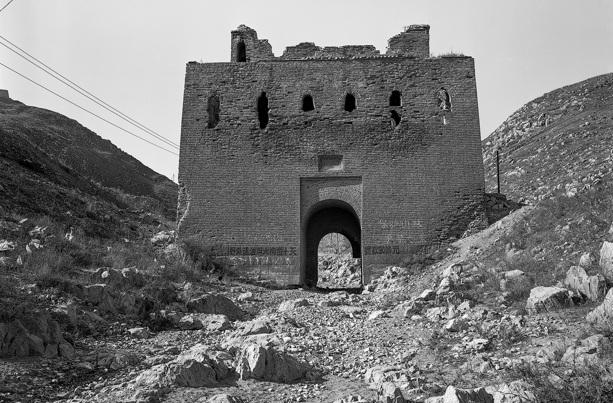
"I gradually find that the Great Wall embodies a fascinating paradox: it is both resilient and fragile. It has stood solidly for millennia, but can be damaged by something as simple as a lightning strike. Ultimately, the Great Wall is the result of its enduring struggles against the elements — wind, rain, the ravages of war, and human intervention. This blend of vulnerability and resilience is what makes the Great Wall so attractive," he adds.
Curator Liu Zheng says the exhibition is titled The Eternal Great Wall not because the architecture remains unchanged but because it continuously evolves while maintaining its vitality.
"Yang's lens guides us to explore the traces of time: the eroded rammed earth walls bear cracks resembling the palm prints of the land. The grass and trees emerging from the crevices of bricks and stones are not destroyers, but rather a chapter written by life and time. The snow-covered watchtowers have a soft outline, appearing to be gently embraced by nature," Liu says.
Beyond the landscape, Yang's camera turns to the human stories embedded in the stones. One of the exhibition's most poignant series focuses on inscribed bricks from the Great Wall in Zunhua, Hebei province — mute witnesses to a story of bravery.
During the Chinese People's War of Resistance Against Japanese Aggression (1931-45), a fierce battle took place in Zunhua, close to the Eastern Qing Tombs, part of the UNESCO-listed Imperial Tombs of the Ming and Qing Dynasties. After the battle, villagers collected scattered Great Wall bricks to build memorial tablets for fallen Chinese soldiers. They carved names, ages, hometowns, and dates of death into the bricks — more than 20 of which still stand today.




















