Thumbs-up to China for its life expectancy









According to National Health Commission figures, the average life expectancy in China had reached 79 in 2024 — same as in the United States the same year. Average life expectancy in China increased by 0.4 years from the year before, 2023.
Given that life expectancy has been increasing at an annual rate of over 0.3 percent in the past decades, we have good reason to believe that this increasing trend will continue. In fact, the commission says life expectancy in eight better developed municipalities and provinces has surpassed 80 — I am happy that Beijing, where I live, is one of them.
This improvement in life expectancy did not come by easily. Behind it is the availability of sufficient food, high-quality nutrients, comprehensive medical care we enjoy, our positive mindset, a beautiful environment we live in and physical exercises we engage in. Ensuring any of these conditions is difficult for any government, more so if that country has a population of more than 1.4 billion.
Longevity has been a target we have been pursuing since ancient times. Legend has it that Qin Shi Huang, the first emperor who unified China, in 221 BC, had sent an emissary overseas to look for ways to extend his life, or, even, make him immortal. In this regard, in many classics we have read about alchemy, a forerunner of chemistry concerned with converting base metals into gold or finding a universal elixir. But they all failed.

In 1949, when the People's Republic of China was founded, the country's average life expectancy was 35 years. Lack of adequate food and insufficient medical care were to blame for a high infant mortality rate. During my school days, I prayed I could live till 60 — China's average life expectancy in 1970. Those days, to be able to live till 70 was considered "something rare since ancient times".
But it isn't considered rare anymore. I am nearly 70 and I continue to write this weekly column while enjoying chorus singing, painting and traveling in China and abroad. Most of my playmates now are older than me, many of them being over 80. In fact, it is not rare these days to find an 80-year-old man or woman leaving square dancing midway, saying they must rush home to take care of their 100-year-old parents. Though there is no official data, a 2025 estimate from Euronews.com mentions China has about 49,000 centenarians, which places it third globally after Japan and the United States.
Such a change, as I mentioned above, has come about because of better living conditions the Chinese are enjoying thanks to the central authorities' people-centered priority.
Huge investment has been made in agricultural production to enable Chinese people to "hold the rice bowl in their own hands". After decades of efforts, China has largely ensured food security by producing about 500 kilograms of grain per person which is higher than the internationally recognized food security line of 400 kg per capita. In my school days, when food was insufficient, I was entitled to a monthly ration of 15.5 kg of food grain, plus 0.5 kg of cooking oil, apart from meat and eggs.
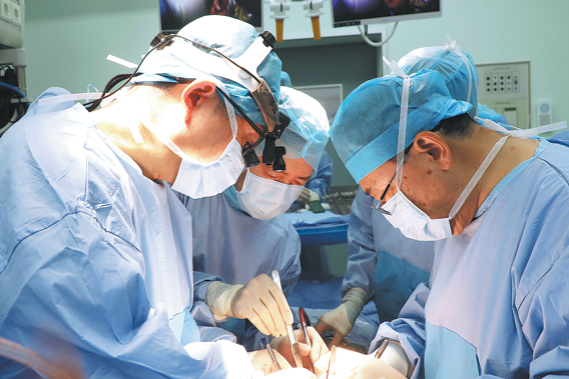
Statistics show that 1.327 billion Chinese joined basic medical insurance by the end of last year, making up over 95 percent of China's population. Such a wide coverage and China's more than one million medical institutions not only ensured timely medical assistance to patients but also helped keep infant mortality rate at a low 0.4 percent.
Unlike in many countries where patients have to complete many formalities before getting treatment, Chinese people can go to any hospital any time to consult the most competent doctors. Though complaints about unsatisfactory service exist, I think China's increasing life expectancy can to a great extent be attributed to its medical system.
In my youth, sports was considered a luxury because most people could not even afford food; sports facilities were rare and equipment were unaffordable. Now, it is difficult to find anyone who doesn't engage in some kind of physical activity, be it square dancing, jogging, swimming, or playing basketball or soccer. Reportedly 38.5 percent of Chinese, or nearly 500 million people, now frequently take part in sport activities.
Becoming immortal remains a dream, but longevity is definitely becoming a reality in China. It's worth a thumbs-up.
The author is former deputy editor-in-chief of China Daily.





Today's Top News
- Militarism revival efforts criticized
- Leadership highlights Party conduct
- Forging a human-centered future in era of smart machines
- Land-sea trade corridor key to regional progress
- Local rules to be reviewed to help disabled
- Stronger RMB points to resilience