Tianjin leverages its district's green assets for growth










Tianjin's Ninghe district is seeking to turn its ecological assets into long-term economic growth as China prepares to implement its 15th Five-Year Plan (2026-30).
In a recent interview, Bai Fengxiang, secretary of the Ninghe District Committee of the Communist Party of China, said the district is accelerating integrated development across agriculture, culture, sports, education, tourism and commerce, guided by a broader push for green transition in economic and social development.
"Ecology is Ninghe's greatest asset and strongest foundation," Bai said."Lucid waters and lush mountains are not only natural assets, but also economic ones. What matters is transformation — turning ecological value into real development momentum and better livelihoods."
Ninghe is home to the Qilihai Wetland, one of the world's three major ancient coastal wetlands. It is also the only national nature reserve in China where an ancient coastline and a wetland coexist.
In recent years, Ninghe has promoted what it calls an "ecology plus" development model, extending ecological protection into agriculture, tourism, sporting events and technological innovation. The aim, Bai said, is to move beyond conservation alone to build an economy shaped by ecological strengths.
Agriculture remains central to the district's identity. During the 14th Five-Year Plan period (2021-25), Ninghe's total agricultural output remained above 8 billion yuan ($1.14 billion), while grain output rose for four consecutive years. Branded products under the "Jingu Qilihai" label have entered Southeast Asian markets, and the brand value of Qilihai river crabs has exceeded 500 million yuan. The district's Hongyao sweet potato planting area now ranks first nationwide.
"Ninghe is a major agricultural district, and ecology and agriculture define its character," Bai said. "We are moving from traditional farming toward branded, smart modern agriculture."
Ecological advantages also extend beyond farming. Cultural tourism and sports events, including marathons and the Lutai fair, have drawn growing crowds. Annual tourist visits have risen to more than 9 million, generating around 700 million yuan in revenue and forming a cluster that combines ecological sightseeing, cultural experiences and study tours.
As industries diversify, rural livelihoods are changing, too. "Farmers are no longer just growers," Bai said. "They have become tour guides, cultural interpreters and partners in industrial development."
Income sources have expanded to include tourism services, ecological compensation, land transfers and profit sharing, while villages have become more livable and attractive to tourists.
Alongside agriculture and tourism, Ninghe is also exploring new growth areas linked to technological innovation. Drawing on its wetland ecosystem and biodiversity, the district has established the Beijing-Tianjin-Hebei region's first low-altitude safety technology industrial park and has launched Tianjin's first integrated sky-ground biodiversity monitoring system. Applications now cover crop protection, inspections and logistics.
"Ecology plus innovation is our way of fostering new quality productive forces suited to local conditions," Bai said.
The district is also strengthening cooperation with Beijing, positioning itself as a place where the outcomes of research in the capital can be applied to industry. By guiding scientific achievements from Beijing and Tianjin into practical use locally, Ninghe aims to build industrial clusters that are linked to emerging sectors.
Its efforts to measure and monetize ecological value have gained international recognition. Last year, Ninghe joined the "Cities with Nature" platform, a global partnership initiative aimed at nature advocacy, and the "Biodiversity Charming City" initiative. The value of its ecological products is estimated at about 46.6 billion yuan.
"Accurate accounting of ecological value is the key to unlocking the pathway from clear waters and green mountains to real economic returns," Bai said. Looking ahead, the district plans to improve ecosystem product accounting, expand wetland and forestry carbon sink trading and accelerate the industrialization of ecological resources.
As the 15th Five-Year Plan period approaches, Bai said, Ninghe will remain committed to an ecology-first development path. It seeks to build a modern city that balances environmental protection with economic vitality.
Ensuring that green development translates into tangible benefits for local residents is the goal, he said.
Huang Linyi and Zhang Haoyu contributed to this story.
- Remains of former senior Chinese legislator Peng Peiyun cremated
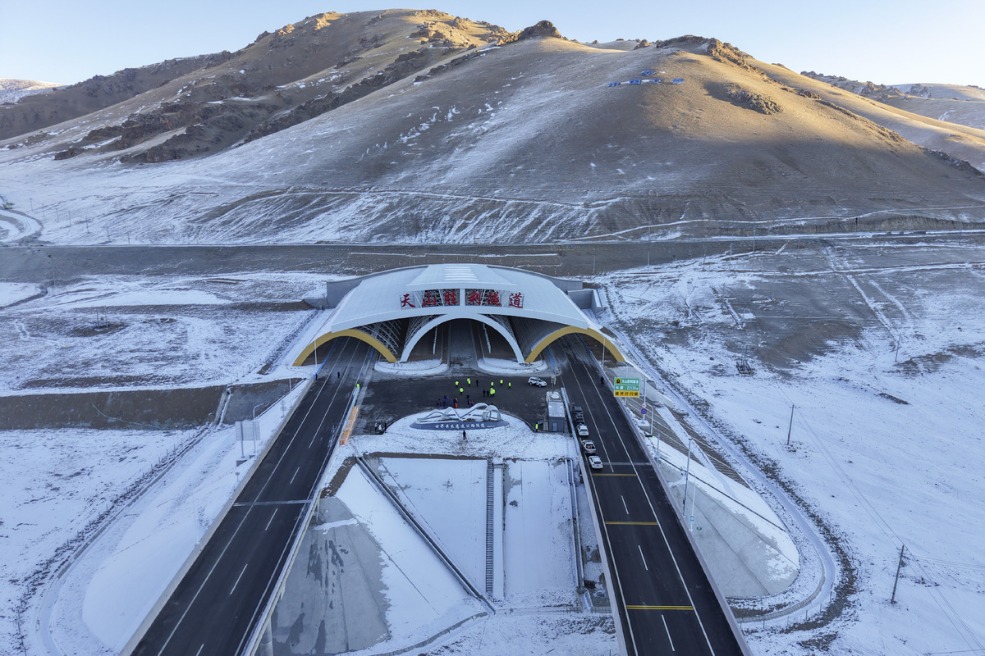
- World's longest expressway tunnel opens to traffic in Xinjiang
- Xinjiang opens world's longest expressway tunnel
- Beijing's Tongzhou Railway Station to open Dec 30
- Frozen Yellow River waterfall captivates tourists
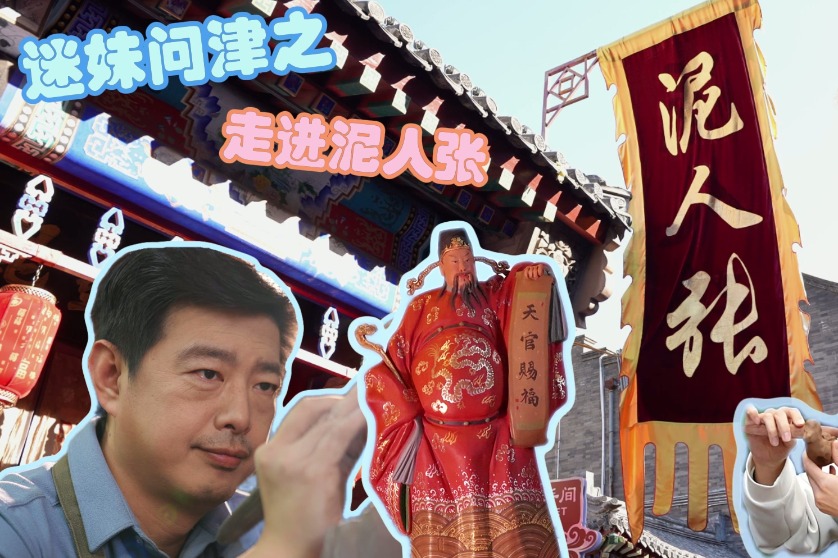
- Sixth-gen clay figurine heir focuses on spirit over color