Connecting cities, changing lives
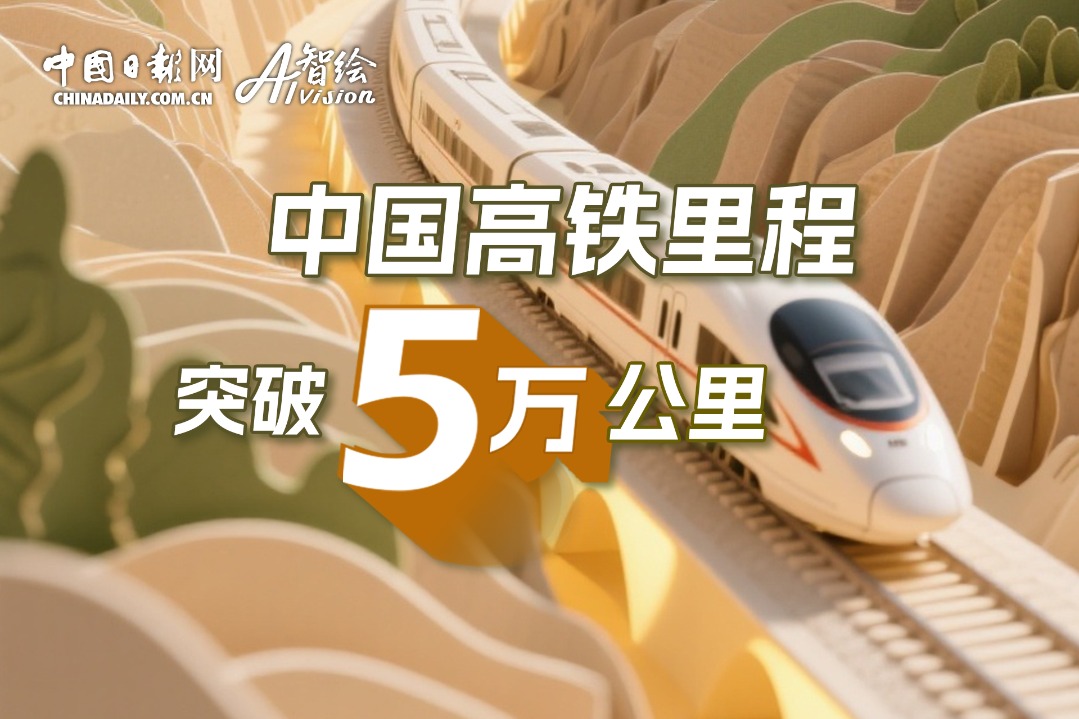
Faster, affordable and convenient rail travel is reshaping China's social and economic landscape










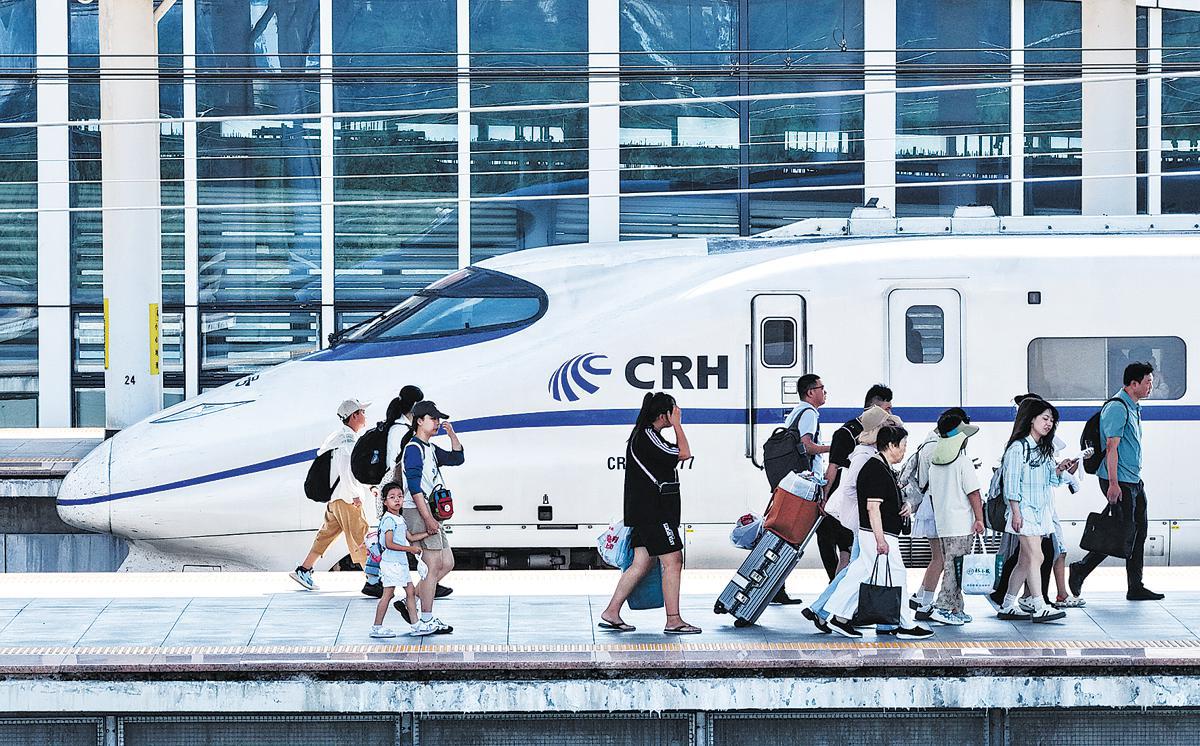
Smooth sailing
For 76-year-old Zhang Kunming, travel during Spring Festival — one of the major travel rushes in China — once meant endurance rather than convenience.
In the early 1970s, Zhang was working in Shenyang, capital of Northeast China's Liaoning province, while his family lived in Qingdao, Shandong. A trip home on the slow green trains of that era took nearly three days. At the time, a one-way train ticket home cost him three months' salary.
"There were no assigned seats," Zhang recalled. "People filled the aisles. You could barely move." Toilets were at the far ends of the carriage, and reaching them meant squeezing through tightly packed crowds.
Today, Zhang's son works in Beijing. Traveling between Beijing and Qingdao now takes about three hours on a high-speed train, and Zhang makes the trip regularly. The trip between Shenyang and Qingdao is about seven and a half hours. The price is much more affordable, too.
Economic, social benefits
At Wufushan Railway Station in Shangrao, Jiangxi province — one of China's smallest high-speed rail stations — a seasonal surge arrives every spring. Tea farmers board the D2325 train to Wuyi Mountain in neighboring Fujian province for the annual tea-picking season. The journey takes just 17 minutes.
"Every year I organize nearly 200 farmers for the picking season," said Lin Xinfu, a team leader. "This train is our 'Tea-Picking Express'. It makes work easier and boosts income."
High-speed rail has enabled better staffing for tea factories during harvest season, connected rural labor to regional markets, and drawn tourists eager to experience tea harvesting and processing.
In Luochuan, Shaanxi, apples are the dominant crop. Wang Bo, secretary-general of the Luochuan county apple industry association, said: "Our apple sector depends on efficient transport. High-speed trains make it easier for companies to visit and for sales to expand."
Tourism has expanded as well. Destinations that were previously hard to reach — from Jiuzhaigou in Sichuan province to Shennongjia in Hubei province — are now accessible via high-speed rail.
"The economic and social benefits of high-speed rail extend far beyond ticket revenues," said Yu Jian, director of the comprehensive planning division at the planning research institute of the China Railway Economic and Planning Research Institute.
"During the construction phase, it generates extensive employment and boosts related industries, including construction, metallurgy, manufacturing, energy, IT, computing, and precision instruments. Once operational, the network enhances regional connectivity, helps optimize industrial structures, and serves as a cornerstone for high-quality economic and social development," he added.