BIZCHINA> Newsmakers

|
BIZCHINA> Newsmakers
|
|
Related
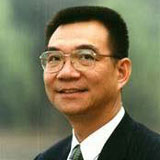
Chinese in top job at World Bank
By Martin Jacques (China Daily)
Updated: 2008-06-03 09:52 [The author Martin Jacques is visiting research fellow at the Asia research centre, London School of Economics.]
In June Justin Lin Yifu, a Beijing professor, will take up the post of chief economist at the World Bank. Nothing could be a clearer sign of the times. This is the number two job in one of the two major international economic institutions, the other being the International Monetary Fund. Earlier incumbents have included the Nobel prize winner Joseph Stiglitz, the former US treasury secretary Lawrence Summers and the UK's Nicholas Stern. Previously the top jobs in these two outfits have always been shared between Americans and Europeans. Lin's appointment thus marks a major break with political tradition. Hitherto there has been hardly any appointment of a Chinese to a senior position in the major international organizations. China's burgeoning importance, however, is set to change this state of affairs, with Lin's appointment likely to set the tone for the future. In the past the World Bank, like the IMF, has been the tame captive of US and European governments, never straying from the prescribed Western free-market orthodoxy. The very public disagreement at the time of the Asian financial crisis between Stiglitz and his counterpart at the IMF, Stanley Fischer - with the World Bank man strongly critical of the IMF's disastrous policy toward the crisis, and supportive of Malaysia's temporary imposition of capital controls - was highly unusual. But the appointment of a Chinese chief economist takes us into an entirely new realm. The East Asian countries have never subscribed to the neoliberal economic agenda, eschewing sweeping privatization, a minimalist role for the state and wholesale market liberalization. At the center of Chinese policy remains a highly interventionist state and state-owned firms. Lin himself has written that the government is the most important institution, determining whether development is successful, and argues that privatization is neither necessary nor sufficient for making Chinese state-owned enterprises more efficient. Imagine such sentiments being expressed by the Bush or Clinton administration, or Gordon Brown for that matter. Of course, the chief economist of the World Bank does not enjoy the same kind of authority as its president - at present a Bush appointee, Robert Zoellick. Previously US deputy secretary of state, Zoellick succeeded the high-profile neoconservative Paul Wolfowitz, whose reign ended in ignominy. Nonetheless, Lin's appointment is a clear indication that China can no longer be ignored, notwithstanding the fact that it espouses policies at variance with Western free-market orthodoxy. China, by virtue of its growing economic power, is in the process of barging its way into the citadels of global economic governance. Western governments are faced with a difficult dilemma: either they can choose to hold China at arm's length until it can no longer be ignored, or alternatively they can usher China into the corridors of power before that decision becomes, in effect, a question of force majeure. Lin's appointment suggests that in this case a more far-sighted approach is being pursued. Foot-dragging and inertia, however, remain the predominant response. Gordon Brown has uttered timid words about "reframing the international architecture", suggesting institutions such as the World Bank and IMF were built for a bygone era, but there was nothing concrete, merely a further round of platitudes. The entry of the Chinese into the highest echelons of the World Bank parallels the extraordinary turn of events at the back end of last year when - following huge losses as a result of their exposure to the US subprime market, and in desperate need of massive injections of capital - major Wall Street investment banks such as Bear Stearns, Merrill Lynch and Morgan Stanley were forced to turn to Chinese banks and the China Investment Corporation, among others. The financial pillars of Wall Street, as a consequence, are now significantly underpinned by Chinese money. Wall Street paid the price for its willingness to live at the outer edges of risk in the cause of greed, while the Chinese have reaped the benefits of being the world's biggest savings machine. Like the appointment of Lin, these events herald the arrival of China not only at the center of the global economy, but in the very heartlands of American financial power. With the American economy now facing the prospect of a prolonged recession and the Chinese economy likely to escape its worst effects, the process of US decline and China's rise is likely to be foreshortened. It would be naive to think that Lin's appointment will result in a major shift in the policies of the World Bank. The latter will still be a creature of Washington. But nor will it be possible for Lin's voice to be ignored. And if that is true now, it will become increasingly the case in the future. There is a growing crisis of representation in the major bodies of international economic governance - the IMF, World Bank and G8. The Western countries that dominate them, along with Japan, account for a declining share of global economic activity, and, with the rise of countries like China and India, that proportion is destined to fall rapidly over the next two decades. But if these countries are to be allowed their voice, as surely in time must happen, then the priorities and policies of these bodies are bound to change as greater weight is given to the interests of the developing world, rather than the developed world. Escalating food prices and their impact on the world's poor would be a good place to start. The World Bank, like the IMF, is likely to become the site of growing rivalry between the developing and developed worlds. However, in the longer run it is not at all clear what will become of the World Bank or the IMF - as opposed to the G8, which could easily change at some point by ditching those who have little case to be there (for example, Italy and Canada), and adding China and India (and, in due course, Brazil and South Africa). A key question, however, is how China will perceive the World Bank and the IMF in the longer term. Already its own aid program for African countries considerably outdistances what the World Bank contributes to the continent. As the Chinese economy grows ever larger, its potential for offering economic aid to Africa, and indeed other parts of the developing world, could far exceed the parsimonious contribution on offer from the World Bank. Over the past decade, China has shown great eagerness to be seen as a full-fledged member of multilateral bodies. There are questions that might still be some way off, but they demonstrate just how fundamentally China's rise will change our Western-made world. (For more biz stories, please visit Industries)
|
主站蜘蛛池模板: 永仁县| 高台县| 永德县| 柳河县| 息烽县| 浙江省| 城口县| 禄丰县| 年辖:市辖区| 富阳市| 景德镇市| 克拉玛依市| 内江市| 赤峰市| 永福县| 西安市| 广灵县| 南平市| 安顺市| 宁德市| 金乡县| 红安县| 古田县| 临泉县| 湾仔区| 普兰县| 沂南县| 雅江县| 涡阳县| 绥德县| 清水河县| 泰州市| 东乡县| 安顺市| 新化县| 中山市| 聂拉木县| 修文县| 邓州市| 天镇县| 抚顺县| 奈曼旗| 屏山县| 新疆| 卢湾区| 浪卡子县| 噶尔县| 长治市| 南宫市| 海晏县| 申扎县| 隆德县| 晋宁县| 县级市| 安康市| 滁州市| 开远市| 乌拉特后旗| 赤壁市| 浙江省| 博白县| 本溪市| 林西县| 从化市| 聂荣县| 会昌县| 辽中县| 赤城县| 大名县| 双桥区| 颍上县| 雅安市| 台北市| 武威市| 富宁县| 石狮市| 临西县| 饶平县| 西昌市| 米脂县| 云安县| 梁平县|