BIZCHINA> Wen's Lens

|
BIZCHINA> Wen's Lens
|
|
Related
In with the new
By You Nuo (China Daily)
Updated: 2008-09-08 09:15
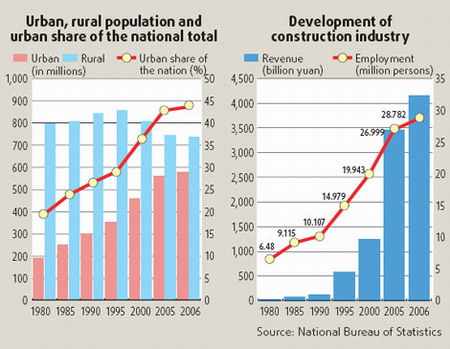
   People have long been arguing about the disappearance of China's old cities - whether it should not be so fast, and whether it should not be so cruel as to knock down the buildings that used to give Chinese cities their unique style. Nostalgia has been part of the urban dwellers' culture. Frequently, when the older cab drivers meet customers who speak with the distinctive "local flavor" they soon begin to compare notes about where they used to live - with the expectation that all homes were once within a bike ride from each other, and now many families, if not all, have moved at least once in the last 30 years from the city's central area to some distant, formerly obscure, suburban spots. Today's Beijing has indeed grown so large, and is so much a mixture of Chinese classic buildings and ultra-modern architectural designs, as the argument still continues about protecting traditional houses. In the meantime, the good thing is that the building industry has become one main pillar of the economy in terms of the capital investment and for the jobs it can create. The demand from the construction industry has also fueled rapid increases in the businesses of steel and cement. The change in the cities' skylines has also brought former rural workers into their first urban jobs. In the photo of workers having their lunch break at the construction site of the new headquarters for CCTV, the national television station, you may hear people greeting each other daily in more than five provincial accents. According to figures released at the end of 2006, all Chinese cities were able to accommodate some 577 million fully-registered residents, or around 44 percent of its entire population. But at this stage, China is still in an early stage of urban development. And the building of new houses and new public infrastructure in most cities other than Beijing and Shanghai is still lagging behind. Cities are being built in a markedly decentralized fashion, partly also because of the country's large land area. In comparison with South Korea, where half of its population and GDP are concentrated in Seoul, the capital city, Beijing, as the Chinese capital city, makes up only a little more than 3 percent of China's GDP.
(For more biz stories, please visit Industries)
|
主站蜘蛛池模板: 繁昌县| 张家港市| 兴仁县| 彭阳县| 板桥市| 湘西| 龙岩市| 宿州市| 桐庐县| 施秉县| 孝义市| 内乡县| 黑河市| 康定县| 大埔县| 海原县| 新源县| 涪陵区| 清水县| 岳西县| 许昌县| 宝坻区| 东阿县| 图木舒克市| 台州市| 南昌市| 镇平县| 翼城县| 色达县| 方正县| 泰州市| 秀山| 澄城县| 松阳县| 常山县| 望江县| 利川市| 昂仁县| 信丰县| 肥乡县| 石家庄市| 东乡族自治县| 东安县| 三明市| 宜兰县| 乐业县| 鹰潭市| 洱源县| 江达县| 林西县| 桓台县| 汶川县| 福贡县| 临西县| 福海县| 遂平县| 新邵县| 九龙县| 乌兰察布市| 和静县| 扬中市| 古蔺县| 莲花县| 元朗区| 海淀区| 呼和浩特市| 东阳市| 习水县| 顺平县| 肃宁县| 怀远县| 五原县| 土默特左旗| 杭锦后旗| 尼玛县| 弥渡县| 西平县| 闵行区| 金堂县| 青川县| 团风县| 资源县|
