BIZCHINA> Top Biz News

|
BIZCHINA> Top Biz News
|
|
Pharmaceutical shares catch investor fancy
By Liu Jie (China Daily)
Updated: 2009-05-07 08:04
Reporters at the Health Ministry's press conference last month were amused when Minister Chen Zhu ventured the culinary advice that the common herb star anise would not only add flavor to pork, but also provide a strong protection against the deadly H1N1 flu. That was not meant to be a joke, of course. The spread of the epidemic has created a strong demand for Tamiflu, an antiviral drug derived from shikimic acid, an extract from star anise.
The price of the company's shares surged more than 60 percent in less than a week to 20.10 yuan per share on May 4. Subsequently it issued a statement stating that it did not expect the H1N1 flu epidemic to have any material effect on its business as it was yet to receive a single order for shikimic acid. That, however, did not prove to be a deterrent for investors and subsequently trading in the company's shares was suspended on May 5. The company later said it would review its business to ascertain if there were any disclosure oversights. Guilin Layn hasn't issued a public statement since then and trading in its shares continues to remain suspended. Guilin Layn hasn't been the only drug maker targeted by investors addicted to "concept" stocks since the outbreak of the dreaded flu epidemic across the Pacific late last month. The entire pharmaceutical sector of the Chinese stock market went on the boil when news of the disease broke in late April. For instance, the share prices of many drug makers, like Guilin Layn, Xinjiang Tecon, China Animal Husbandry Industry, Inner Mongolia Jinyu, Jiangsu Lianhuan Pharmaceutical and Apeloa, surged to their daily limit of 10 percent on April 27 and 28. In comparison, the benchmark Shanghai Composite Index dropped an aggregate of more than 2 percent in these two sessions. The Hong Kong listed H shares of some mainland drug companies soared nearly 40 percent since late April. On the Shenzhen bourse, the Pharmaceutics and Bio-tech Industry Index rose nearly 6.74 percent since late April to 827.3 on May 4. Stock analysts are still skeptical on the expected demand for relevant drugs made by mainland manufacturers. "This is a kind of speculation," said Ni Wenhao, analyst, Guotai Jun'an Securities. "Everybody simply assumes that the increased demand for antiviral drugs will benefit pharmaceutical companies in China. That's unreasonable," he said. The China unit of international drug company, La Roche, said its facilities are operating at full capacity to meet the delivery schedule for a new order of 220 million doses of Tamiflu. But it didn't specify the suppliers of the key ingredients, including shikimic acid.
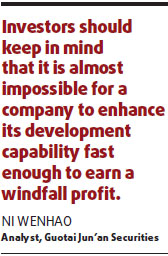
Meanwhile, Guilin Layn said in its statement that shikimic acid was not a major product of the company. It has the capacity to produce only 500 kg of the chemical per day, or about 180 tons a year. The company also said if demand for shikimic acid grows, it would raise the prices of its raw material star anise. The narrow profit margin would not have brought much real benefit to the company even if shikimic acid orders had increased, it said. Guilin Lyne earlier said its profit for 2008 dived more than 80 percent from 2007 to just a little over 4 million yuan, on sales of 113 million yuan, down 8.37 percent. "Investors should keep in mind that any epidemic is short term and it's almost impossible for a company to enhance its development capability and increase its production capacity fast enough to earn a windfall profit," Ni said. Indeed, the allure of the pharmaceutical and biotech sector seems to have faded a little after the Labor Day holiday break as investors are beginning to realize that not all vaccines are effective against the H1N1 flu. Jinyu shares slumped after it was made known that its specialty was in animal vaccine mainly for swine fever control and had nothing in common with any drugs for the treatment of H1N1 flu. The company's shares fell from 10.75 yuan on May 5 to 10.40 yuan yesterday. Fan Jiming, a middle-aged Beijinger, who bought Jinyu shares at a peak price of over 11 yuan per share some weeks back, admitted that he has lost thousands of yuan after the May Day holiday. "But I have no regrets," he said. "I bough the stock for its long-term value," he added. (For more biz stories, please visit Industries)
|
||||||
主站蜘蛛池模板: 东光县| 虎林市| 北流市| 白山市| 石棉县| 恩施市| 襄垣县| 饶阳县| 贵港市| 乌鲁木齐市| 岢岚县| 西华县| 洪江市| 罗平县| 沛县| 涿州市| 邮箱| 海口市| 舒城县| 东源县| 颍上县| 渭南市| 余江县| 高要市| 翁源县| 永顺县| 奇台县| 秦皇岛市| 柳河县| 涿鹿县| 丰原市| 永平县| 和平县| 台安县| 封开县| 奈曼旗| 岑溪市| 平山县| 项城市| 临漳县| 恩施市| 元朗区| 林甸县| 鄂伦春自治旗| 达日县| 锡林浩特市| 遂宁市| 安塞县| 全椒县| 太白县| 民县| 葫芦岛市| 灵丘县| 泽州县| 藁城市| 济宁市| 安宁市| 新和县| 石楼县| 肥乡县| 高邑县| 竹山县| 祁门县| 高青县| 巴林左旗| 宁化县| 调兵山市| 苏州市| 阳江市| 松原市| 茌平县| 甘孜| 蕲春县| 太白县| 明光市| 海安县| 四平市| 晋宁县| 高青县| 横山县| 崇信县| 娄烦县|