Wealthy reflect trends in economy


In a country not known for its openness about wealth, the Hurun Rich List has long been described as a "fat pig killing list". The implication is that a high-profile exposure of wealth can be followed by a high-profile knockdown.
 |
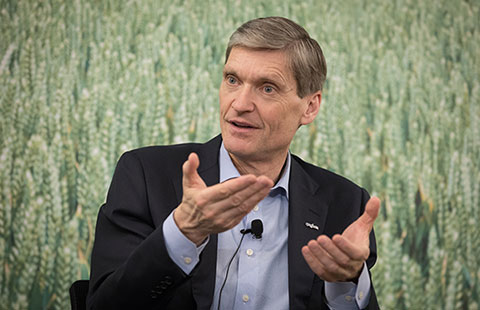
Hoogewerf, the founder of the Hurun Report, which publishes the well-known annual listing of the richest 1,000 people in China, said that China's richest are reluctant to be identified as a "new money class" when put under the spotlight by his rich list, and are now seeking cooperation and providing him more data to prove otherwise.
For instance, Duan Yongping, a 52-year-old executive in the electronic appliances industry, once showed his stock trading account to Hoogewerf and his team for assessment.
"They wouldn't be happy to do this before," Hoogewerf, a former chartered accountant at Arthur Andersen, told China Daily, adding that China is a complicated market with many different regulations and rules, some of which are not very clear.
"So if someone knows you got a lot of money they are more likely to ask you for extra tax or payments," he said.
During the past decade, China has created more wealth overall than any other country in the world. The number of its dollar billionaires has grown from 15 to around 250 in just six years. As late as 2004, a total of $150 million was enough to make the top 100.
For most on the rich list, Hoogewerf, an old Etonian with a degree in Chinese, said it is difficult to discover all the sources of their wealth. So the real extent of their wealth is likely more than shown on the list.
But the idea of creating such a report involves more than satisfying people's curiosity about the bank accounts and lifestyles of the rich.
"It is more important that it (the report) reflects trends underlying success and failure in China's economic development and meets the needs of the transparency of the market," he said.
Wang Xiuli, a professor at the Business School of the University of International Business and Economics in Beijing, said that Hoogewerf is in a good position to cover and analyze China's private sector, especially when the country has limited resources to let the public know about business and financial data.
"Though the private sector may be small, it plays a very important part in China's economy," Wang said. "Sometimes it is even more efficient than State enterprises."
This year, the largest groups of rich people are in manufacturing and real estate, Hoogewerf said, since urbanization is still the key source of wealth for the Chinese economy for the next 15 to 20 years.
In sharp contrast, financial investment, along with technology, media and telecommunications, are the top sources of wealth in the US, according to the global rich list.
"Here in China the rich are all coming up from the first generation and quite young with an average age of only 50, while in the US, one-quarter of 420 listed entrepreneurs are inherited and quite old," he said.
John Ross, a senior fellow of the Chongyang Institute for Financial Studies at Renmin University of China, said China's economic structure, and therefore its pattern of wealth, could not resemble that of the US for many decades because of their different levels of economic development.
"It will take at least 30 years for China to reach the GDP per capita of the US. So there is no reason to expect in the near future China's structure of wealthy people will resemble the US," Ross said. "It will also take approximately 15 years for China's level of economic development to reach that of South Korea — and South Korea is still an economy dominated by manufacturing."